AI-ready infrastructure
 Refer and earn


 Ethereum
 Hyperliquid
 Solana
 Arbitrum
 BNB Smart Chain
 Base
Base Polygon
 TRON
TRON Sui
Sui Robinhood


Chainstack becomes the Wormhole Guardian

Chainstack is now part of the Wormhole Guardian Network — the set of independent infrastructure operators that observe and sign messages for Wormhole, the cross-chain interoperability protocol. For us, this is a step into the verification layer of one of the most heavily used interoperability protocols in production, and a natural extension of the RPC infrastructure we already run across 70+ chains.
What the Guardian Network actually does
Wormhole connects 45+ blockchains across EVM, Solana, Sui, Aptos, Cosmos, and major L2s. It powers cross-chain messaging, token transfers, governance, and queries for protocols including Circle’s CCTP, Pyth, Uniswap, Lido, Sky (formerly MakerDAO), and tokenization platforms moving regulated assets across chains.
The Guardian Network is what makes that work. Nineteen independent validator companies observe contract events on every supported chain and sign attestations using a t-Schnorr multisig scheme. Once a 13-of-19 supermajority has signed, the signatures are aggregated into a VAA (Verifiable Action Approval) that any destination-chain Core Contract can verify. No VAA, no cross-chain action. Consensus is reputation-based Proof-of-Authority rather than stake-weighted: every Guardian has equal weight, and the only thing standing between a bridged dollar and a stuck dollar is whether enough honest operators saw the same event.
Some chains (Ethereum, Solana) are observed directly by all 19 Guardians. Others use a delegated subset, with Canonical Guardians waiting for delegate quorum before signing — a setup that keeps operational overhead manageable without lowering the effective 13-of-19 security threshold. That makes the operational quality of each Guardian a structural property of the protocol, not a vendor metric.
What we’re operating
As a Guardian, our responsibilities cover:
- Running the Guardian stack. The
guardiandsoftware deployed with redundant hardware, continuous signing, and isolated key management — backed by the same MFA enforcement, hardware tokens, and privileged access management used across our platform. - Direct on-chain observation. Full nodes for the chains where we participate in observation, so we sign on events we’ve seen ourselves rather than relayed attestations.
- 24/7 monitoring and incident response. The same on-call discipline and observability practices we apply across our infrastructure, with a dedicated rotation for the Guardian deployment.
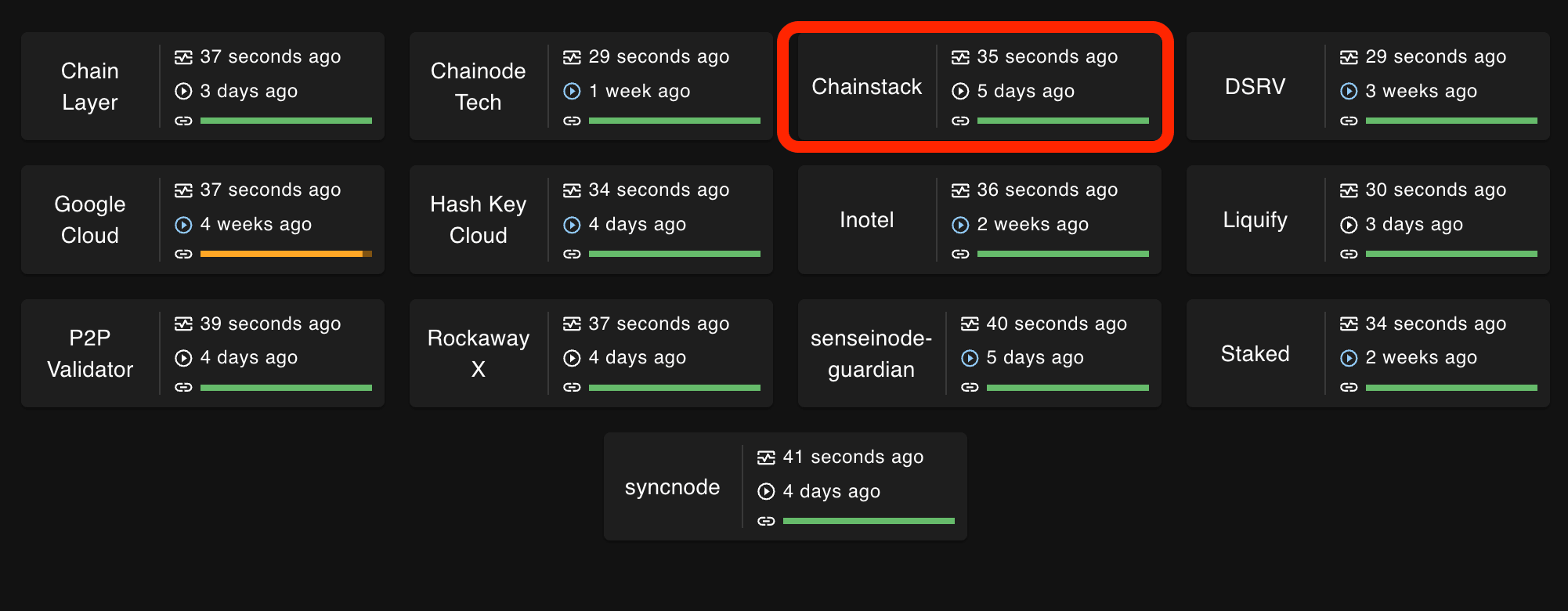
The Guardian deployment is isolated from our customer-facing RPC infrastructure, which matters: a Guardian must be able to fail safely without dragging anything else down with it, and vice versa.
Why this matters for builders
For developers shipping cross-chain features, a Guardian set composed of operators with deep multichain infrastructure experience is the difference between a VAA that arrives in seconds and one that doesn’t arrive at all. The 13-of-19 threshold protects against any one Guardian going down, but it depends on the rest of the set actually being available.
For institutions and tokenization platforms moving regulated assets across chains, the audited-controls side of the Guardian role matters as much as the technical one. The same SOC 2 Type II and ISO 27001 posture, key management, and access controls we apply to our institutional and regulated client base extend to the Guardian deployment.
For end users, the effect is invisible and that’s the point: cross-chain transactions that keep settling, even as message volume grows.
About Wormhole
Wormhole is an interoperability protocol connecting 45+ blockchains across EVM, Solana, Sui, Aptos, Cosmos, and major L2s. It powers cross-chain messaging, token transfers, governance, and queries for protocols including Circle’s CCTP, Pyth, Uniswap, Lido, Sky (formerly MakerDAO), and tokenization platforms moving regulated assets across chains. Security is anchored by the Guardian Network: 19 independent validator companies that observe and sign every cross-chain message under a 13-of-19 t-Schnorr multisig threshold. The current Guardian set is publicly visible on the Wormhole Dashboard.
Connect with us
- Join our Discord, Telegram, and follow us on X
- Sign up for a free Developer account or explore our plans here