AI-ready infrastructure
 Refer and earn


 Ethereum
 Hyperliquid
 Solana
 Arbitrum
 BNB Smart Chain
 Base
Base Polygon
 TRON
TRON Sui
Sui Robinhood


RISC-V on Ethereum: a deep dive into the EVM environment

Since last year, Vitalik Buterin, co-founder of Ethereum, one of the most popular blockchains, has discussed plans to explore migrating Ethereum’s runtime environment from the current Ethereum Virtual Machine (EVM) to RISC-V. The change would mean that smart contracts on Ethereum would compile, or be transformed, into low-level bytecode that a RISC-V processor would understand instead.
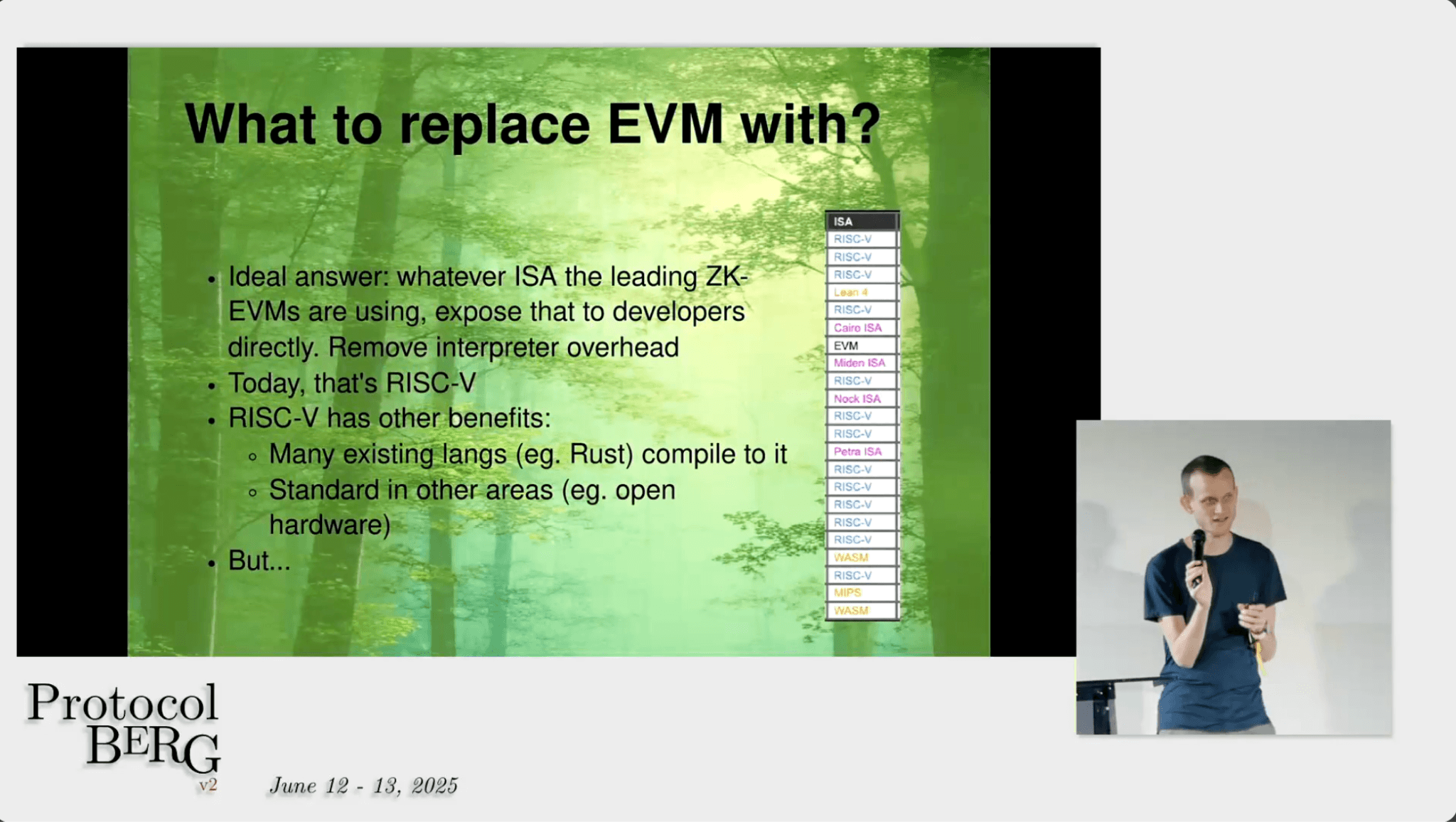
The move would require a major technical overhaul of Ethereum, but would provide various scaling benefits, such as the ability to use zero-knowledge proofs to verify compiles and broader flexibility in the programming languages in which smart contracts can be written.
Since then, several major zero-knowledge virtual environments (zkVMs), which create zero-knowledge proofs to verify that they executed a set of machine instructions correctly, such as RISC Zero, Succinct, and a16z’s Jolt, compile to RISC-V.
Linea, an Ethereum L2 developed by Consensys, plans to deploy RISC-V compatibility on mainnet by the end of the summer of 2026.
Outside of blockchain, nearly 15 percent of systems on a chip (SoC) or microchips that integrate computer components use RISC-V as an architecture.
RISC-V provides opportunities to scale Ethereum and improve the developer experience, but requires extensive, challenging technical implementation and raises many unknowns. This article provides Ethereum developers with a perspective on how RISC-V impacts them, highlighting current EVM bottlenecks, the value and trade-offs of migrating to RISC-V, and current RISC-V implementations.
What is the Ethereum Virtual Machine (EVM)?
Ethereum is unique compared to other blockchains, such as Bitcoin, as the Ethereum Virtual Machine enables Ethereum developers to deploy smart contracts, or self-executing computer programs, on-chain. Other blockchains are less dynamic, allowing only transaction updates within a ledger-like system.
Ethereum allows more dynamic state changes because it operates as a state machine, an architecture that updates state based on previous state values or inputs.
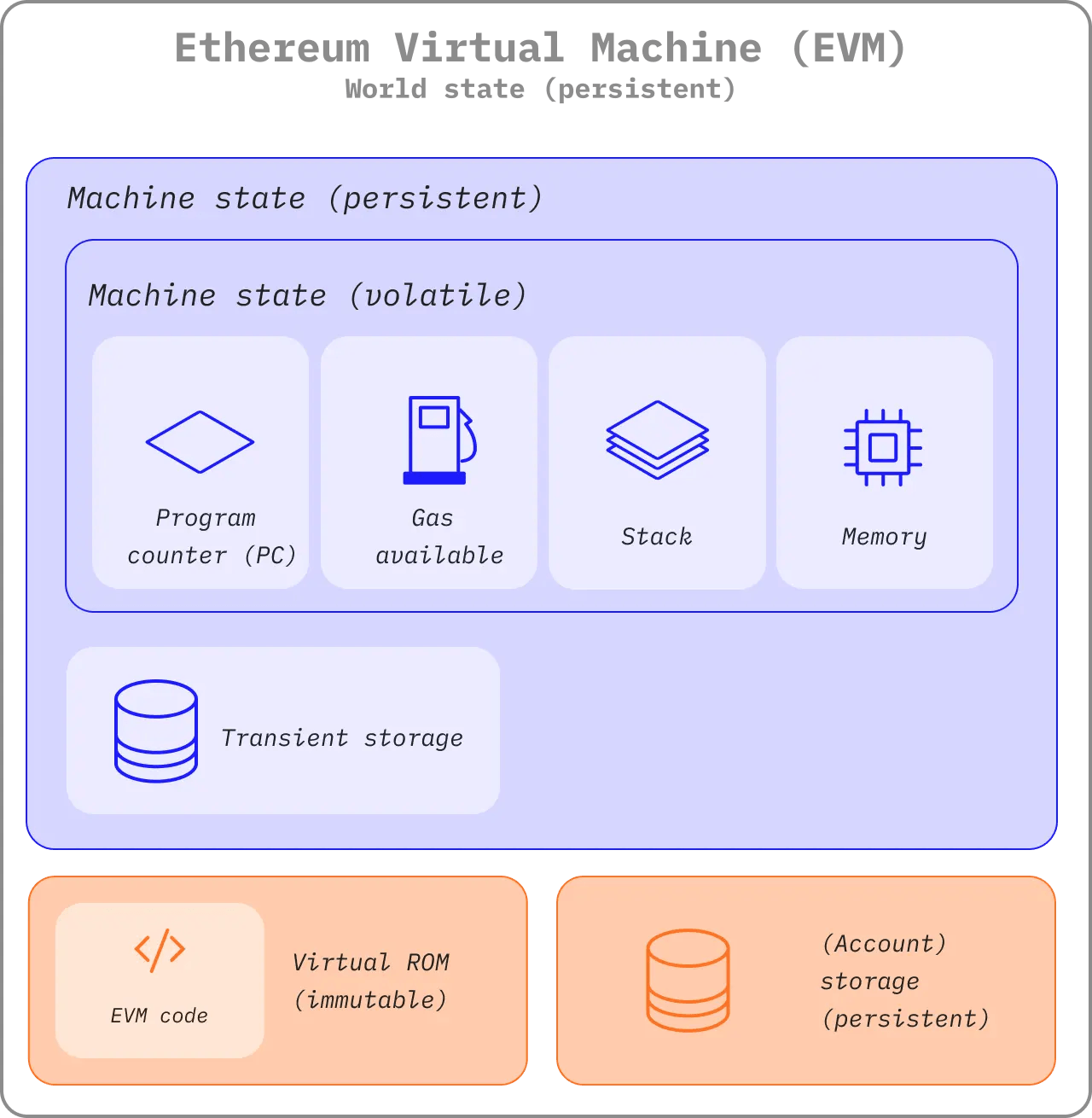
The “state machine” is the Ethereum Virtual Machine (EVM), an Instruction Set Architecture (ISA) and runtime environment that defines the rules for changing state from block to block and executes smart contract code when given instructions. For example, when a smart contract is deployed on Ethereum, it is first compiled into bytecode that the EVM can execute.
EVM is strictly used for Ethereum, while other ISAs are more general-purpose across other hardware and software implementations.
What is RISC-V?
Another ISA is RISC-V, an open-source ISA that defines the set of instructions a processor can execute and the interface between hardware and software. It is known for its simplicity, performance, and expansive contributions to its research.
In the case of Ethereum, it would replace EVM as the “state machine” and handle the compilation and execution of smart contracts. The Ethereum Foundation ruled out other popular ISAs used in computing, such as x86, WASM, and ARM, because RISC-V is simpler, more actively developed, and, overall, better suited to Ethereum’s needs.
Proposal to migrate from EVM to RISC-V
In his proposal, Vitalik Buterin outlined that a migration to RISC-V would require a major technical overhaul that would take at least 18 months but would improve scalability and could enhance the developer experience.
How RISC-V addresses EVM bottlenecks
Although the EVM enables developers to build more on Ethereum than on other blockchains, the current EVM architecture poses several scalability challenges that RISC-V could address.
Faster zero-knowledge proving
At present, each validator must individually re-execute every transaction in each block to confirm the accuracy of the proposed state changes. To improve scalability, Ethereum will need to adopt zero-knowledge proofs, enabling verification that a computation was performed correctly without rerunning it.
EVM was not designed with efficient verification in mind, leading to long prover times and computational effort required to generate these cryptographic proofs. A few examples include:
- EVM operates primarily on 256-bit words, whereas most computations require much smaller values, resulting in unnecessary operational overhead. On the other hand, RISC-V words are 32-64 bits.
- It is harder for provers to track every transition in the process in EVM than in RISC-V. EVM uses a stack-based architecture, pushing each opcode value, or code for different operations, onto and off the stack as the code runs. In comparison, RISC-V allows values to be placed in 32 general-purpose registers whenever the compiler wants.
For example, storing number 5, then number 4, and 3, and adding them requires three additional steps and more number tracking in EVM than RISC-V:
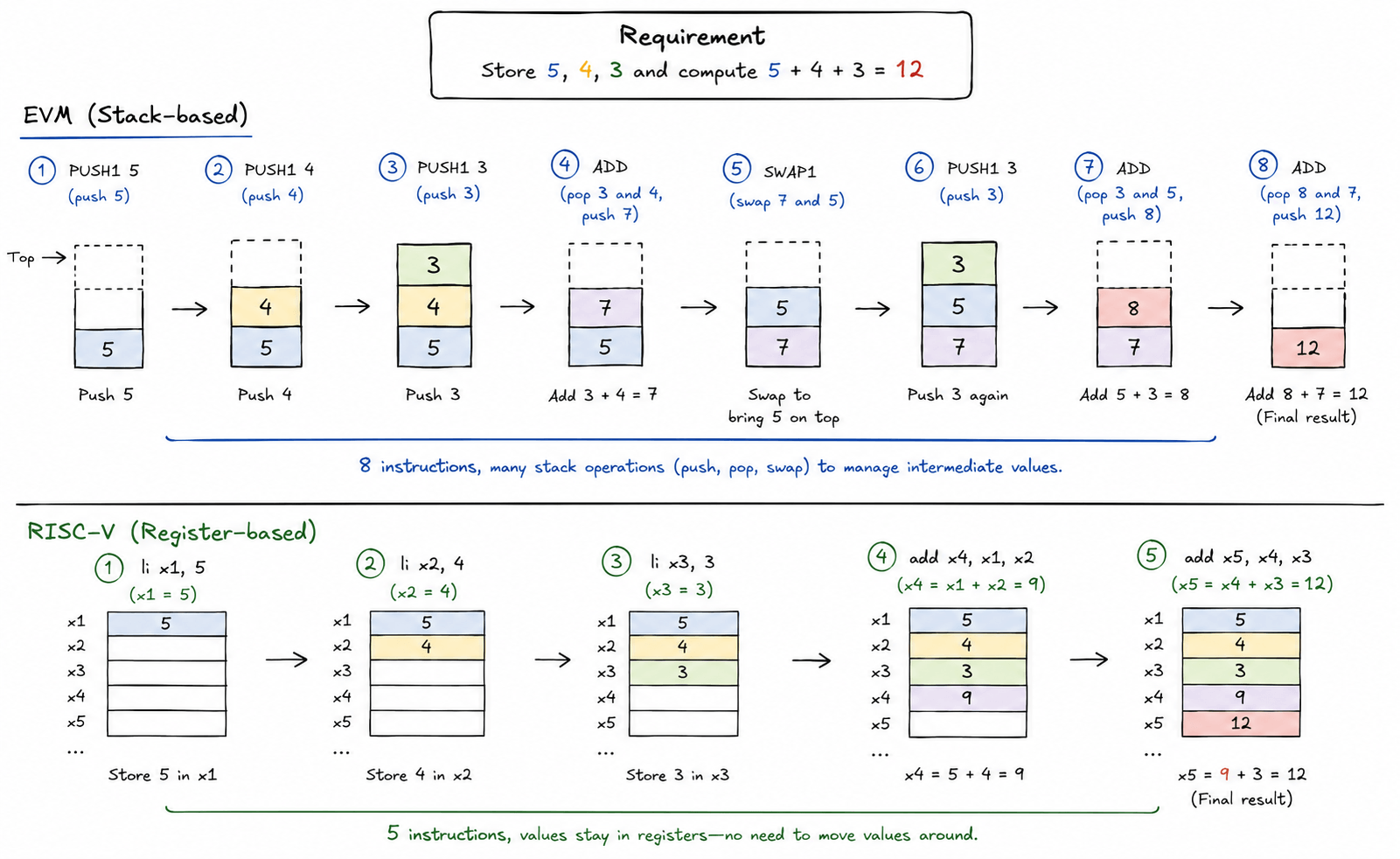
Initial research by Succinct Labs, cited by Vitalik Buterin, indicates that using zk proofs to verify Ethereum blocks on the EVM currently incurs 100 to 800 times the overhead of RISC-V. Linea also cited the core reason for migrating to RISC-V was the register-based architecture, which enabled a much faster prover.
An X post by Uma Roy, an applied cryptographer at Succinct Labs, citing the significant overhead that using zk proofs on EVM requires as opposed to RISC-V, was retweeted by Vitalik Buterin.
Developer experience
RISC-V would enhance the overall developer experience for Ethereum by expanding the programming language options for writing smart contracts and potentially making more research and tools available.
Developers would benefit from more programming language options with RISC-V migration.
Currently, Ethereum developers can write smart contracts in Solidity or Vyper, the only two high-level programming languages that compile to EVM. When EVM migrates to RISC-V, Solidity and Vyper will still remain as options, but virtually any programming language can run on RISC-V.
Migrating to RISC-V would also enable Ethereum developers to access research and tools that are already in place, as RISC-V has seen wide adoption across industries outside blockchain.
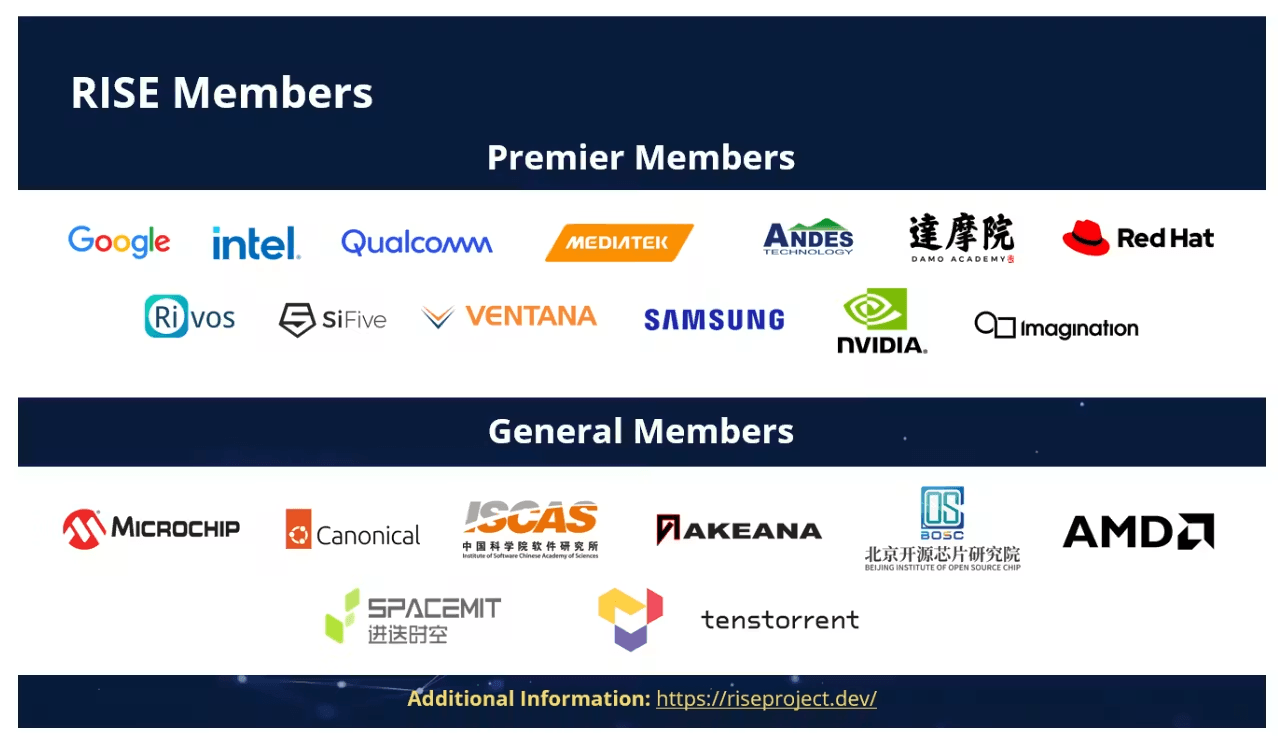
15 percent of systems on a chip (SoC) or microchips that integrate computer components use RISC-V as an architecture. Major companies such as Google, Intel, and NVIDIA are part of the RISE collaborative effort to accelerate the development of RISC-V software.
How zkVMs use RISC-V
A major example of how RISC-V could scale Ethereum, one more closely tied to blockchain, is the research and development of new zero-knowledge virtual machines (zkVMs). zkVMs are runtime environments that use zero-knowledge proofs to verify smart contracts, and all of which compile to RISC-V.
The Ethereum Foundation plans to integrate zkVMs to generate proofs of Ethereum blocks and allow clients to verify them in the consensus layer as part of its 2026 roadmap. Their main expectation is for the zkVM, which they specifically state should use RISC-V or “similar” (though it is not defined what similar may entail), to consume a guest program, or computer program that the zkVM can review, that consists of the block and witness needed to verify the block.
As of mid-2026, eight zkVMs are being developed and tested with these expectations in mind, including LambdaVM, OpenVM, RISC Zero, Airbender, Jolt, Pico, SP1, and Zisk. Most zkVMs are still in progress toward meeting the minimal requirements to serve as a RISC-V “target” or version that Ethereum can use.
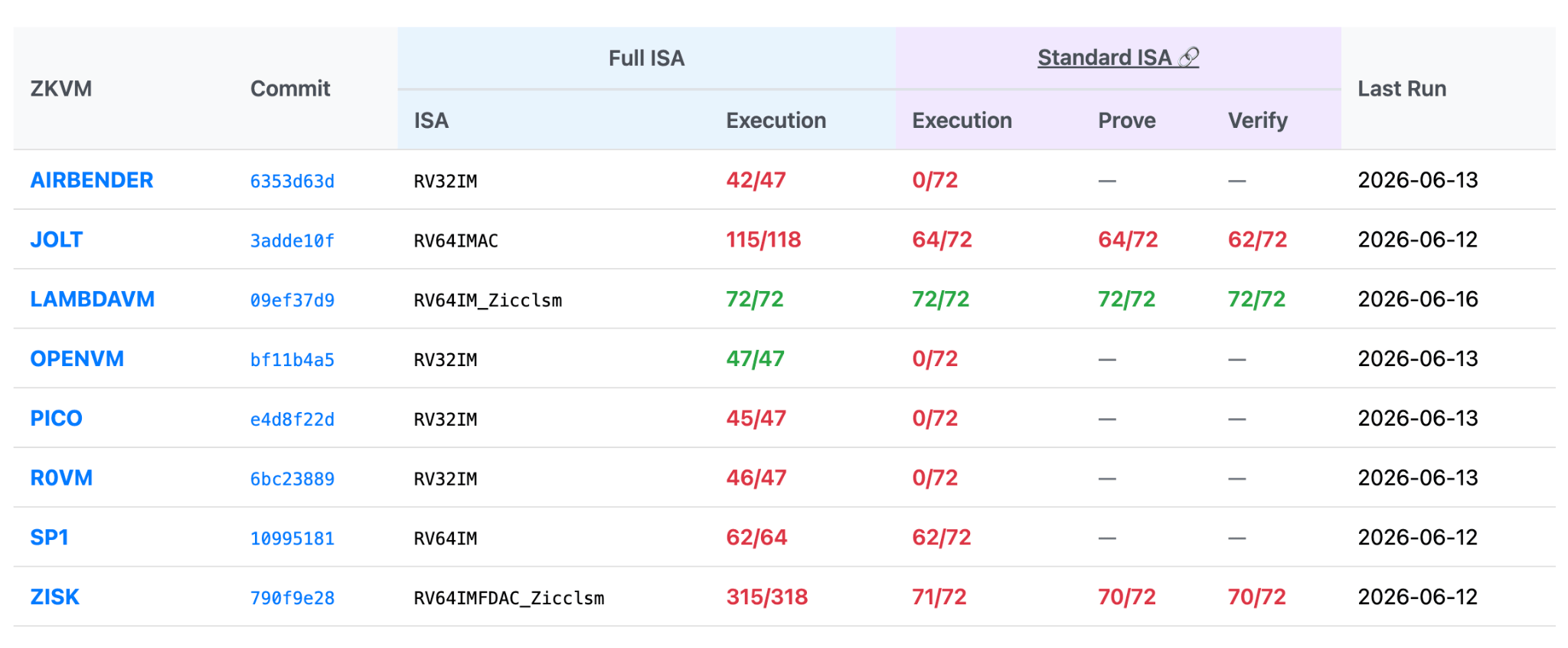
However, some of them have already demonstrated the value of a RISC-V-based zkVM.
SP1 already handles “real-time proving” or can prove a mainnet block within the roughly 12-second window before the next block arrives, allowing validators to verify a proof instead of re-executing each block. Initially, when launched on mainnet in November 2025, SP1 proved 99.7% of L1 Ethereum blocks on 16 GPUs in under 12s, and 95.4% in under 10s. Since then, as of May 2026, the v6 version of SP1 generates proofs six times as fast.
RISC Zero allows developers to write smart contracts in mainstream languages such as Rust and Go. To verify that their zkVM behaves exactly as the RISC-V spec dictates, the team uses open-source conformance tests and a formal specification model — a critical requirement for security.
Beyond that, RISC Zero is also working on formal verification tooling to produce mathematical proofs that their ZKVM is correct with respect to the RISC-V spec.
Jolt, a zkVM developed by a16z crypto, is another useful example. Jolt was designed to be simpler, easier to audit, and easier to extend than other zkVMs, reducing the likelihood of errors. Rather than hand-specifying optimized constraints for every CPU instruction, Jolt showed how it can extend the Ethereum instruction set further. It handles instructions through lookups into structured tables, which means extending the instruction set for an even more robust ISA as Ethereum expands takes only a couple of days of developer time.
Why RISC-V migration is not guaranteed
Despite its promise, migrating Ethereum’s execution layer to RISC-V faces real technical hurdles around performance, reproducibility, and security.
Some developers and stakeholders in the Ethereum community are still debating whether to commit to a specific ISA and instead support multiple ISAs, including WASM.
Even assuming a perfectly correct, formally verified zkVM, the compiler that turns high-level code into RISC-V code can introduce bugs that cause the binary to differ from the original program.
Currently, zkVM codebases are massive, and even a minor bug in a zkVM toolchain can have disastrous consequences. Missing constraints might allow a prover to deceive a verifier with false claims.
Until these toolchains are thoroughly verified as bug-free, projects dependent on them are arguably safer through obscurity than actual cryptography. The Jolt codebase consists of tens of thousands of lines of Rust, and SP1 and RISC Zero are even larger, making it difficult to check for all potential bugs.
Conclusion
Replacing the EVM with RISC-V could alleviate many of the current bottlenecks around prover time speed, expand programming language options for developers, and connect Ethereum to the broader research ecosystem that has emerged around RISC-V. SP1 Hypercube — now in production with formal verification of all 62 RISC-V opcodes — has demonstrated this is no longer research, but production reality.
However, RISC-V migration introduces real challenges in compiler correctness, security, and formal verification. The L1 timeline remains uncertain — Vitalik’s proposal estimates at least 18 months — but at the L2 level, the transition is already underway: Linea will deploy RISC-V proving on mainnet by the end of summer 2026, making it the first major rollup where developers encounter RISC-V in production.
For builders running production workloads on Ethereum and Linea, the next 12 months are a practical inflection point. Tracking proof finality on Linea via linea_getVerificationStatus, tracing zkVM-generated proofs with archive access, and monitoring transaction behavior across the migration all require RPC infrastructure built for production-grade workloads. Chainstack provides Ethereum and Linea RPC endpoints with archive depth, trace methods, and SOC 2 Type II and ISO 27001 compliance — the profile that lets your application track this transition without rebuilding the RPC layer mid-migration.
FAQ
RISC-V is an open-source instruction set architecture that Ethereum is exploring because its simpler, register-based architecture could significantly improve scalability and developer flexibility.
No, Solidity and Vyper would likely remain supported alongside many additional programming languages that can compile to RISC-V.
The EVM’s 256-bit word size and stack-based architecture create substantial overhead for zero-knowledge proving.
RISC-V’s register-based architecture requires fewer execution steps and simpler state transitions for provers to verify.
The main challenges are implementation complexity, compiler correctness, zkVM security, and the difficulty of formally verifying large codebases.
No, Ethereum researchers are highly supportive of RISC-V but are still actively debating it and are open to alternative approaches, including supporting multiple instruction set architectures.
Additional resources
From the Ethereum and zkVM ecosystem
- Vitalik Buterin’s RISC-V proposal
- Ethereum Foundation: zkEVM Test Monitor
- Linea’s RISC-V migration announcement
- SP1 Hypercube on Ethereum mainnet
- RISC-V: Good and Bad by Argument
- Ethereum Yellow Paper
Build on Ethereum and Linea with Chainstack