Ethereum
 Solana
 Hyperliquid
 Arbitrum
 Base
Base BNB Smart Chain
 MegaETH
 Tempo
Tempo Avalanche
 Aptos
Aptos TRON
TRON Ronin
Ronin zkSync Era
 Optimism
 Sonic
Sonic Polygon
 Unichain
 Fantom
 Gnosis Chain
 Sui
Sui Avalanche Subnets
 Polygon CDK
 Starknet Appchains
 zkSync Hyperchains




 Refer and earn
 Discord
 Telegram
 X (Twitter)
Helius RPC provider overview (2026)

Solana teams care about two things: how quickly you can read state and how reliably you can land transactions when the network is busy. Helius leans into both with Solana‑specific plumbing, staked connections for sends, gRPC‑class streaming, and pre‑parsed data so you write less glue code.
Helius is a Solana-focused RPC provider and data platform that bundles staked RPC sends, Sender’s parallel submit path to Jito, Yellowstone-compatible LaserStream with replay and regional failover, faster Enhanced WebSockets, and DAS APIs for assets and transactions, all wrapped in a credit-based model with clear RPS caps and optional fixed-rate streaming tiers.
Where Helius fits (and where it doesn’t)
Best fit
- Solana‑only projects that need fast inclusion and low‑latency streams. Sender + staked defaults help when slots are tight.
- Teams that don’t want to maintain Yellowstone clusters; LaserStream is turnkey and adds replay/failover.
- Apps that hate writing parsers. DAS and Enhanced Transactions cover common asset and tx workflows.
Not ideal
- Multi‑chain roadmaps (you’ll need a second provider elsewhere).
- Workloads that can’t tolerate plan gating (e.g., LaserStream mainnet is Professional+; Enhanced WS sits on Business+).
Product surface
RPC nodes (HTTP/WSS). Paid plans use staked connections by default via the regular mainnet endpoint; “secure” masked URLs exist for frontends.
Streaming choices.
- LaserStream (gRPC) — drop‑in for Yellowstone; adds historical replay, auto‑reconnect, and multi‑region endpoints.
- Enhanced WebSockets — 1.5–2× faster on average than standard WS; now powered by the LaserStream backend.
- Webhooks — server‑to‑server pushes when you prefer HTTP over sockets.
Data APIs.
- DAS (Digital Asset Standard): ownership/metadata for tokens, NFTs, and compressed NFTs.
- Enhanced Transactions: human‑readable tx data + address history.
- getTransactionsForAddress: Helius‑exclusive, paginated, filterable history in a single method.
Send path.
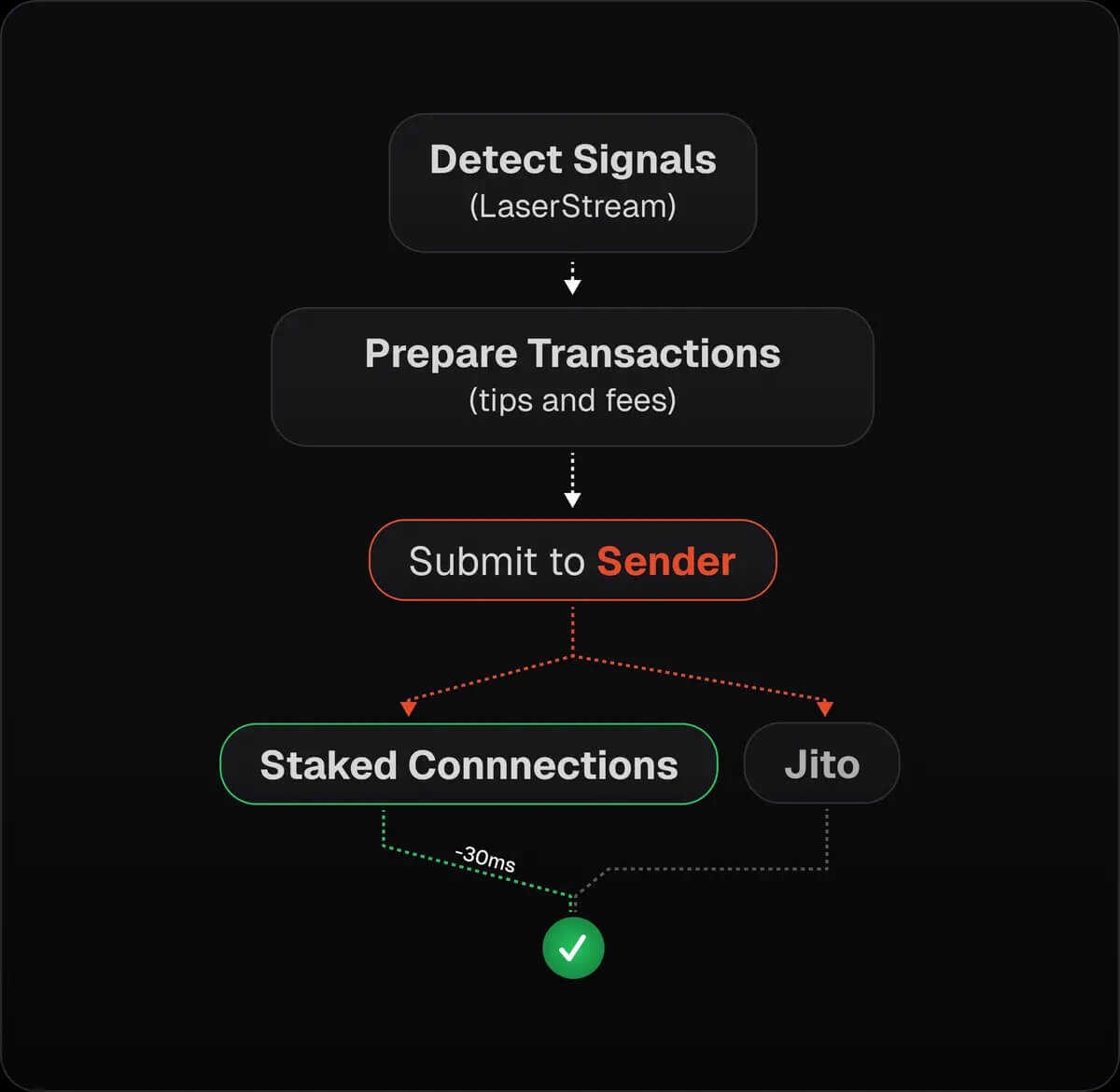
- Sender: submits in parallel to Jito and Helius across 7 regions; no credits billed, min 0.001 SOL tip; tuned parameters recommended for speed.
Specialized option.
- Shred Delivery (beta): UDP feed of raw shreds for desks chasing single‑digit‑ms advantage.
Pricing at a glance
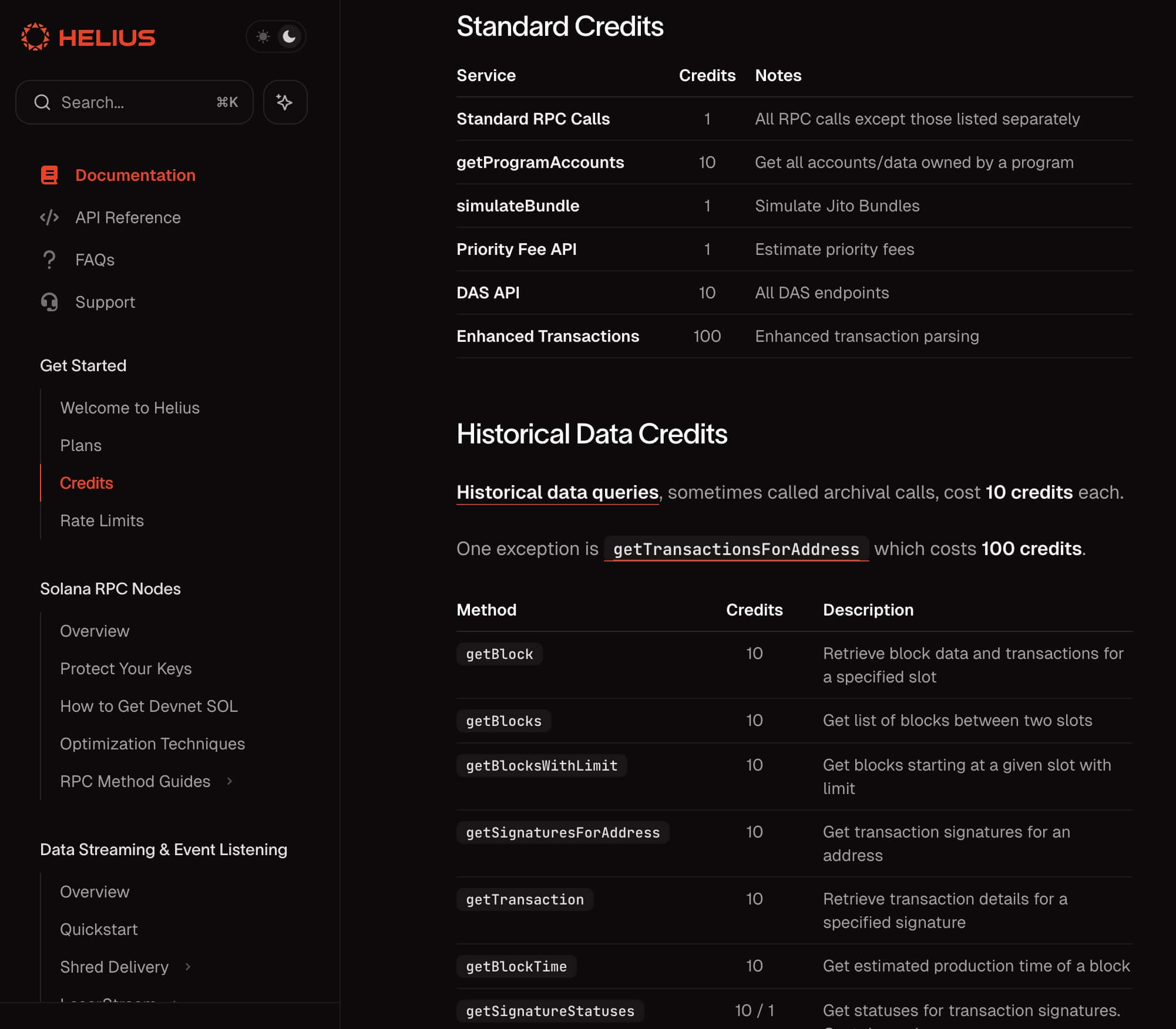
Helius uses a credit-based pricing model with additional pricing components for streaming and dedicated infrastructure.
Pricing is structured around three main components:
- Plans include monthly credits with request-per-second (RPS) caps.
- Data add-ons for LaserStream and Enhanced WebSockets are priced as fixed tiers ranging from 5 TB to 100 TB per month.
- Dedicated Solana nodes are listed as starting at around $2,900 per month.
Because RPC methods, streaming volume, and data services all consume credits or data bandwidth differently, total cost depends not only on request volume but also on streaming usage and the specific APIs used.
| Metric | Chainstack | Helius |
|---|---|---|
| Plan used in example | Pro | Business |
| Included usage | 80M Request Units | 100M API Credits |
| Example workload | 73.5M calls | 73.5M calls |
| Plan price | $199 | $499 |
| Overage | $0 | $0 |
| Total monthly cost | $199 | $499 |
In this example, both workloads fit within included usage, but the pricing models differ significantly — request-based pricing ties cost directly to request volume, while credit-based pricing depends on method mix and streaming usage.
Tip: If streaming volume is your biggest cost variable, use right‑size filters and consider fixed‑rate tiers if you’re always on.
Strengths and trade‑offs
| Strengths | Trade‑offs / watch‑outs |
|---|---|
| Staked sends by default on paid plans; less work to get good landing rates. | Single‑chain scope. Great for Solana, not for multi‑chain stacks. |
| LaserStream gives Yellowstone features without the ops burden (replay, failover, regional). | Some features are plan‑gated (e.g., LaserStream mainnet = Professional+; Enhanced WS = Business+). |
| Enhanced WebSockets (now on LaserStream infra) and Webhooks simplify real‑time work. | Streaming volume can dominate cost; use the data add‑on or tighten filters. |
DAS + Enhanced Tx + getTransactionsForAddress reduce custom indexing and parsing. | Parsers don’t cover everything; some protocols still need bespoke logic. |
| Sender routes to Jito + Helius in parallel (0 credits; tip required). | Needs fee/tip tuning; recommended params (e.g., skipPreflight) won’t suit every workflow. |
Helius vs. Chainstack
- Scope
- Helius: Solana‑only, optimized around low‑latency streaming and fast inclusion.
- Chainstack: Multi‑chain with managed Yellowstone gRPC and an Unlimited Node option for flat‑fee, RPS‑tiered scaling when you want predictable cost.
- Pricing posture
- Helius: Credit plans + data add‑on for streaming; good when you want granularity and can size your data budget.
- Chainstack: Transparent request‑based plans and flat‑fee Unlimited Node to cap spend under steady or bursty workloads.
FAQ
Create a key, point to the mainnet/devnet endpoints. On paid plans, staked connections are automatic—no endpoint swap needed.
It’s a managed, Yellowstone‑compatible gRPC with replay and multi‑region failover. Use it when you need reliable, low‑latency streams without running your own nodes.
No credits; you tip in SOL and it routes to Jito + Helius in parallel. Tune fees for your risk profile.
Streaming volume with Helius is the variable. Consider the data add‑on or tighten filters