AI-ready infrastructure
 Refer and earn


 Ethereum
 Hyperliquid
 Solana
 Arbitrum
 BNB Smart Chain
 Base
Base Polygon
 TRON
TRON Sui
Sui Robinhood


DAO tooling beyond a voting page: 5 tools to compare

A DAO needs more than a proposal page. It needs a way to decide, a way to execute decisions, a clear membership model, and defined authority for the people and systems doing the work. Voting is only the visible part of the operating model.
That is why DAO tooling should not be evaluated as a list of interchangeable governance apps. Snapshot is a voting layer. Aragon is a framework for onchain organizations and permissions. Guild and Collab.Land connect wallet-based membership to community access. Hats Protocol models programmable roles and accountability.
This guide compares five tools from the Chainstack Marketplace by the organizational job they solve. A mature DAO may use several of them at once. The goal is to give every decision, role, and access rule a clear home instead of trying to make one tool do all of it.
Map the operating model first
| Organizational job | Start by comparing… | Why |
|---|---|---|
| Gather sentiment or run flexible token-based votes | Snapshot | Snapshot supports gasless offchain voting and configurable voting strategies. |
| Create an onchain organization with permissions and execution logic | Aragon | Aragon OSx is a modular framework for organization accounts, plugins, and permissions. |
| Gate membership and reward community contributions | Guild.xyz | Guild supports token-gated access, role ranking, contribution scoring, and community integrations. |
| Verify wallets and manage token-gated community roles | Collab.Land | Collab.Land manages token-gated membership and roles in community platforms. |
| Define programmable, revocable roles and delegated authority | Hats Protocol | Hats models organizational roles as onchain, ERC-1155-based permissions objects. |
1. Snapshot
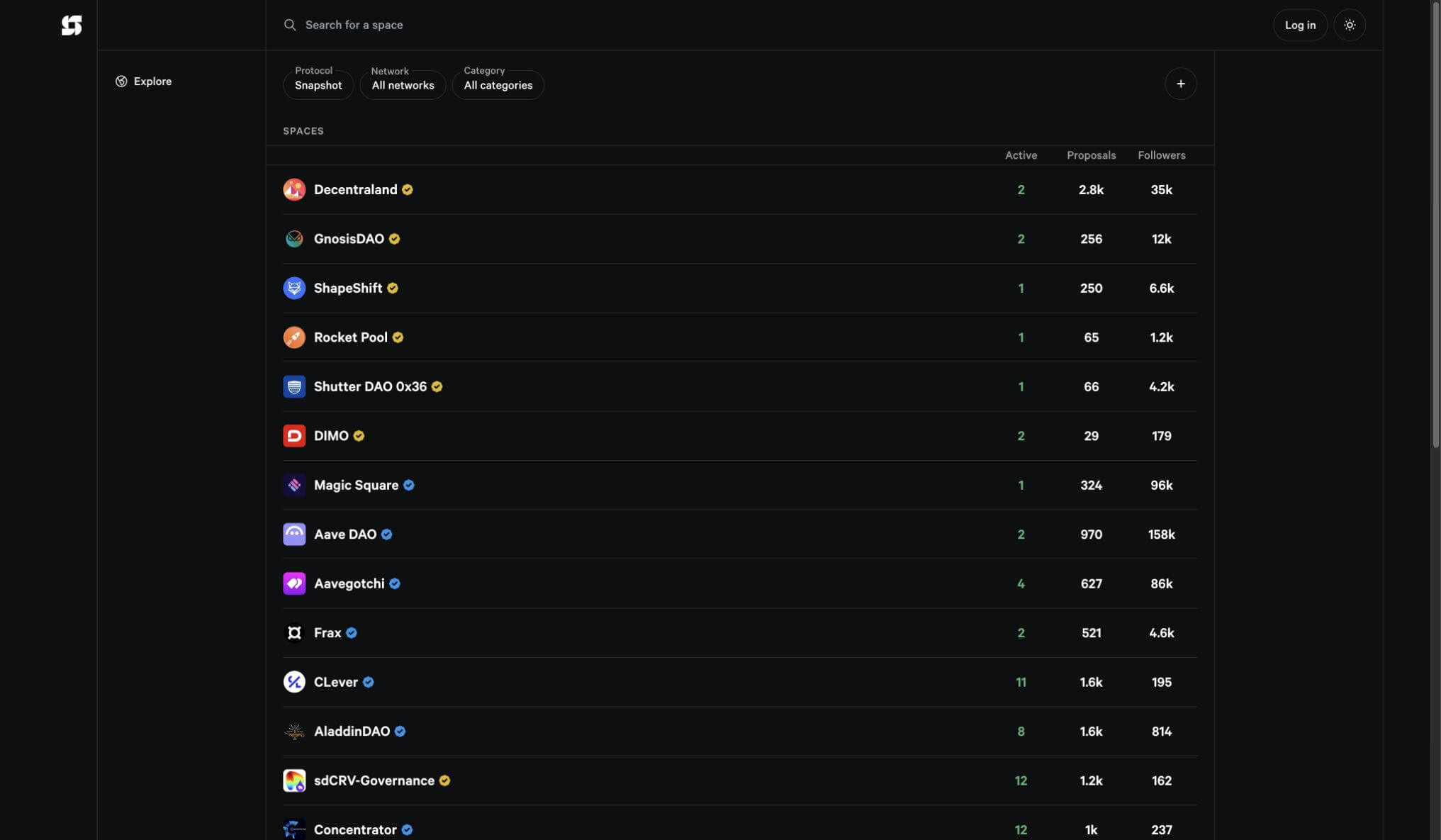
Snapshot is a governance voting platform for DAOs, DeFi protocols, and NFT communities. It supports offchain voting without gas fees, flexible voting strategies, multiple voting systems, and customizable governance spaces. Snapshot X also supports fully onchain governance on EVM and Starknet.
Snapshot is a natural fit when the DAO needs to gather a decision from members without making every vote an onchain transaction. It can be used for temperature checks, formal governance votes, delegation, and voting models based on token balances or other strategies. It also has integrations and guides for Safe-based execution flows, which is useful when the vote should eventually trigger an accountable operational action.
The crucial decision is not whether offchain voting is good or bad. It is what the vote actually authorizes. A nonbinding community signal, a recommendation to a multisig, and an onchain-executable governance proposal each need different controls and expectations.
Choose Snapshot if: you need flexible, gasless voting and want to define voting power separately from onchain execution.
Think twice if: the DAO needs every decision to execute automatically onchain. Evaluate Snapshot X or an onchain governance architecture instead.
2. Aragon
Aragon provides a modular technology stack for organizations to manage protocols, permissions, and assets onchain. Its OSx framework creates organization accounts that can hold assets, execute actions, install plugins, and define who can perform specific operations.
Aragon is appropriate when the DAO needs an organizational framework, not simply a voting front end. Its design revolves around permissions and plugins: governance, membership, execution workflows, and other capabilities can be composed into the organization rather than treated as unrelated tools.
That flexibility needs discipline. Each plugin and permission becomes part of the DAO’s security model. Use narrow roles, clear authority boundaries, and tested execution paths. The goal is to keep the organization adaptable without creating an admin system no one can audit or explain.
Choose Aragon if: you need onchain organization accounts, modular governance, permissions, and execution capabilities.
Think twice if: the DAO is still testing community interest and only needs simple signaling votes. Start with a lighter governance layer before committing to a full organizational framework.
3. Guild.xyz
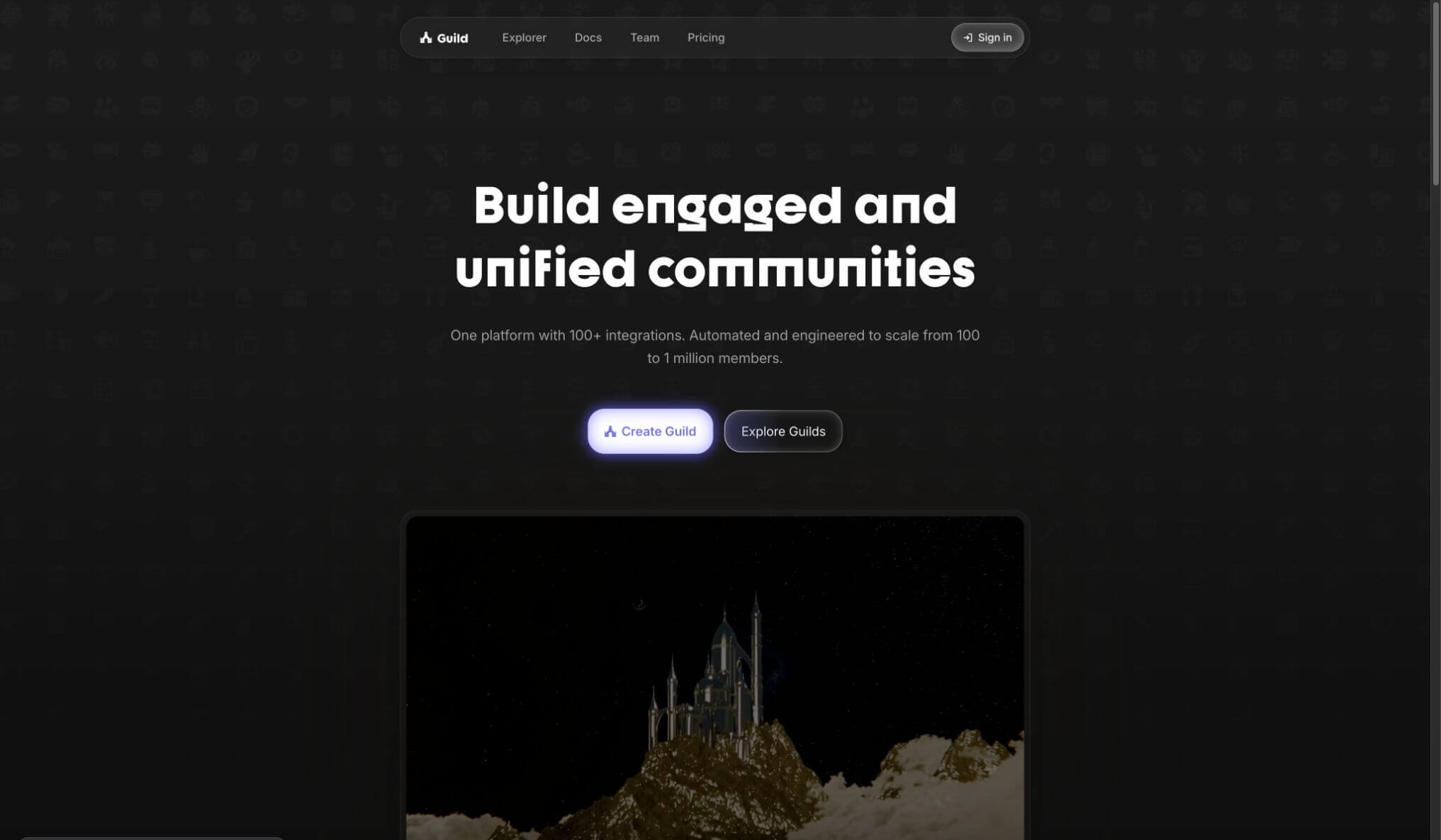
Guild.xyz helps communities organize membership and access around onchain signals. Its current product includes token gating, role ranking, contribution scoring, quests, gated forms, and automated Discord and Telegram access.
Guild is useful when membership should be more expressive than “holds token” or “does not hold token.” A DAO can use it to recognize contributors, segment communities, gate workspaces, and build paths from participation to responsibility. This makes Guild closer to community operations than core protocol governance.
The design question is whether the access rule reflects a real contribution or simply creates an arbitrary hurdle. Use onchain activity, attestations, token holdings, or contribution scores only when the rule is explainable and users can understand how to qualify.
Choose Guild.xyz if: you need token-gated membership, contributor recognition, role ranking, or automated access across community tools.
Think twice if: the only job is to verify a wallet inside a Discord or Telegram group. A narrower token-gating tool can be easier to operate.
4. Collab.Land
Collab.Land is a token-gated community management platform. It verifies wallets, applies token-gating rules, manages roles, and connects communities through platforms such as Discord and Telegram.
Collab.Land is focused on a specific operational problem: make sure members have access to the community roles they qualify for, then remove that access when the qualification changes. Its Command Center lets administrators configure token-gating rules, inspect role assignments, and run balance checks. It also supports more complex role composition through AND and OR logic.
This is not a substitute for DAO governance. It is the membership and communications layer around governance. A DAO can use Snapshot for a vote, Aragon for onchain execution, and Collab.Land to ensure only qualified members enter the relevant discussion or work channel.
Choose Collab.Land if: you need wallet verification and token-gated access management in Discord, Telegram, or other community surfaces.
Think twice if: the DAO needs a broader member journey with contribution programs, custom forms, and recognition mechanisms. Compare Guild.xyz for that larger community-operations scope.
5. Hats Protocol
Hats Protocol lets organizations create programmable onchain roles, called hats. A hat bundles responsibilities, permissions, and accountability, and is represented as an ERC-1155 token held by an address. It can be granted, revoked, and connected to systems such as multisigs, workspaces, governance, and communication channels.
Hats is powerful when a DAO wants to express its organization chart as a living permission model. A role can be held by an individual, a multisig, another contract, or an agent. The organization can use a Hats tree to make clear who may propose, approve, deploy, manage a budget, or access a specific operational surface.
The main risk is complexity. Do not model every informal interaction as an onchain role. Start with authority that has real consequences, such as spending rights, deployment controls, access to privileged channels, or grant approval. Then add more detail only where it makes the organization safer or easier to run.
Choose Hats Protocol if: you need programmable, revocable roles that connect organizational accountability to onchain and offchain permissions.
Think twice if: simple token gating is enough. Hats is most useful when the DAO needs fine-grained authority, not just membership verification.
Three operating models to consider
Community-led project
Use this when a project needs broad participation, but the founding team or a multisig still handles execution.
- Use Snapshot to gather community decisions without asking every participant to pay gas.
- Use Guild.xyz or Collab.Land to manage member access and contributor recognition.
- Publish exactly how votes inform operational decisions, including which votes are binding and who executes them.
Protocol DAO
Use this when the organization controls treasury assets, smart contracts, or parameter changes that need a formal authority model.
- Use Aragon to define the organization account, plugins, permissions, and execution model.
- Use Snapshot for offchain signaling where it is appropriate, but separate that from formal onchain authority.
- Use Hats Protocol for councils, working groups, and clearly scoped operational powers.
Contributor organization
Use this when the DAO’s main challenge is assigning responsibility and access as people join, contribute, and leave.
- Use Guild.xyz to recognize contributions and manage access rules.
- Use Collab.Land for wallet verification and token-gated community roles.
- Use Hats Protocol to grant and revoke roles that carry real responsibilities.
- Keep a readable public record of what each role can do, who can remove it, and how disputes are handled.
Questions to answer before you launch governance
Tool selection cannot solve unclear governance. Before deployment, write down:
- Which decisions are signals, which are binding, and which are operational recommendations?
- How is voting power calculated and when is it measured?
- Who can create a proposal, change a rule, or execute an approved action?
- What happens when a role holder leaves, loses access, or acts against the DAO’s interests?
- Which permissions can move assets, modify contracts, or control member access?
- How can a member verify that the dashboard, Discord role, and onchain authority agree?
How Chainstack fits into the stack
Governance and community tools sit on top of blockchain data. Chainstack provides RPC and WebSocket access for the reads, writes, and event monitoring around those tools. Use it to query voting-power inputs, read DAO contract state, submit governance transactions, monitor proposal execution, and confirm that onchain permissions reflect the operating model you published.
For example, a DAO can use Chainstack to retrieve token balances used by a custom voting strategy, watch an Aragon execution event, or verify the onchain holder of a Hats role before granting a related application permission. The governance interface should make decisions understandable, but reliable underlying chain data is what lets the organization verify that those decisions were applied correctly.