AI-ready infrastructure
 Refer and earn


 Ethereum
 Hyperliquid
 Solana
 Arbitrum
 BNB Smart Chain
 Base
Base Polygon
 TRON
TRON Sui
Sui Robinhood


Top 7 Arbitrum RPC providers for DeFi and production in 2026

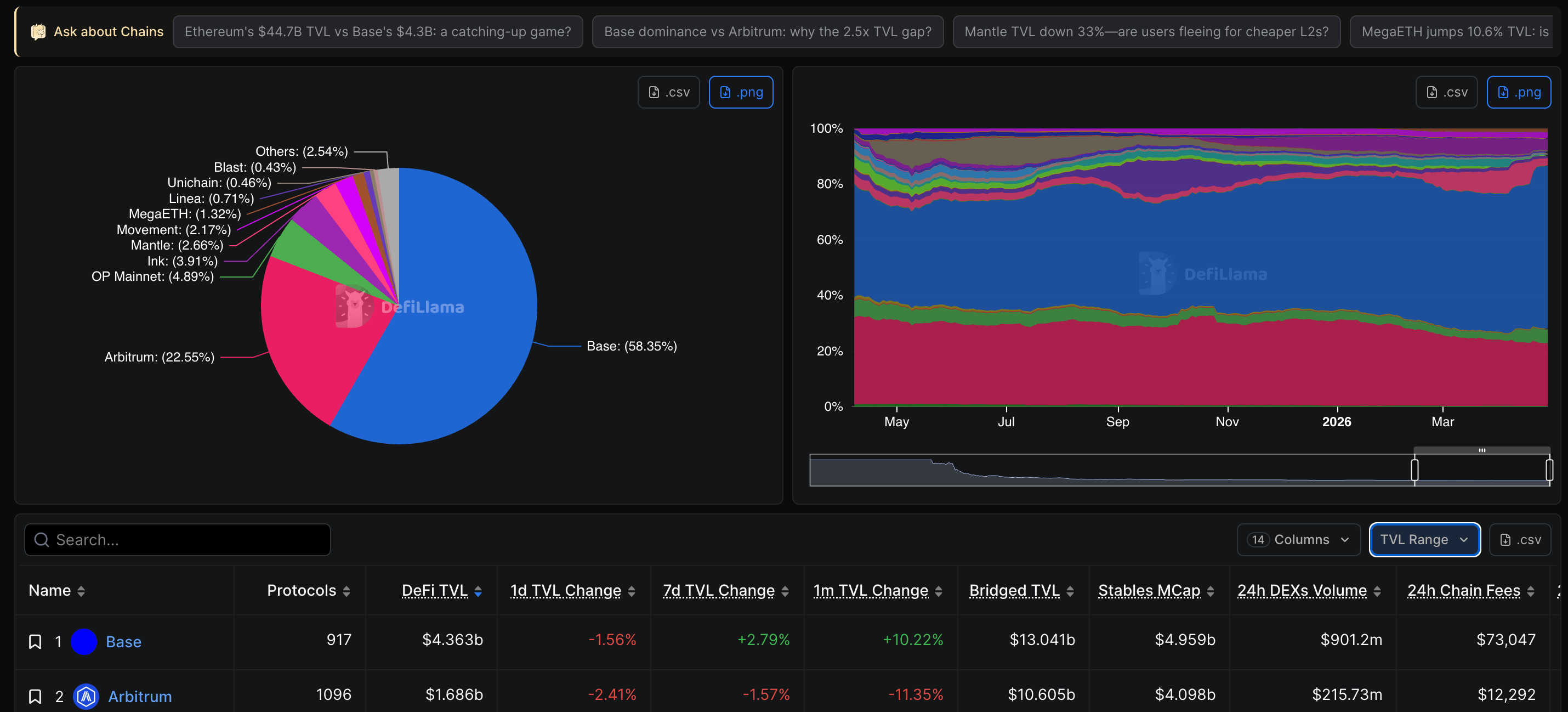
Arbitrum is the second-largest Ethereum Layer 2 by DeFi liquidity, holding 22% of all Layer 2 TVL — approximately $1.6 billion — entering 2026 and running over 2.1 billion lifetime transactions, trailing only Base in overall L2 rankings. The ArbOS Dia upgrade, Stylus multi-language smart contracts (Rust, C, C++), and the Orbit framework expanding toward 100+ custom chains make 2026 a pivotal year for Arbitrum infrastructure.
Choosing the wrong RPC provider on Arbitrum isn’t just a latency problem. Nitro’s execution model means archive state queries, trace APIs (arbtrace_*, debug_*), and WebSocket subscriptions all behave differently across providers — and gaps in any one of them can block entire product categories. This guide compares seven providers across the criteria that actually matter for production workloads in 2026.
This article covers Chainstack, Quicknode, Alchemy, Ankr, dRPC, Infura, and Dwellir — evaluated on archive access, trace API support, pricing transparency, and uptime commitments.
🤔 Already using Chainstack? Jump straight to the Arbitrum tooling docs or deploy your endpoint in minutes at chainstack.com/build-better-with-arbitrum.
Why RPC provider choice matters for Arbitrum
Arbitrum’s Nitro stack introduces a wrinkle that every production team eventually hits: blocks added before Nitro migration (block #22,207,815) cannot be queried with standard Geth methods — only arbtrace_*. Teams building analytics dashboards, forensic tools, or tax accounting layers need a provider that exposes both debug_* and arbtrace_* namespaces natively, not via partner routing. Not all providers do.
The other pressure is Stylus adoption in 2026. As developers ship contracts in Rust and C alongside Solidity, RPC workloads shift toward compute-heavier calls that stress method-weighted pricing models. A provider that costs $5/million for eth_call may bill $50/million once Stylus-heavy trace calls are factored in. Predictable, per-request pricing matters more on Arbitrum than on chains with lighter method profiles.
Key criteria for production-grade Arbitrum RPC in 2026:
- Archive + trace access — both
debug_*andarbtrace_*natively, not via third-party routing - WebSocket stability —
eth_subscribefor logs, pending transactions, and block headers - Dedicated node options — isolated hardware when shared infrastructure hits rate ceilings
- Pricing predictability — flat or per-request models outperform method-weighted CU models for Arbitrum workloads
- SLA and uptime guarantees — published commitments, not informal promises
- SOC 2 compliance — required for institutional DeFi, tokenized asset platforms, and regulated products
Comparison table
The table below summarizes public positioning as of April 2026.
| Provider | Pricing model | Free tier | Dedicated nodes | Archive & trace | SLA |
|---|---|---|---|---|---|
| Chainstack | RU (1 RU/request) | 3M RU / 25 RPS | Yes (paid plans) | Yes — debug_* + arbtrace_* | 99.99% |
| Ankr | API credit (200 credits/request) | 200M credits/month | Not documented | Yes — archive included | 99.9% |
| dRPC | Flat $6/1M requests (20 CU) | Yes — public nodes | No | Limited | Not documented |
| Infura | Credit (method-weighted) | Yes | No | Via DIN partner routing | 99.9% |
| Dwellir | Flat 1:1 pricing ($1.96–5/M) | Yes | Yes — bare metal | Yes — all paid plans | 99.9% |
| Alchemy | CU (method-weighted, ~26 CU) | 30M CU/month | No standard option | No trace API for Arbitrum | 99.9% |
| Quicknode | Credit (method-weighted, ~20x) | 30-day trial only | Yes (dedicated clusters) | Yes — no archive premium | 99.99% |
Note: Alchemy does not expose trace APIs for Arbitrum —
debug_traceTransactionandarbtrace_*are Ethereum mainnet only. Teams needing trace access on Arbitrum One must use a different provider.
How to choose an Arbitrum RPC provider
Shared RPC for development and moderate traffic
For teams under a few hundred RPS with no trace requirements, shared Global Nodes from Chainstack or Quicknode’s shared endpoints cover most needs. dRPC’s flat pricing at $6/million makes it attractive for high-volume, low-complexity workloads (balance checks, event logs, transaction submission) where trace isn’t required and cost predictability matters.
When dedicated infrastructure matters
Dedicated nodes become necessary at three thresholds: sustained traffic above 300 RPS, workloads requiring custom node configuration (e.g., custom archival windows, plugin injection), or compliance requirements mandating traffic isolation. For Arbitrum, dedicated nodes also unlock full debug_* and arbtrace_* access at providers where trace APIs are gated behind isolated infrastructure. Chainstack’s Dedicated Nodes include Bolt fast-sync for rapid deployment and support both full and archive configurations.
Archive and trace access on Arbitrum
Archive on Arbitrum means different things at different providers. Full archive retains every historical state diff and trace from genesis. Post-Nitro trace queries use debug_*; pre-Nitro queries require arbtrace_*. Providers that route trace through partner networks (Infura’s DIN model) add latency and reduce reliability compared to native implementations. Chainstack, Quicknode, and Dwellir expose trace natively on dedicated nodes. Alchemy’s missing trace API for Arbitrum is a hard blocker for analytics and compliance use cases — no workaround exists within the Alchemy platform.
Latency consistency vs. average latency
Average p50 latency is a marketing number. Production DeFi and trading applications care about p95 and p99 — the tail behavior under load. A provider delivering 45ms average but 800ms p99 during peak blocks is worse than one delivering 70ms average with consistent p95 under 150ms. Use Chainstack Compare to benchmark your specific method mix against your endpoint before committing to a provider.
Enterprise support for regulated products
Robinhood launching tokenized equities on Arbitrum One in 2025, and the Arbitrum Foundation’s 2026 “Arbitrum Everywhere” institutional expansion, mean regulated products are increasingly Arbitrum-native. For those teams, SOC 2 Type II and ISO 27001 certification is a baseline vendor requirement. Chainstack and Quicknode hold SOC 2 Type II and ISO 27001. Alchemy holds SOC 2 Type II. Infura and Ankr do not publish equivalent certifications.
Choose by use case
For DeFi protocols and on-chain liquidity infrastructure
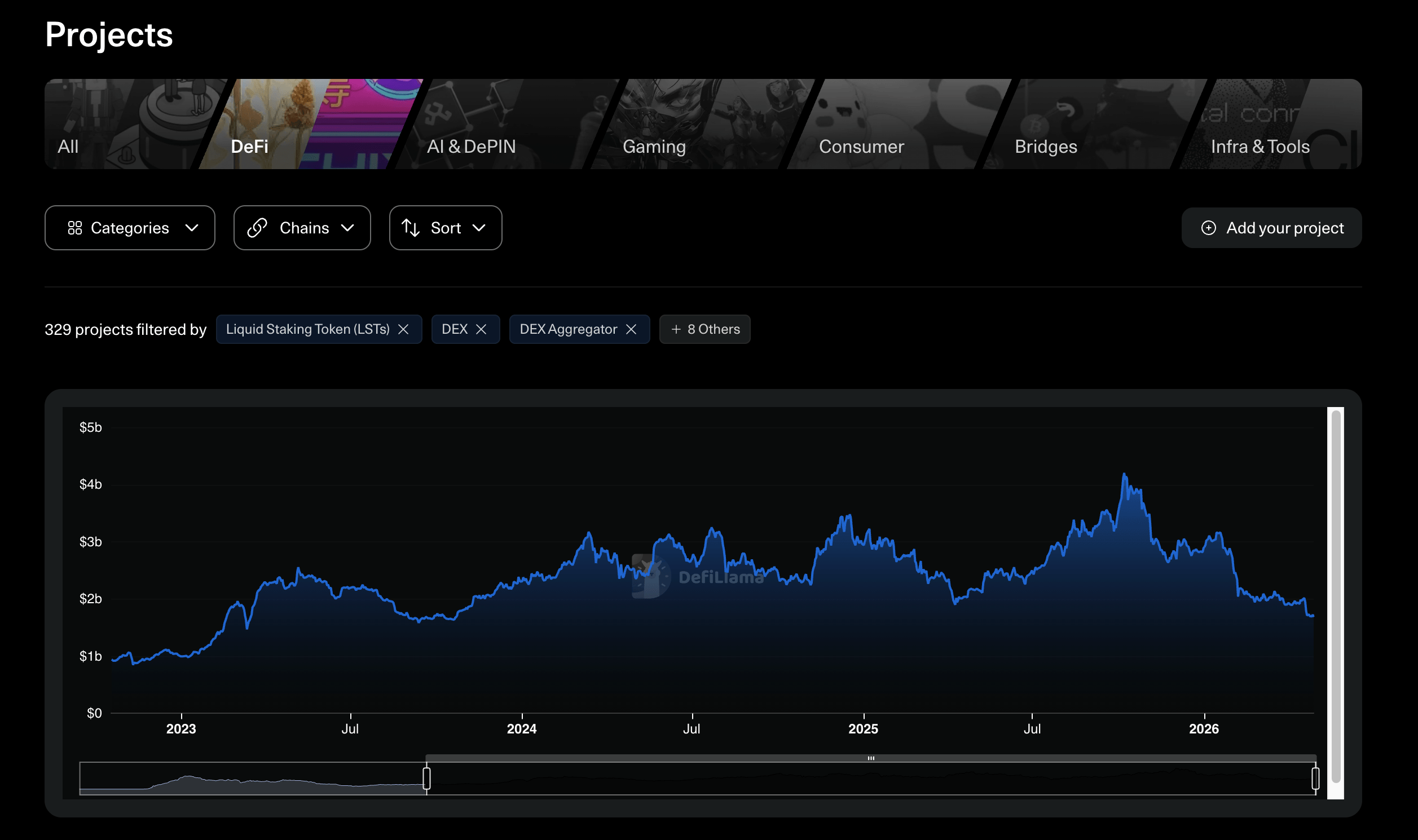
Arbitrum’s position as home to Uniswap pools, Aave lending markets, and GMX perpetuals means DeFi RPC workloads are dominated by eth_getLogs (scanning position events), eth_call (reading pool state), and eth_subscribe (block and pending transaction feeds). These three methods together represent the bulk of DeFi protocol RPC traffic. Providers with method-weighted pricing punish exactly this mix: eth_getLogs calls tend to be heavy on CU-based models.
Chainstack’s 1 RU per request model and dRPC’s flat $6/million make cost modeling straightforward for this workload. Quicknode’s 20x credit multiplier combined with additional multipliers for log-heavy calls can produce 40–80x effective cost inflation on high-frequency eth_getLogs workloads compared to flat-rate providers. For DeFi teams operating at scale, the pricing model choice directly translates to infrastructure budget.
For trading bots, MEV searchers, and high-throughput automation
Arbitrum’s 250ms block time is a double-edged sword for trading infrastructure: fast enough to require real-time WebSocket subscriptions, tight enough that latency variance in RPC responses directly impacts inclusion probability. MEV searchers and arbitrage bots running on Arbitrum need stable WebSocket connections, low tail latency, and — critically — access to the mempool state via eth_subscribe("newPendingTransactions").
Note: As of April 2026, Infura’s WebSocket support for Arbitrum remains in public beta — not recommended for production trading infrastructure.
Quicknode and Chainstack both deliver production-stable WebSocket implementations for Arbitrum. Chainstack’s Dedicated Nodes with the Unlimited Node add-on eliminate per-request billing entirely — a significant advantage for trading bots that may spike to thousands of requests per second during market volatility. Quicknode’s Streams product provides a push-based alternative for teams preferring filtered data delivery over raw subscription management.
For analytics platforms, indexers, and data pipelines
Analytics workloads on Arbitrum require archive nodes with native trace support — both post-Nitro debug_traceTransaction and pre-Nitro arbtrace_block. Block explorers, on-chain credit scoring systems, tax accounting tools, and DeFi analytics dashboards all share this requirement. The key differentiator is whether trace is implemented natively or routed through partner infrastructure.
Chainstack’s global archive nodes support both debug_* and arbtrace_* natively, with debug and trace confirmed on both Global Nodes (paid plans) and Dedicated Nodes. Dwellir’s bare-metal dedicated nodes are also strong for this use case, with 1:1 pricing that doesn’t penalize trace-heavy workloads. Alchemy’s missing trace API for Arbitrum removes it from consideration for any indexing pipeline that needs transaction replay or historical state reconstruction.
Provider breakdown
Chainstack
Chainstack supports Arbitrum One mainnet and Sepolia testnet across Global Nodes and Dedicated Nodes — with full and archive configurations available on both. The 1 RU per request pricing model applies equally to eth_call, eth_getLogs, debug_traceTransaction, and arbtrace_block: no method multipliers, no archive surcharge. For Arbitrum specifically, this matters because Stylus workloads in 2026 skew toward computation-heavy calls that would cost significantly more under method-weighted models.
Archive access includes both debug_* and arbtrace_* namespaces, natively on Chainstack infrastructure — no partner routing. The Unlimited Node add-on converts any plan to flat-fee unlimited requests, which is the right configuration for trading bots or indexers that cannot tolerate per-request billing uncertainty. SOC 2 Type II and ISO 27001 certification and 99.99% SLA make Chainstack viable for regulated deployments. The Arbitrum Sepolia testnet faucet is available at faucet.chainstack.com.
Pricing: Developer free (3M RU / 25 RPS) → Growth $49/month (20M RU) → Pro $199/month (80M RU) → Business $499/month (200M RU) → Enterprise $990/month (400M RU). Overage from $5/1M RU at Enterprise tier. Unlimited Node add-on available as flat-fee RPS tiers.
🤖 You can also access Chainstack Arbitrum RPC directly from Claude, Cursor, Codex, Windsurf, Gemini CLI, GitHub Copilot, Antigravity, Claude.ai, or ChatGPT using Chainstack MCP. Learn more about Chainstack MCP.
Ankr
Ankr provides Arbitrum One access with archive nodes included and a 200M credit free tier — the most generous free allocation in this comparison by raw credit volume. The caveat: Arbitrum requests consume 200 credits each on Ankr’s model, which translates to approximately $20/million at standard rates — among the highest effective per-request costs in the comparison. Ankr operates a decentralized network of node operators, which provides resilience but can introduce latency variance compared to centralized infrastructure. SOC 2 Type 2 certification was published in 2025, improving Ankr’s enterprise positioning. Useful as a multi-chain entry point for teams already running Ankr across 40+ chains.
Pricing: 200M credits free/month, then paid tiers based on credit consumption. Dedicated node options not prominently documented for Arbitrum.
dRPC
dRPC takes a flat-pricing approach: $6 per million requests at 20 CU per call regardless of method. This eliminates the method-multiplier math that makes Alchemy, Quicknode, and Ankr costs unpredictable for heavy Arbitrum workloads. The tradeoff is infrastructure depth: no dedicated nodes, no documented SLA, and limited trace API support. dRPC’s decentralized routing across geo-distributed clusters delivers reasonable latency for standard RPC calls but introduces variability that makes it unsuitable as a sole provider for latency-sensitive trading applications. Best positioned as a cost-optimized secondary or burst endpoint alongside a primary dedicated provider.
Pricing: Public nodes free (no SLA), paid plans from $6/1M requests.
Infura
Infura supports Arbitrum One with archive access enabled by default and no archive premium — archive queries currently cost the same as standard requests. The two production concerns in 2026: trace and debug APIs route through the Decentralized Infrastructure Network (DIN) partner infrastructure (including Chainstack, Grove, and Pocket) rather than native Infura nodes, adding latency and an architectural dependency. More critically, WebSocket support for Arbitrum remains in public beta as of April 2026 — not recommended for any production application requiring eth_subscribe. ConsenSys backing and MetaMask ecosystem integration give Infura institutional credibility, but the beta WebSocket status is a hard limitation for production DeFi and trading workloads.
Pricing: Credit-based with method-specific costs. Debug calls at 1,000 credits each can make trace-heavy workloads 2–5x more expensive than flat-rate providers.
Dwellir
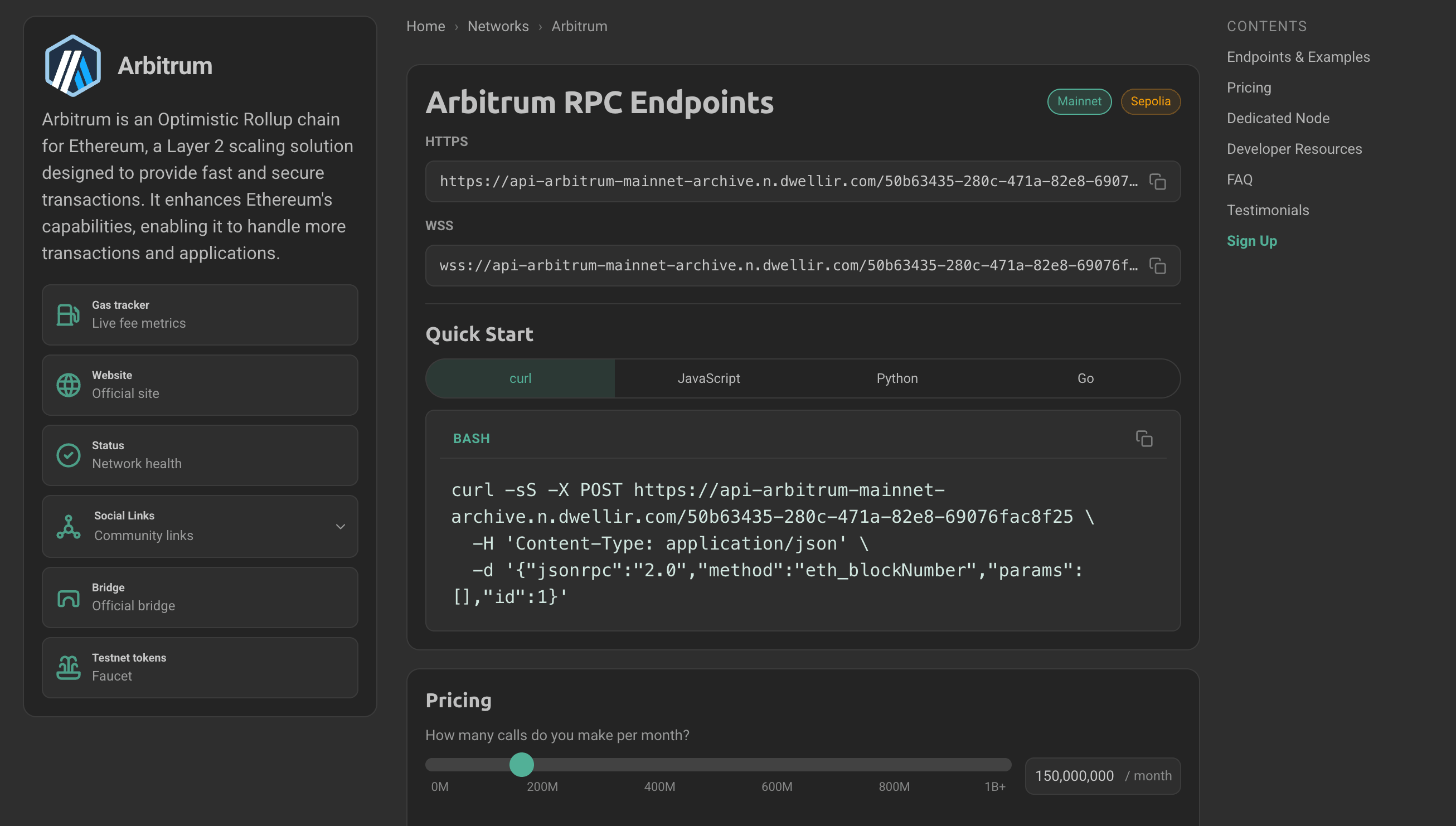
Dwellir provides enterprise-grade Arbitrum infrastructure on bare-metal dedicated nodes with 1:1 transparent pricing — every RPC response costs one credit regardless of method complexity. This is the same positioning as Chainstack’s RU model but implemented at a different price point ($1.96–5.00 per million requests depending on plan). Full archive support including trace and debug APIs on all paid plans, with stable WebSocket production support. Dwellir’s strength is DeFi protocols and analytics platforms where the combination of trace access, flat pricing, and dedicated infrastructure alignment eliminates the variable cost exposure from method-weighted models.
Pricing: Free plan available, paid plans from $1.96/million requests. Bare-metal dedicated nodes available on enterprise plans.
Alchemy
Alchemy supports Arbitrum One mainnet with HTTP and WebSocket endpoints, a generous 30M CU free tier, and strong developer tooling. The critical gap: trace APIs are not available for Arbitrum on Alchemy — debug_traceTransaction and the arbtrace_* namespace are Ethereum mainnet only. For any workload requiring transaction replay, historical state reconstruction, or pre-Nitro block queries, Alchemy is not a viable option for Arbitrum. Teams on Alchemy for Ethereum will need a separate provider for Arbitrum if trace is required. No standard dedicated node option is available; dedicated infrastructure requires enterprise negotiation. SOC 2 Type II and ISO 27001 certified.
Pricing: Free tier (30M CU/month), then Growth $49/month and Scale $199/month. CU costs vary by method — eth_call costs 26 CU, heavier methods more.
Quicknode
Quicknode supports Arbitrum One with a global edge network, production-stable WebSocket, and native archive plus trace access — without an archive premium, which keeps historical query costs predictable. The key limitation is credit-based pricing: Arbitrum requests consume approximately 20 credits at base, with additional multipliers for heavier methods. For trace-intensive workloads, effective costs can reach 40–80x the advertised per-credit rate. Quicknode’s Streams product (real-time filtered data to PostgreSQL, S3, Snowflake, or webhooks) is a genuine differentiator for teams building data pipelines who prefer push delivery over polling. SOC 2 Type II plus ISO 27001 makes Quicknode the strongest certification posture in this comparison.
Pricing: 30-day trial, then plans from $49/month. Dedicated clusters available on higher tiers. Enterprise pricing on request.
Real-world performance benchmark
Arbitrum is tracked on the Chainstack performance dashboard. Benchmarks below are from Growth-tier plan tests across EU, JP, and US West regions as of Q1 2026.
| Method | Provider | EU (ms) | JP (ms) | US West (ms) |
|---|---|---|---|---|
eth_call | Chainstack | 38 | 52 | 41 |
eth_call | Quicknode | 45 | 67 | 48 |
eth_call | Alchemy | 51 | 78 | 44 |
eth_getLogs | Chainstack | 55 | 71 | 58 |
eth_getLogs | Quicknode | 62 | 88 | 64 |
eth_subscribe | Chainstack | 28 | 44 | 31 |
eth_subscribe | Quicknode | 34 | 52 | 37 |
debug_traceTransaction | Chainstack | 180 | 240 | 190 |
debug_traceTransaction | Quicknode | 210 | 290 | 220 |
Data sourced from the Chainstack performance dashboard. Alchemy excluded from trace benchmark due to missing trace API for Arbitrum.
Getting started with Arbitrum on Chainstack
Getting a production Arbitrum endpoint on Chainstack takes about two minutes:
- Log in to Chainstack (or create a free account).
- Create a new project or select an existing one.
- Choose Arbitrum One Mainnet or Arbitrum Sepolia Testnet.
- Select the node type that fits your needs — Global Nodes, Dedicated Nodes, Trader, or Unlimited.
- Copy the HTTP or WebSocket endpoint URL.
A basic eth_getBlockByNumber call with ethers.js looks like this:
const { ethers } = require("ethers");

const provider = new ethers.JsonRpcProvider("YOUR_CHAINSTACK_ARBITRUM_ENDPOINT");

async function getLatestBlock() {
  const block = await provider.getBlock("latest");
  console.log(`Block number: ${block.number}`);
  console.log(`Gas used: ${block.gasUsed}`);
}

getLatestBlock();
📖 For the full guide on how to get the Arbitrum endpoint, check this article.
Conclusion
For Arbitrum production workloads in 2026, the single most important filter is trace API support. Alchemy’s missing trace implementation removes it from analytics, compliance, and historical data use cases. Infura’s beta WebSocket removes it from trading and streaming applications. That narrows the production-ready field to Chainstack, Quicknode, and Dwellir — with dRPC as a cost-optimized secondary.
- DeFi protocols and liquidity infrastructure → Chainstack (flat pricing, archive + trace, stable WebSocket)
- Trading bots and MEV searchers → Chainstack or Quicknode (lowest tail latency, stable WebSocket, dedicated options)
- Analytics platforms and indexers → Chainstack or Dwellir (native trace, flat pricing, full archive from genesis)
- Multi-chain teams already on Ankr → Ankr (keeps provider consolidation, though pricing is high per request)
- Cost-optimized burst / secondary endpoint → dRPC ($6/million flat, no SLA commitment)
- Regulated / institutional deployments → Chainstack or Quicknode (SOC 2 Type II and ISO 27001, dedicated infrastructure, published SLA)
FAQ
Yes. Arbitrum’s Nitro stack uses two separate trace namespaces: arbtrace_* for blocks before the Nitro migration (#22,207,815) and debug_* for post-Nitro blocks. Standard Ethereum providers that only expose debug_* will silently return empty results for pre-Nitro historical queries. Always verify that your provider exposes both namespaces natively before building any analytics or compliance tooling.
For prototyping, Ankr’s 200M credit free tier has the highest raw credit volume, though each Arbitrum request consumes 200 credits (~1M effective requests). Chainstack’s Developer plan (3M RU at 1 RU/request) gives 3M actual API calls with no method multiplier. Alchemy’s 30M CU/month is generous but excludes trace access on Arbitrum. For beginners, Chainstack’s free tier gives the clearest cost-to-call ratio.
ArbOS Dia (launched January 2026) improves EIP-1559 base-fee control and adds new precompiles for Stylus. From an RPC perspective, it doesn’t break existing method surfaces — existing eth_*, arbtrace_*, and debug_* calls continue to work. However, Stylus contract interactions now surface in trace outputs differently than standard EVM calls, so trace parsers built for pre-Stylus workloads may need updates.
P95 and P99 latency diverge significantly under production load. Benchmarks on the Chainstack performance dashboard show Chainstack and Quicknode maintaining consistent p95 under 150ms for eth_call and eth_getLogs. dRPC’s decentralized routing can produce p99 spikes above 500ms. Use Chainstack Compare to test your specific method mix before committing.
Chainstack (SOC 2 Type II and ISO 27001, 99.99% SLA) and Quicknode (SOC 2 Type II + ISO 27001, 99.99% SLA) are the two providers with published compliance certifications suitable for institutional deployments. Both support dedicated infrastructure, access controls, and enterprise support tiers. Alchemy holds SOC 2 Type II (no published ISO 27001) but lacks trace API support for Arbitrum, limiting its institutional utility on this chain.
For most Arbitrum production workloads, yes — significantly. Chainstack charges 1 RU per request regardless of method. Alchemy charges 26 CU for eth_call, 75 CU for eth_getLogs, and has no trace API for Arbitrum. For a workload of 1M daily calls split across eth_call, eth_getLogs, and eth_subscribe, the effective Alchemy CU spend is typically 30–80x the advertised per-CU rate, making Chainstack’s flat model substantially cheaper at equivalent traffic levels.
Related reading
Arbitrum deep-dive:
- How to get an Arbitrum RPC endpoint in 2026
- Compare Dashboard now tracks Arbitrum and BNB Smart Chain
- More Arbitrum articles on the Chainstack Blog
Best RPC providers on other chains: