AI-ready infrastructure
 Refer and earn


 Ethereum
 Hyperliquid
 Solana
 Arbitrum
 BNB Smart Chain
 Base
 Polygon
 TRON
 Sui
 Robinhood


Best Zcash RPC providers for wallets, exchanges and indexers in 2026: pricing, rate limits and docs compared

Zcash is a privacy-focused proof-of-work UTXO chain with optional shielded transactions, and Chainstack added Zcash Mainnet and Testnet to Global Nodes on October 19, 2026. The old zcashd node reached its end-of-support halt on July 18, 2026, so Zebra (or Zakura) is the supported node software.
The next change could land within weeks. The Zcash explorer shows block 3,525,519 at 12:17 UTC on October 21, 2026, and as of that date an open pull request in the ZIPs repository proposes block 3,543,405 as the Mainnet activation of NU7, which cuts the block time from 75 to 25 seconds (draft ZIP 259). That is about 16 days at 75 seconds per block if it merges as written. The September notes of Zebra 6.4.0, a release since withdrawn for a security fix, put the end-of-support height around November 2 for a tentative November 5 activation, and Zebra 6.4.2 is the current stable release. Polling intervals, confirmation counts and block-range parameters all change with a block time that is a third as long.
This comparison covers five of the providers we reviewed that document Zcash support (smaller providers such as node101, Spectrum Nodes and Crypto APIs also list Zcash and were left out), with the cost of one representative call, free tiers, rate limits and the gaps in each provider’s docs.
💡 Already using Chainstack? Jump straight to the Zcash tooling docs or deploy your endpoint in minutes.
TL;DR
- Best overall for the lowest cost per 1M calls inside the plan allowance: Chainstack, $2.45 per 1M
getrawtransactioncalls on Growth, among the dollar plans (1 RU for every call). - Best free tier in calls: Chainstack, 3M requests a month and no card, against 50,000 lifetime calls on Tatum.
- Best for high shared-plan RPS: GetBlock, 800 RPS on Pro, against 600 on Chainstack Business (Enterprise is unlimited by contract).
- Best for enterprise: Chainstack, SOC 2 Type II, ISO 27001 and Dedicated Nodes from Pro.
Why RPC provider choice matters for Zcash
A Zcash node sees only part of the chain. Transparent addresses (t1, t3) behave like Bitcoin addresses and a node can index their balances, history and unspent outputs, but shielded balances are encrypted to the holder’s viewing key and only a wallet that scans the chain can read them. What a provider serves is therefore blocks and transactions, the transparent address index, the note commitment tree state that wallets need to sync across the Sapling, Orchard and Ironwood pools, and transaction broadcast. Ironwood is the fourth shielded pool, activated with NU6.3 at block 3,428,143 on July 28, 2026.
Zebra has no wallet, so z_sendmany, z_getbalance and listunspent from zcashd do not exist, and clients ported from Bitcoin Core or zcashd have to check every method against Zebra’s RPC reference instead of assuming parity. Seven criteria separate production endpoints from test ones:
- Cost predictability and pricing model. Flat request units (Chainstack: 1 RU for every Zcash request, no archive split, no per-method weights) against compute units and credits where each call is a multiple of one.
- History and the address index. Transparent history from block 1, whether
getaddressbalance,getaddresstxidsandgetaddressutxosexist, and whether a Blockbook API sits beside the node. - Node client and method coverage. Zebra’s method set, the shielded pool methods, and which wallet and mining methods are refused.
- Throughput stability and support. RPS ceilings per plan and response times by tier.
- Free-tier reality. A standing plan, a lifetime allowance or a one-month trial, card or no card.
- WebSocket, dedicated nodes, SLA and compliance. Zebra serves HTTP JSON-RPC only, so push data means a Blockbook WebSocket or polling, and audit reports separate providers.
- NU7 readiness. Which providers publish a date for the Mainnet upgrade, and how they handle the end-of-support halt that Zebra enforces.
Quick comparison: pricing, free tier and rate limits
The tables below summarize public positioning as of October 2026; prices come from each provider’s official pricing page, checked October 21, 2026.
| Rank | Provider | Best for | Entry price | Free tier | Rate limits | Official pricing / docs |
|---|---|---|---|---|---|---|
| 1 | Chainstack | The lowest cost per 1M calls inside the plan allowance | Growth $49/month ($40 annual), 20M RU | Developer: $0, 3M RU, 25 RPS, no card | 25 RPS Developer, 250 Growth, 400 Pro, 600 Business | pricing, docs |
| 2 | NOWNodes | A 3-minute support response on every plan | Pro €20/month, 1M requests (euros, not converted) | Start: 100,000 requests, 15 RPS, 1 month | 15 RPS Start; none predefined on paid plans | pricing, docs |
| 3 | GetBlock | High shared-plan RPS, 800 on the Pro plan | Starter $49/month ($39 annual), 90M CU | Free: 50,000 CU/day, 20 RPS | 20 RPS Free, 250 Starter, 300 Growth, 450 Advanced, 600 Scale, 800 Pro and Premium | pricing, docs |
| 4 | Tatum | Guaranteed-RPS dedicated API keys | Starter $49/month ($29.08 on a yearly plan), 4M credits | 100K lifetime credits, 3 RPS | 3 RPS Free, 200 RPS Starter, Pro and Scale per its Plans & Limits docs | pricing, docs |
| 5 | Quicknode | Streams-based data delivery listed on its Zcash page | Build $49/month ($34 annual), 80M credits | 1-month trial: 10M credits, 15 RPS, no card | 15 RPS trial, 50 Build, 125 Accelerate, 250 Scale, 500 Business | pricing, docs |
| Provider | Pricing model | Supported blockchains | Dedicated nodes | Zcash client and API | WebSocket and Blockbook |
|---|---|---|---|---|---|
| Chainstack | Request units, 1 RU per request, no archive split | 70+ by its own count; Zcash Mainnet and Testnet | Yes, from Pro; Mainnet Zebra node $562.10/month list | Zebra; address index and shielded pool state methods | No WebSocket; no Blockbook found |
| NOWNodes | Flat requests in euros, no per-method weights found | 120+ by its own count; Zcash Mainnet on its page | Listed on its Zcash page, no price found | Client not named; Bitcoin-style methods, no z_* or address index methods found | WebSocket and Blockbook REST |
| GetBlock | Compute units, 10 CU per Zcash call | 130+ by its own count; Zcash Mainnet in its docs | Full-node dedicated from $1,000/month; its configurator lists zcashd only | Zebra per its docs; address index and shielded pool state methods | Blockbook REST and Blockbook WebSocket |
| Tatum | Credits, 2 per standard RPC call | 130+ by its own count; Zcash Mainnet and Testnet | Dedicated API keys from $99/month; no node price found | Zebrad gateway URL listed in its docs, client behind the standard URL not stated; Bitcoin-style method list, no z_* or Zebra address index methods found | Not documented |
| Quicknode | Credits, no Zcash weight published | 130+ networks by its own count; Zcash Mainnet and Testnet | Enterprise plan, no price found | Client not named; address index and shielded pool state methods | Blockbook listed on its chain page; no WebSocket |
⚡ No Chainstack benchmark covers Zcash yet, so these tables have no latency column. Benchmark each endpoint from your region before you commit (curl timing, k6).
Note: We found no Zcash support in Alchemy’s docs or chain list (checked October 21, 2026), so it has no section here. Teams on multi-chain Alchemy stacks will need a separate provider for this network.
How to choose a Zcash RPC provider
- Pricing model: flat or weighted. An exchange or indexer repeats
getrawtransactionand address lookups millions of times a month, and a weighted plan turns each into 2, 10 or an unpublished number of units. The pricing explainer below holds the formula and the cost per 1M calls, and the cost calculator models your own mix. - History, address index and Blockbook. Zcash has no archive class on Chainstack: Global Nodes run in Full mode, serve transparent history from block 1 and bill every request at 1 RU. Chainstack, GetBlock and Quicknode document it, NOWNodes and Tatum do not, and NOWNodes, GetBlock and Quicknode add a Blockbook API.
- Free-tier reality. Chainstack’s Developer plan is free (3M RU a month, no card). GetBlock renews 50,000 CU a day, NOWNodes and Quicknode give a one-month allowance, and Tatum gives 100K credits for the life of the account.
- When dedicated infrastructure matters. Sustained high RPS on one chain, isolated compliance requirements, or a node that must also run lightwalletd for light wallets. Dedicated Nodes start at the Pro plan.
- Zcash data access. Decide whether you need shielded wallet sync (
z_gettreestate,z_getsubtreesbyindex), transparent address data, or only block and transaction reads, and check each provider’s method list for the ones you call. - Support quality by tier. Chainstack lists Standard support on every paid plan (under 24 hours, 24×5), Professional under 6 hours and Premium under 1 hour, both 24×7. NOWNodes lists a 3-minute response time on every plan, GetBlock 24/7 under 5 minutes on Pro, and Quicknode 24, 12 and 8 hour support SLAs on Build, Accelerate and Scale.
- Latency consistency: the p95 and p99 argument. A deposit that lands in a slow tail confirms late, so time
getblockcountand one heavier call such asgetrawtransactionfrom your own region and compare p95 and p99.
Choose by use case
For wallets and shielded wallet sync
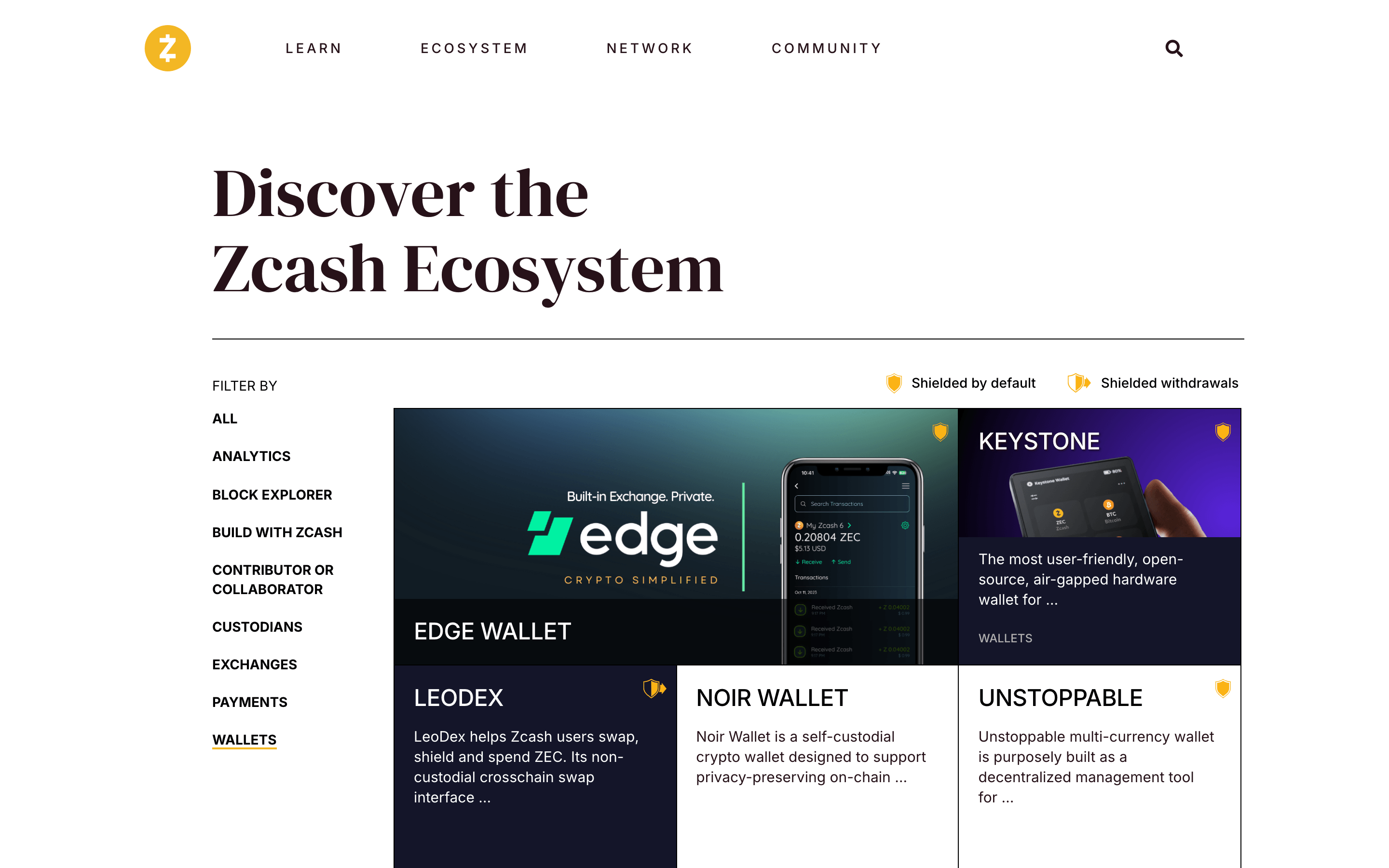
A Zcash wallet builds and signs transactions locally, scans the chain for notes with a viewing key, and asks the node for the tree state it needs to sync, so the endpoint has to serve z_gettreestate and z_getsubtreesbyindex for the Sapling, Orchard and Ironwood pools plus sendrawtransaction for broadcast. Edge Wallet and Keystone are among the wallets z.cash lists, and light wallet clients talk to lightwalletd, which Chainstack’s docs say can run beside Zebra on Dedicated Nodes.
Chainstack and GetBlock document all four shielded pool methods, Quicknode documents z_gettreestate, z_getsubtreesbyindex and z_validateaddress, and we found no z_* method in the Zcash docs of NOWNodes or Tatum.
For exchanges, custodians and payment processors
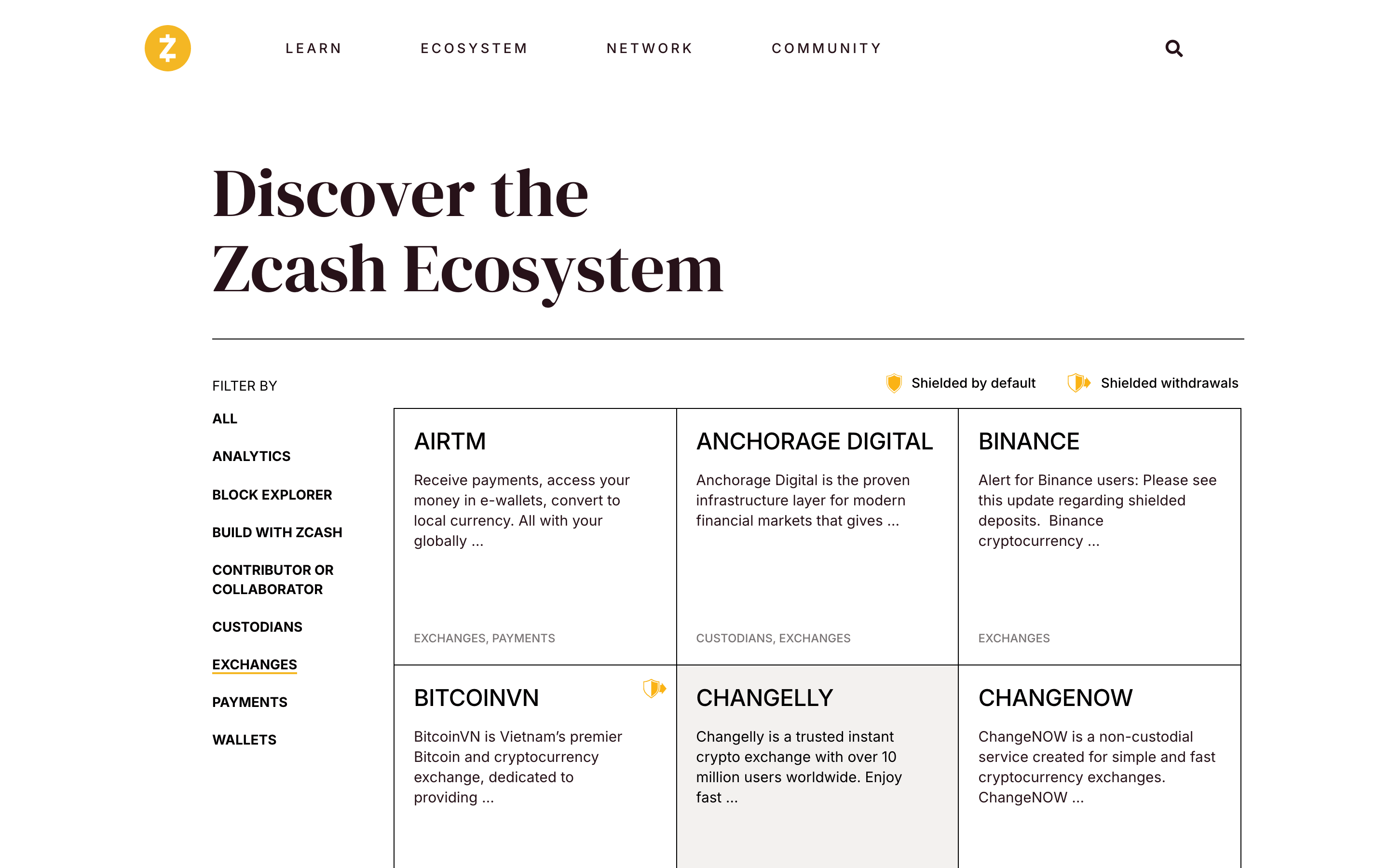
Deposit and withdrawal flows on Zcash run on transparent addresses: getaddressutxos and getaddresstxids find deposits, getrawtransaction confirms them, and sendrawtransaction broadcasts withdrawals signed elsewhere, because Zebra holds no keys. Teams migrating from zcashd also lose its built-in wallet and have to rebuild that part with a wallet library or Zallet. A confirmation count covers one third of the time once blocks are 25 seconds, so the thresholds need review before NU7.
Chainstack covers the address index on Global Nodes with 250 RPS from Growth and a contractual 99.9% quarterly SLA through the Enterprise SLA page, NOWNodes and GetBlock add Blockbook address, UTXO and balance-history queries, and GetBlock lists subscribeNewBlock and subscribeAddresses on its Blockbook WebSocket.
For indexers, analytics and compliance
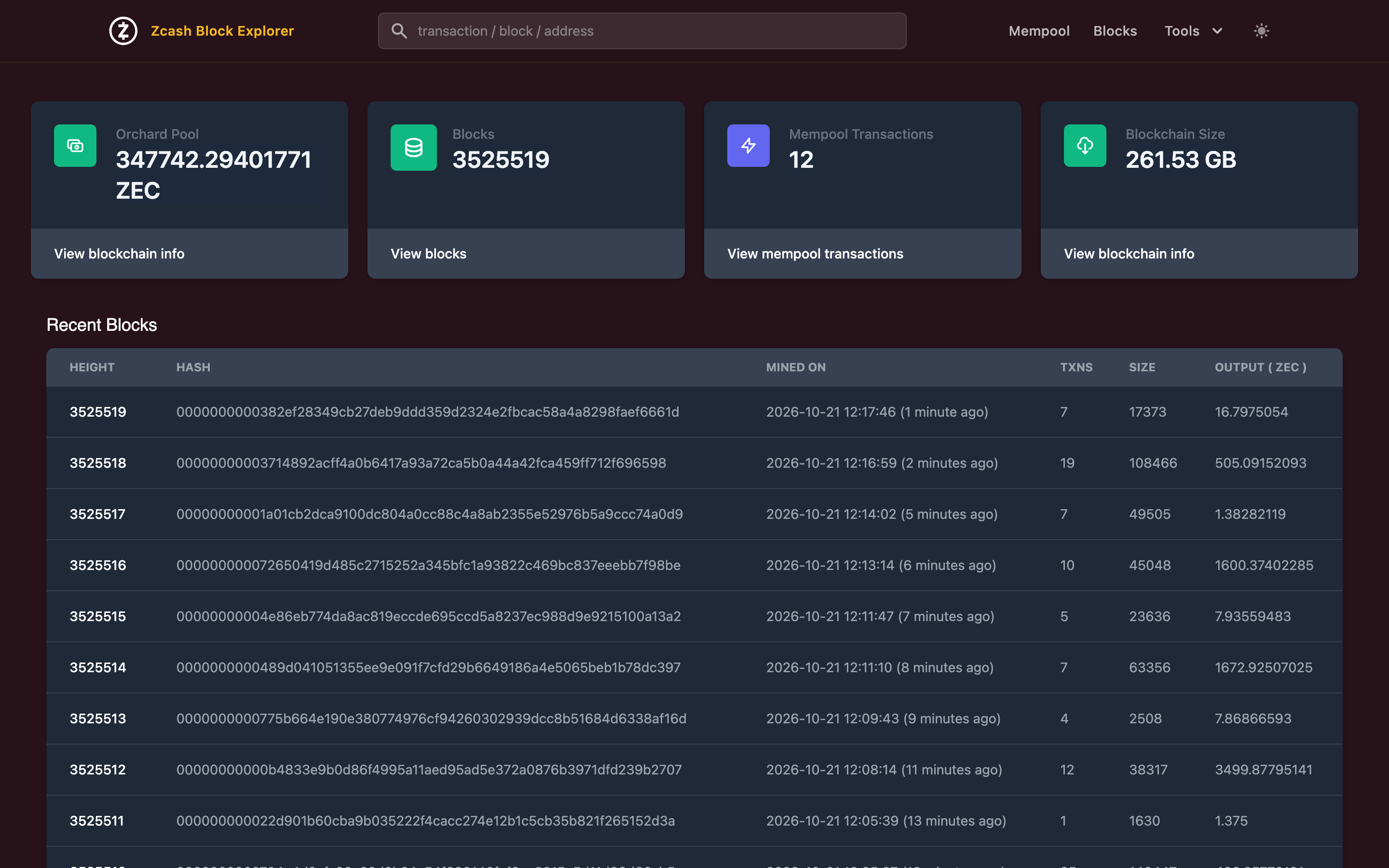
An indexer replays one block every 75 seconds, about 420,000 blocks a year, reading getblock and getrawtransaction and recording the pool balances that getblockchaininfo reports in valuePools. Shielded transactions expose only pool value balances, so analytics covers the transparent side and the pool totals. On Chainstack every call is 1 RU with no archive multiplier, the Unlimited Node add-on replaces per-request billing with a flat fee per RPS tier from Growth, and Dedicated Nodes for Zcash start at Pro with a Mainnet Zebra list price of $562.10 a month, and Chainstack Enterprise adds custom throughput. Chainstack holds SOC 2 Type II and ISO 27001 certifications, and the contractual 99.9% quarterly SLA with credits is on the Enterprise SLA page.
Among the others, GetBlock lists a SOC 2 Type II attestation and a full-node dedicated Zcash node from $1,000 a month, Quicknode lists SOC 1 Type 2, SOC 2 Type 2 and ISO 27001 reports on request under Enterprise, and Tatum’s homepage shows SOC and ISO 27001 badges without a report we could open. We found no published SOC 2 Type II or ISO 27001 for NOWNodes.
1. Chainstack: best for the lowest cost per 1M calls inside the plan allowance
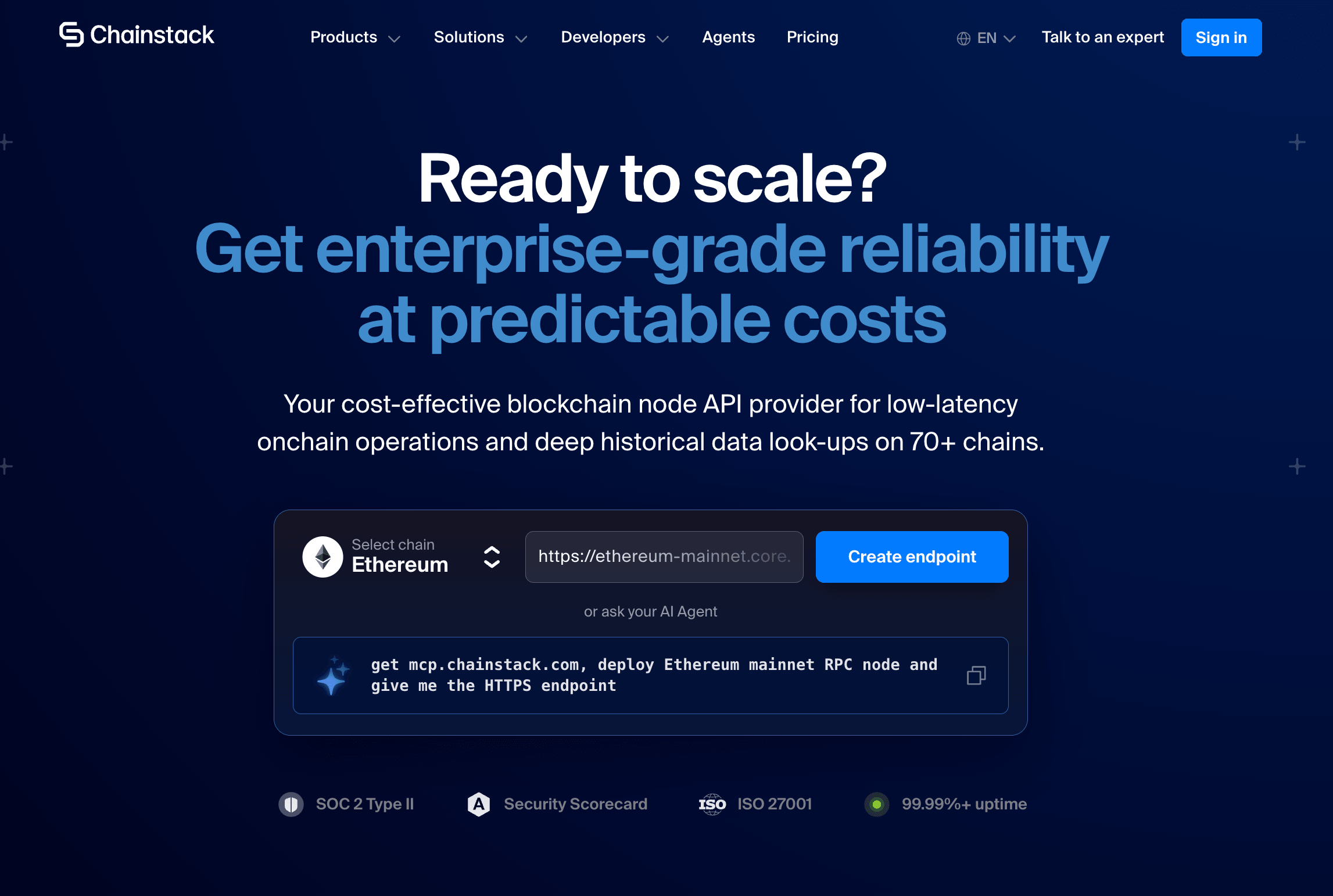
Chainstack serves Zcash RPC on Mainnet and Testnet through Global Nodes running Zebra in Full mode, with transparent history from the first block. Every Zcash request is 1 RU, with no archive split and no per-method weights, so a getrawtransaction call costs $2.45 per 1M inside the Growth allowance.
Pricing
Developer is free with 3M RU a month. Growth is $49 a month ($40 billed annually) for 20M RU, Pro $199 for 80M RU, Business $499 for 200M RU, and Enterprise starts at $990. Extra usage on Growth is $15 per 1M RU while extra usage is enabled, and Pay As You Go starts from $2.5 per 1M RU, arranged with sales. The Unlimited Node add-on, from Growth, charges a flat fee per RPS tier instead, with tiers from 25 RPS, and its docs say it can turn any existing Chainstack RPC node into a flat-fee node. See the Chainstack pricing page, checked October 21, 2026.
Supported chains and methods
Chainstack’s Zcash tooling docs list the Zebra methods served on Mainnet and Testnet: getblockchaininfo, getblock and getrawtransaction for chain data, the address index (getaddressbalance, getaddresstxids, getaddressutxos) for transparent addresses, and the shielded pool methods z_gettreestate, z_getsubtreesbyindex, z_validateaddress and z_listunifiedreceivers. Mining methods (getblocktemplate, submitblock) and node control methods (stop, addnode, generate) return HTTP 403 with error code -32601, and zcashd wallet methods do not exist. Endpoints are HTTPS only, with no WebSocket and no subscriptions, so you poll getbestblockhash or getblockcount. Dedicated Nodes can also run lightwalletd for light wallet clients.
Rate limits and latency
Plans allow 25 RPS on Developer, 250 on Growth, 400 on Pro and 600 on Business, with unlimited on Enterprise. We found no Zcash-specific per-method RPS limit on its throughput guidelines page. Zcash Testnet already produces a block about every 25 seconds, the NU7 block time, while Mainnet produces one about every 75 seconds.
Free tier
Developer is free: 3M RU a month, 25 RPS, no card required, which is 3M getrawtransaction calls at 1 RU each. Extra usage on Developer is optional, otherwise services stop at the quota.
Limitations
Past the allowance, Growth’s $15 per 1M RU is above GetBlock Pro at $4.00 and Quicknode Build at $6.20 by the table below, so the low price holds for volume that fits the plan. Endpoints have no WebSocket and no lightwalletd on Global Nodes, and we found no Blockbook API in Chainstack’s Zcash docs. Chainstack’s docs do not say when Mainnet nodes move to an NU7-capable Zebra, and a Zcash Dedicated Node needs the $199 Pro plan on top of its $562.10 monthly list price.
2. NOWNodes: best for a 3-minute support response on every plan
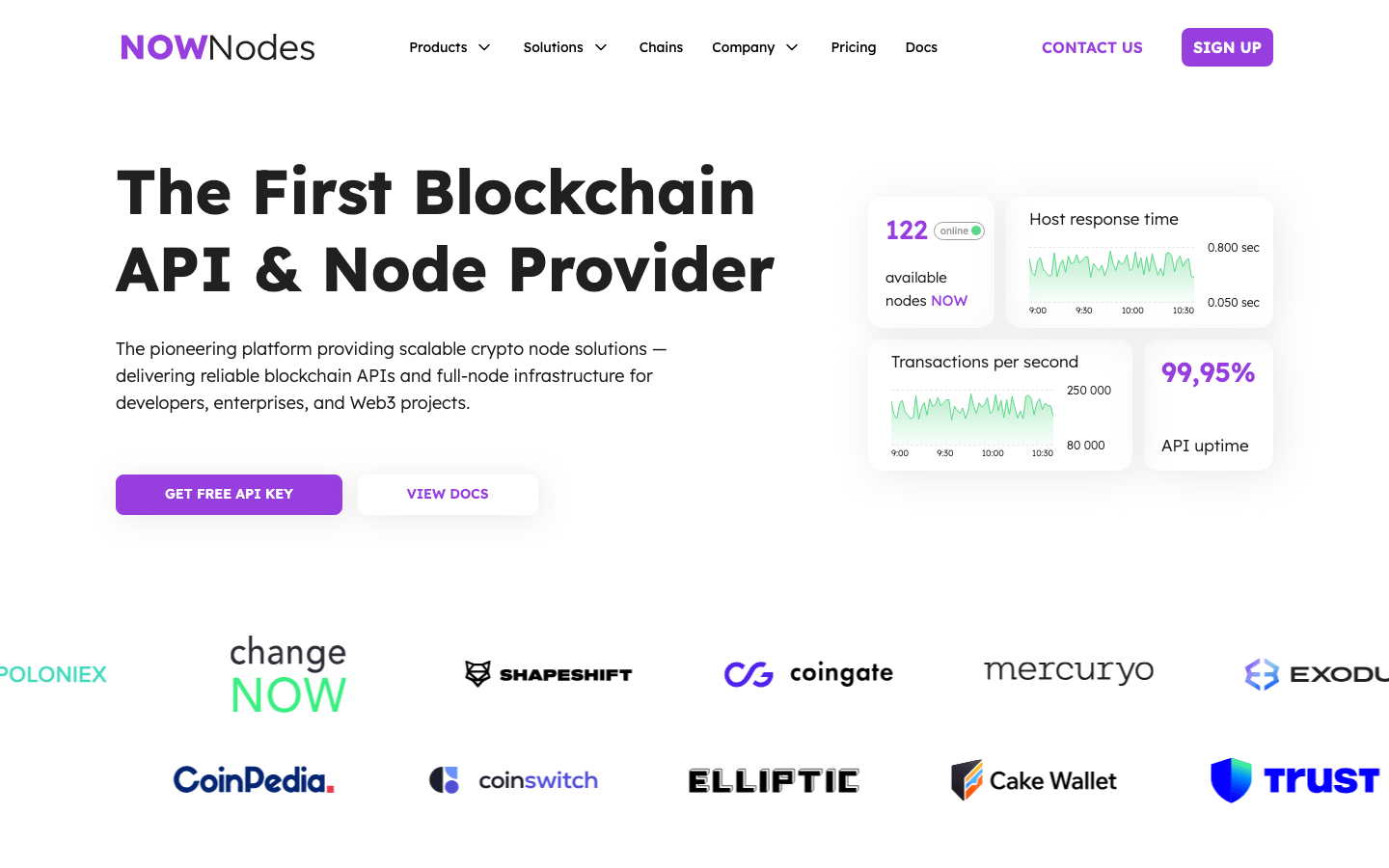
NOWNodes serves Zcash Mainnet through a JSON-RPC endpoint, a Blockbook REST API and a WebSocket endpoint, and its archive table marks all three Zcash endpoints archive-enabled. Its pricing page lists a 3-minute support response on every plan, and its Zcash page says paid plans have no predefined RPS limit.
Pricing
Start is free for one month. Pro is €20 a month for 1M requests, Pro Plus €90 for 10M with €5 per 100k overage, Business €200 for 30M with €1 per 100k, Business Plus €300 for 50M with €1 per 100k, and Enterprise €500 for 100M with €0.5 per 100k; Pro lists no overage rate, and annual billing is 10% off. Euros are not converted. We found no per-method weights on its pricing page or docs. See the official pricing page.
Supported chains and methods
Its Zcash page lists JSON-RPC, Blockbook, WebSocket and archive mode for Mainnet, and the official Zcash docs document 29 Bitcoin-style RPC operations such as getblockstats, getchaintips and createrawtransaction, with Blockbook endpoints for address and UTXO lookups. We found no address index methods and no z_* methods in that list, and the docs do not name the node client. Its WebSocket example calls getInfo, a Blockbook method, so it is not a JSON-RPC subscription feed. Its generic copy mentions Debug & Trace, but we found no Zcash-specific listing, and it offers Mainnet only.
Rate limits and latency
The Start plan allows 15 RPS, and its Zcash page says paid plans have no predefined RPS limits. It claims 99.95% uptime. NOWNodes is not covered by Chainstack’s benchmark reports.
Free tier
Start is 100,000 requests, 15 RPS and any five networks, for one month only on its pricing page, so we treat it as a trial: 100,000 getrawtransaction calls at one request each.
Limitations
Pro lists no overage rate, billing is in euros, the Zcash docs list no address index or shielded pool methods, and the product page shows Mainnet only. We found no published SOC 2 Type II or ISO 27001.
3. GetBlock: best for high shared-plan RPS, 800 on the Pro plan
GetBlock serves Zcash from Zebra over JSON-RPC, a Blockbook REST API and a Blockbook WebSocket API, billed at 10 compute units per call. The Pro plan allows 800 RPS, the highest numeric ceiling among the self-serve plans listed here (Chainstack Business is 600, Enterprise unlimited by contract), and a full-node dedicated Zcash node is listed from $1,000 a month.
Pricing
Free is $0 with 50,000 CU a day. Starter is $49 a month ($39 billed annually) for 90M CU, Pro $499 for 1B CU with extra CU at $0.40 per 1M, and Enterprise starts at $999. Its compute-unit page puts Zcash in the 10 CU group for all methods with no archive column, so a getrawtransaction call costs about $5.44 per 1M inside Starter ($4.33 annual); we found no per-CU price for Starter’s extra CU packages. See the official pricing page.
Supported chains and methods
The official Zcash docs say GetBlock serves Zcash from zebrad, and list address index, shielded pool and mempool methods including z_gettreestate, z_getsubtreesbyindex and z_listunifiedreceivers, plus Blockbook REST and Blockbook WebSocket endpoints with subscribeNewBlock and subscribeAddresses. Its docs list Mainnet from a Frankfurt endpoint only, while its Zcash product page says nodes are available for mainnet and testnets. Its dedicated-node configurator lists the zcashd client, which halted on July 18.
Rate limits and latency
Free is 20 RPS, Starter 250, Growth 300, Advanced 450, Scale 600 and Pro and Premium 800. GetBlock is not covered by Chainstack’s benchmark reports.
Free tier
The Free plan is standing: 50,000 CU a day, renewed daily, which is 5,000 getrawtransaction calls a day, about 150,000 a month, at 20 RPS.
Limitations
Its docs list one Frankfurt region for Zcash, its Zcash page labels data “Archive” while the configurator lists full mode, the Blockbook WebSocket is not a JSON-RPC feed, and Starter lists no extra-CU price. GetBlock lists a SOC 2 Type II attestation, and its site gives conflicting ISO 27001 statements (homepage badge versus an FAQ saying certification is in progress), so we leave it out.
4. Tatum: best for guaranteed-RPS dedicated API keys
Tatum serves Zcash Mainnet and Testnet through a standard gateway URL and a separate “Zebrad” URL (Tatum’s own name for it) listed in its Zcash docs. A standard RPC call costs 2 credits, and dedicated API keys from $99 a month buy guaranteed RPS without using plan credits.
Pricing
Free is 100K lifetime credits. Starter is $49 a month for 4M credits ($349 a year, $29.08 a month); Pro is $139 for 15M credits and Scale $1,199 for 150M. Its RPC docs charge 2 credits per standard method, so a getrawtransaction call costs $24.50 per 1M inside Starter ($14.54 on the yearly price). Its homepage also advertises a two-year plan at about $25 a month ($599). We found no per-credit overage price: with auto-upgrade off, keys stop when credits run out, and with it on, the account moves to the next tier. See the official pricing page.
Supported chains and methods
Zcash is a Tier 2 chain on Tatum, and the official Zcash docs list 31 methods on both the standard and the “Zebrad” gateway, in the Bitcoin Core style (getblockstats, getchaintips, createrawtransaction). We found no getaddressbalance or z_* method in either list, and no WebSocket or archive statement for Zcash.
Rate limits and latency
Free allows 3 RPS on full nodes, and its Plans & Limits docs page, last updated January 2026, lists 200 RPS on Starter, Pro and Scale, so check the live page. Dedicated API keys are 10 RPS at $99, 25 RPS at $249, 50 RPS at $509 and 100 RPS at $1,049 a month. Tatum is not covered by Chainstack’s benchmark reports.
Free tier
The free account is 100K lifetime credits and 3 RPS, which is 50,000 getrawtransaction calls in total, not per month.
Limitations
The free allowance is lifetime, we found no overage price, and its method list is Bitcoin Core-style (31 methods, against 29 at NOWNodes) with no z_* shielded or address-index methods. Its homepage shows SOC and ISO 27001 badges, but we found no report or certificate page.
5. Quicknode: best for Streams-based data delivery listed on its Zcash page
Quicknode serves Zcash Mainnet and Testnet over HTTPS with the Bitcoin-style JSON-RPC, and its docs document the address index and shielded pool methods. Its Zcash page lists a Blockbook API and Streams and Webhooks, and the Build plan is $49 a month for 80M credits at 50 RPS.
Pricing
The free trial lasts one month with 10M credits, no overage and no card. Build is $49 a month ($34 billed annually) for 80M credits with extra credits at $0.62 per 1M, Accelerate $249 ($212) for 450M, Scale $499 ($424) for 950M and Business $999 ($849) for 2B at $0.50 per 1M extra. Its credit table has no Zcash row; the 10-credit tier lists Bitcoin, Dogecoin and Litecoin, so we assume 10 credits per Zcash call, which makes a getrawtransaction call $6.13 per 1M inside Build, and a 20-credit tier would double it. See the official pricing page.
Supported chains and methods
Its Zcash docs list Mainnet and Testnet over HTTP with no WebSocket, archive “No” and pruning disabled, and 27 method pages including getaddressbalance, z_gettreestate, z_getsubtreesbyindex and z_validateaddress. Its chain-page hero says archive, debug and trace, but its FAQ and docs say archive is not offered, and its add-ons page says “No endpoint add-ons” while the chain page lists Blockbook, Streams and Webhooks.
Rate limits and latency
The trial allows 15 RPS, Build 50, Accelerate 125, Scale 250 and Business 500. Its docs cite a 99.9% SLA and its chain page 99.99%, and Quicknode is not covered by Chainstack’s benchmark reports.
Free tier
The free tier is a one-month trial, not a standing plan: 10M credits, 15 RPS, no card, which is 1M getrawtransaction calls at 10 credits or 500,000 at 20.
Limitations
The Zcash credit weight is unpublished, there is no JSON-RPC WebSocket, the trial ends after a month, and its chain-page hero, FAQ and docs disagree on archive, with add-ons and the SLA figure also differing between pages.
Quicknode, GetBlock and Tatum credits and compute units vs Chainstack request units: how pricing differs
True cost per call = (method’s unit weight x price per million units) / 1,000,000; multiply by monthly calls for the bill.
The table applies it to getrawtransaction, the call exchanges, explorers and indexers repeat most, at each provider’s entry paid plan, assuming the included allowance is used in full. Zebra has no archive class, so there is no archive figure, and NOWNodes’ euro price is not converted.
| Provider | Unit and weight | Entry paid plan | Per 1M calls inside the allowance (annual in parentheses) | Per 1M calls beyond the allowance |
|---|---|---|---|---|
| Chainstack | 1 RU | Growth $49/month, 20M RU | $2.45 ($2.00) | $15.00 |
| NOWNodes | 1 request, no weights found | Pro €20/month, 1M requests (euros, not converted) | €20.00 (€18.00 annual) | No rate listed on Pro; Pro Plus €50.00 |
| GetBlock | 10 CU | Starter $49/month, 90M CU | $5.44 ($4.33) | Starter: no price found; Pro $4.00 |
| Tatum | 2 credits | Starter $49/month, 4M credits | $24.50 ($14.54) | No overage price found |
| Quicknode | 10 credits assumed (no Zcash row; doubles at 20) | Build $49/month, 80M credits | $6.13 (about $4.3) | $6.20 |
Among the dollar plans with an allowance, Chainstack has the lowest figure inside the allowance, and Tatum’s credits make the same call about ten times dearer. Beyond the allowance the order flips: Chainstack’s $15.00 is the highest dollar figure listed, above Quicknode at $6.20 and GetBlock at $4.00, which is a Pro-tier price rather than the entry plan. Chainstack’s Unlimited Node add-on avoids per-request overage on a steady load.
Dedicated nodes are priced separately, not per request. Chainstack lists Zcash Dedicated Nodes from Pro: the Mainnet Zebra node (its catalog entry says archive mode, while the Networks docs list Full mode for Zcash) is $0.50 per hour compute plus $0.27 per hour storage for 537 GB, $562.10 a month at 730 hours plus the Pro plan, and the Testnet node is $401.50, list prices checked October 21, 2026, billed per node with requests not metered. GetBlock lists a full-node dedicated Zcash node from $1,000 a month, and its configurator lists the zcashd client only. Tatum sells dedicated API keys from $99 a month rather than nodes, Quicknode lists dedicated infrastructure on Enterprise, and NOWNodes lists dedicated nodes on its Zcash page; we found no Zcash node price for those three.
How we compared: requirements, methodology and date checked
We picked providers whose own Zcash page, docs or llms.txt show an endpoint for Zcash and that publish a price. We found no Zcash page for Alchemy, Dwellir, OnFinality, dRPC, Infura, Blockdaemon or thirdweb, and we found no Zcash page in Ankr’s docs index (checked October 21, 2026).
Every price and limit was read from the provider’s official pricing page or docs on October 21, 2026, units were converted with the formula above, and free tiers are compared in calls. Where a page was silent we wrote “we found no …”.
Chainstack publishes this page and is listed first. The order of the others is editorial, not a benchmark score: NOWNodes, GetBlock and Tatum follow in that order, and Quicknode is last.
Chainstack runs Chainstack Compare and the benchmark reports and is one of the four providers they rank (Chainstack, Quicknode, Alchemy and dRPC), but neither covers Zcash, so we show no latency figures. The NU7 Mainnet activation height is a proposal in an open pull request, not a merged ZIP, and we found no statement from any of the five providers on when its Mainnet nodes move to NU7. We could not confirm Quicknode’s Zcash credit weight, the node client behind NOWNodes and Quicknode, or GetBlock’s Zcash Testnet.
Getting started with Zcash on Chainstack
Deploy a production Zcash endpoint in a few steps:
- Log in to the Chainstack console (or create an account).
- Create a new project
- Select Zcash as your blockchain protocol
- Choose network: Zcash Mainnet or Zcash Testnet
- Deploy the node
- Open Access and credentials and copy your HTTPS endpoint
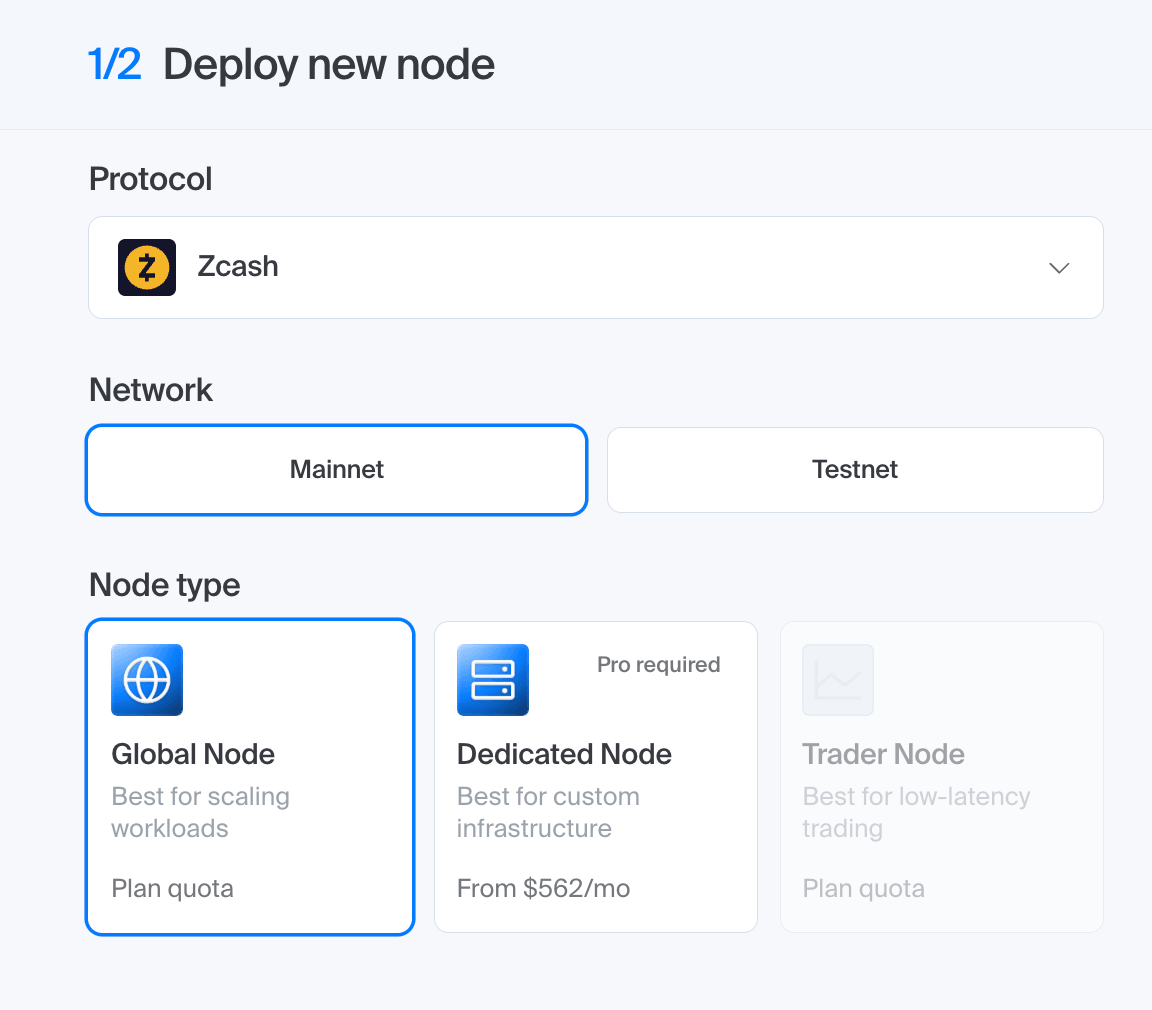
Global Nodes are the shared, load-balanced option on every plan, and Dedicated Nodes give single-tenant Zebra resources from Pro. Zcash endpoints are HTTPS only, so there is no WebSocket endpoint to copy. This snippet reads the chain name and the block height.
// Source: Chainstack Zcash tooling docs, checked October 21, 2026
const ENDPOINT = "YOUR_CHAINSTACK_ENDPOINT";

async function rpc(method, params = []) {
  const response = await fetch(ENDPOINT, {
    method: "POST",
    headers: { "Content-Type": "application/json" },
    body: JSON.stringify({ jsonrpc: "1.0", id: 1, method, params }),
  });
  return (await response.json()).result;
}

const info = await rpc("getblockchaininfo");
console.log(info.chain, info.blocks); // "main" on Mainnet, "test" on Testnet
📖 For the full integration guide, see the Chainstack Zcash tooling documentation.
🤖 You can also access Chainstack Zcash RPC directly from Claude, Cursor, Codex, Windsurf, Gemini CLI, GitHub Copilot, Antigravity or ChatGPT using Chainstack MCP. For a fuller agent stack (MCP, the Chainstack skill, llms.txt, WebMCP), see the Chainstack Agents page.
Conclusion
As of October 21, 2026, if the proposed NU7 height is adopted, Mainnet is about 16 days out, and the deciding question is who serves the upgraded node on that date and what each call costs at your volume. Price your real mix of getrawtransaction and address lookups, then ask each provider how it handles the Zebra end-of-support halt.
- Lowest cost per 1M calls inside the plan allowance: Chainstack, $2.45 per 1M
getrawtransactioncalls inside Growth. - Fast support response: NOWNodes, a 3-minute response time on every plan.
- High shared-plan RPS: GetBlock, 800 RPS on Pro.
- Guaranteed-RPS dedicated API keys: Tatum, from $99 a month for 10 RPS.
- Streams-based data delivery: Quicknode, listed on its Zcash page.
Frequently asked questions
Chainstack and GetBlock document z_gettreestate, z_getsubtreesbyindex, z_validateaddress and z_listunifiedreceivers, and Quicknode documents the first three. We found no z_* method in the Zcash docs of NOWNodes or Tatum. None of them can show a shielded balance, which only a wallet with the viewing key can read.
Inside the plan allowance, yes: a getrawtransaction call costs $2.45 per 1M on Chainstack Growth against about $6.13 on Quicknode Build, both $49 a month, assuming Quicknode’s 10-credit tier because its credit table has no Zcash row. Beyond the allowance the order flips, $15.00 per 1M on Chainstack Growth against $6.20 on Quicknode Build.
Chainstack’s Developer plan has the most calls: 3M requests a month with no card, against about 150,000 a month on GetBlock’s Free plan, 100,000 on NOWNodes’ one-month Start plan and 50,000 lifetime calls on Tatum. Quicknode’s one-month trial is 10M credits, which is 1M calls if Zcash costs 10 credits.
Yes. Under draft ZIP 259, NU7 cuts the block time from 75 to 25 seconds and makes version 4 transactions invalid, and its Mainnet height of 3,543,405 is still a proposal in an open pull request. Poll more often or use Blockbook push where a provider offers it, recount confirmation thresholds, and ask your provider when it moves Mainnet to an NU7-capable Zebra.
Not from Chainstack: Chainstack Compare and the benchmark reports do not cover Zcash. Test each endpoint from your own region with a loop over getblockcount and getrawtransaction, and compare p95 and p99.
Chainstack holds SOC 2 Type II and ISO 27001. GetBlock lists a SOC 2 Type II attestation and Quicknode lists SOC 1 Type 2, SOC 2 Type 2 and ISO 27001 reports on request under Enterprise. Tatum’s homepage shows SOC and ISO badges without a report, and we found no published SOC 2 Type II or ISO 27001 for NOWNodes.
Additional resources