AI-ready infrastructure
 Refer and earn


 Ethereum
 Hyperliquid
 Solana
 Arbitrum
 BNB Smart Chain
 Base
Base Polygon
 TRON
TRON Sui
Sui Robinhood


Top 6 TON RPC providers for production apps in 2026

The Open Network (TON) is the Telegram-native sharded L1 built for mass adoption — now processing over 2 million transactions per day and serving an ecosystem of 950M+ Telegram users. In 2026, TON’s trajectory shifted sharply: Telegram announced it would replace the TON Foundation as the network’s main driver and its largest validator, cut transaction fees by roughly sixfold to ~$0.0005, and accelerated TON Pay 2.0 — a Layer 2 payments network targeting mass in-app use — toward a mid-2026 release. For builders, that means infrastructure stability matters more than ever: the RPC endpoint handling your Mini App or payment processor is the single layer between your code and one of the fastest-growing non-EVM chains.
TON’s architecture makes provider selection non-trivial. Its sharded workchain/shardchain model, the dual HTTP v2/v3 API surface, and native ADNL protocol all create requirements that don’t map onto generic EVM tooling. Running your own node means managing specialized binaries and high-IO storage costing $150–300/month before operational overhead — while community liteserver proxies impose hard rate limits and carry no SLA. The right managed RPC provider eliminates that complexity while keeping production guarantees intact.
This guide compares the six providers with verified TON mainnet and testnet support in 2026 — across pricing, archive access, ADNL support, dedicated infrastructure, and compliance.
🤔 Already using Chainstack? Jump straight to the TON tooling docs or deploy your endpoint in minutes.
Why RPC provider choice matters for TON
TON’s architecture produces failure modes that don’t exist on EVM chains. The masterchain coordinates multiple workchains, each of which can spawn shardchains dynamically — meaning a provider that routes all traffic to a single region will see latency spikes under load as the sharding topology shifts. Any serious production workload, from a payment processor handling in-app USDT transfers to a Jetton indexer tracking tens of thousands of daily token events, needs a provider with geo-distributed nodes and a clear RPS commitment per plan tier. For a deeper look at the architecture itself, the TON ultimate developer guide covers smart contracts, Jettons, and the workchain model in detail.
The v2/v3 API split also introduces a decision that has no EVM equivalent. TON API v2 serves requests off a live node (lowest latency, real-time data), while TON API v3 serves requests off an indexer (higher stability, structured historical data). For wallet backends and payment confirmation flows, v2 is essential. For analytics dashboards, Jetton balance reconciliation, and block explorers, v3 is significantly more reliable. The TON ultimate guide to APIs and interaction libraries breaks down the full API surface and available SDKs. A provider that only offers one of the two surfaces forces you to build your own workarounds.
Key criteria for evaluating TON RPC providers in production:
- API surface coverage — both HTTP v2 and v3 (indexer) endpoints, not just one
- ADNL protocol support — required for low-level peer-to-peer operations and advanced dedicated node use cases
- Archive access — full transaction history without pruning; critical for payment reconciliation and explorers
- Dedicated node availability — isolated compute and RPS, required when traffic exceeds shared-tier limits
- SLA and uptime commitment — explicitly documented; 99.9%+ with dedicated support access
- Pricing transparency — no method weighting, no hidden overages on archive calls
- Security compliance — SOC 2 Type II and ISO 27001 or equivalent for regulated or enterprise deployments
TON RPC provider comparison
The table below summarizes public positioning as of May 2026.
| Provider | Pricing model | Free tier | Dedicated nodes | Archive access | ADNL support |
|---|---|---|---|---|---|
| Chainstack | RU-based (flat per request) | 3M RU/month, 25 RPS | Yes (Pro+) | Yes (Growth+, $49+/month) | Yes (Dedicated Nodes only) |
| Orbs TON Access | Free (decentralized) | Unlimited, keyless | No | No | Yes |
| dRPC | Per-request ($6/1M on paid) | Public endpoints (no SLA); TON on Growth Plan+ | Not documented | Not documented | Not documented |
| Ankr | API credit | 200M credits/month (shared, no SLA) | Yes (paid) | Not documented | Not documented |
| GetBlock | CU-based | 40K requests/day | Yes (dedicated plans) | Not documented | Not documented |
| Quicknode | Credit-based (method-weighted) | 30-day trial only | Yes (paid) | Yes (mainnet) | Not documented |
Note: Alchemy does not currently support TON — teams on multi-chain Alchemy stacks will need a separate provider for this network.
How to choose a TON RPC provider
Shared RPC for moderate traffic
A shared Global Node endpoint is sufficient for development, staging, and early-production workloads handling fewer than ~25–50 RPS continuously. At this scale, rate limits on free tiers are manageable, and the primary risk is occasional 429 errors during traffic bursts rather than sustained degradation. Both Chainstack and Quicknode offer shared endpoints for TON mainnet. Orbs TON Access is the only keyless, rate-limit-free option but provides no SLA and no archive access.
When dedicated infrastructure matters
Three scenarios reliably push teams past shared-tier limits on TON:
- High-frequency payment processing. A Telegram Mini App handling thousands of concurrent in-app USDT transactions will query
getTransactionsandgetAddressBalanceat rates that exceed shared RPS caps within minutes of a traffic spike. - Jetton indexer or block explorer. Backfilling token transfer histories against the TON v3 indexer generates sustained heavy-method load. Shared endpoints throttle under this pattern; dedicated compute keeps indexing throughput predictable.
- Real-time wallet backends. Wallet apps that subscribe to address state changes via WebSocket and need sub-100ms response times on
getMasterchainInfoandgetAccountStatecannot tolerate the p99 variability of shared infrastructure at peak.
ADNL and advanced protocol access
ADNL (Abstract Datagram Network Layer) is TON’s native low-level networking protocol — it provides direct peer-to-peer communication at a layer below the HTTP API, with encrypted sessions and public-key-based node identity. Most applications don’t need it: the HTTP v2 and v3 APIs cover wallet integration, payment flows, DeFi reads, and contract interaction. Teams that do need ADNL include protocol-level tooling builders, node operators, and any application requiring raw liteserver communication without an HTTP-to-ADNL translation layer. Chainstack’s Dedicated Nodes support ADNL, as does Orbs TON Access — both are managed options in this comparison with confirmed ADNL support; check the comparison table for the rest.
Latency consistency vs. average latency
On TON, mean latency figures from providers are almost always measured on uncongested shared infrastructure. The number that matters is p95 under your expected request mix — particularly for getTransactions calls on accounts with large transaction histories, which are significantly heavier than simple balance queries. Before committing to a provider, check Chainstack’s public performance dashboard for real-time cross-provider latency data — TON is not yet listed among its tracked chains, so benchmark your own method mix directly against each provider’s TON endpoint — and verify that WebSocket connections remain stable under sustained load.
Enterprise support for regulated deployments
For fintech products, custodial wallets, and any deployment handling significant user funds, SLA coverage and security certification are non-negotiable. Chainstack holds SOC 2 Type II and ISO 27001 certification and provides SLA-backed uptime at 99.99% across its paid plans. Quicknode also holds SOC 2 Type II and ISO 27001. Other providers in this comparison either do not publish equivalent certifications or restrict SLA terms to enterprise-only contracts.
Choose by use case
For Telegram Mini Apps and stablecoin payment flows
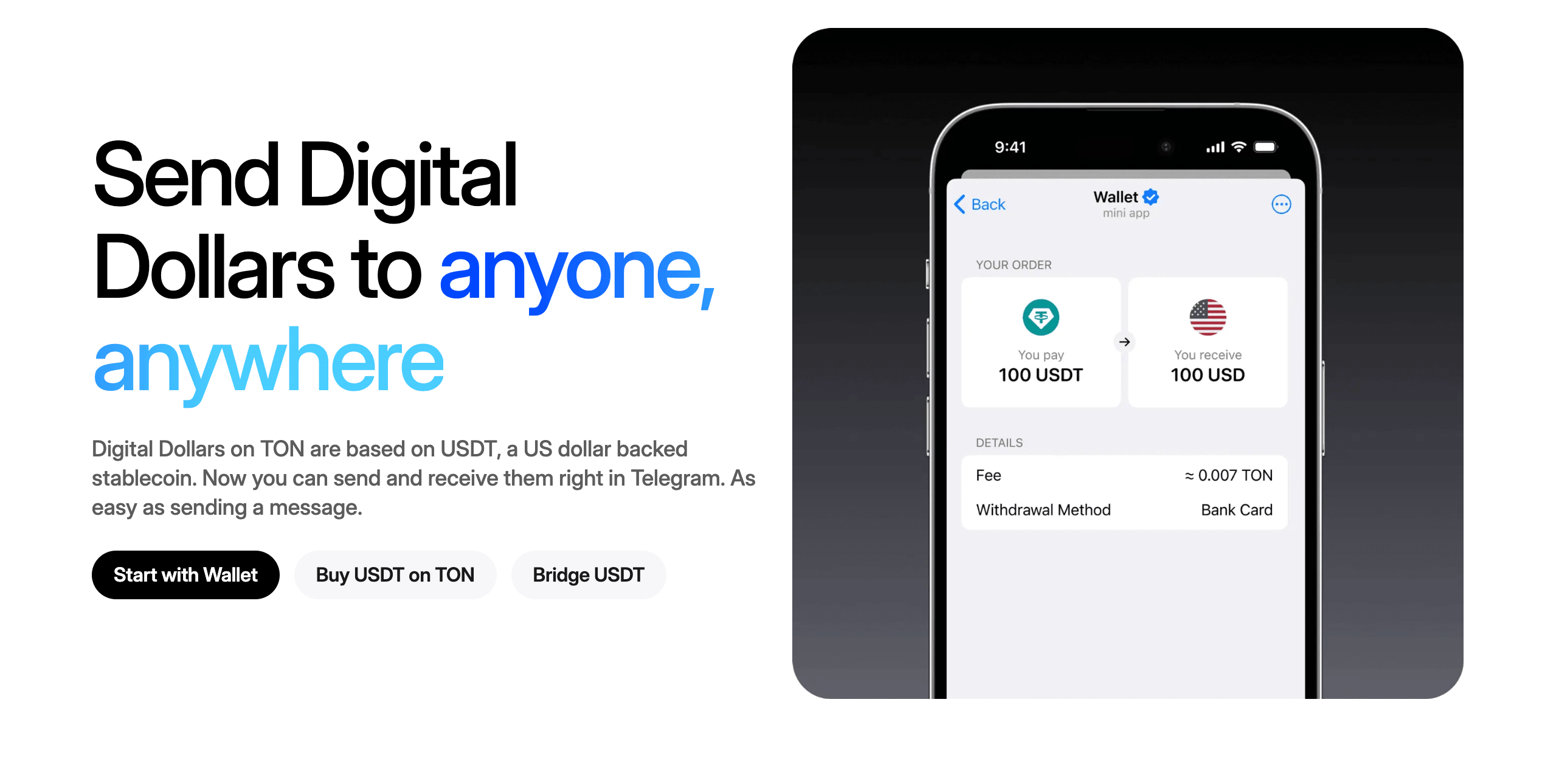
TON is Telegram’s designated blockchain for Mini App payments — and with TON Pay 2.0 targeting mid-2026, payment infrastructure requirements are escalating. A Mini App handling USDT transfers needs to confirm transaction finality quickly, detect incoming payments reliably, and handle traffic spikes when viral Mini Apps attract millions of simultaneous sessions. This means consistent RPS capacity, reliable WebSocket connections for address monitoring, and rock-solid getTransactions method coverage with no silent failures.
For production payment flows, Chainstack is the strongest option: flat RU pricing (no method weighting on getTransactions), geo-distributed Global Nodes that automatically route to the nearest server, and an Unlimited Node add-on for teams needing flat-fee throughput with no per-request billing. Quicknode is the second-best option for teams already in its credit ecosystem who can budget for TON’s credit consumption. dRPC works for cost-sensitive early-stage payment apps, but requires a paid Growth Plan for TON access and has no documented SLA.
For DeFi protocols, Jetton indexing, and on-chain analytics
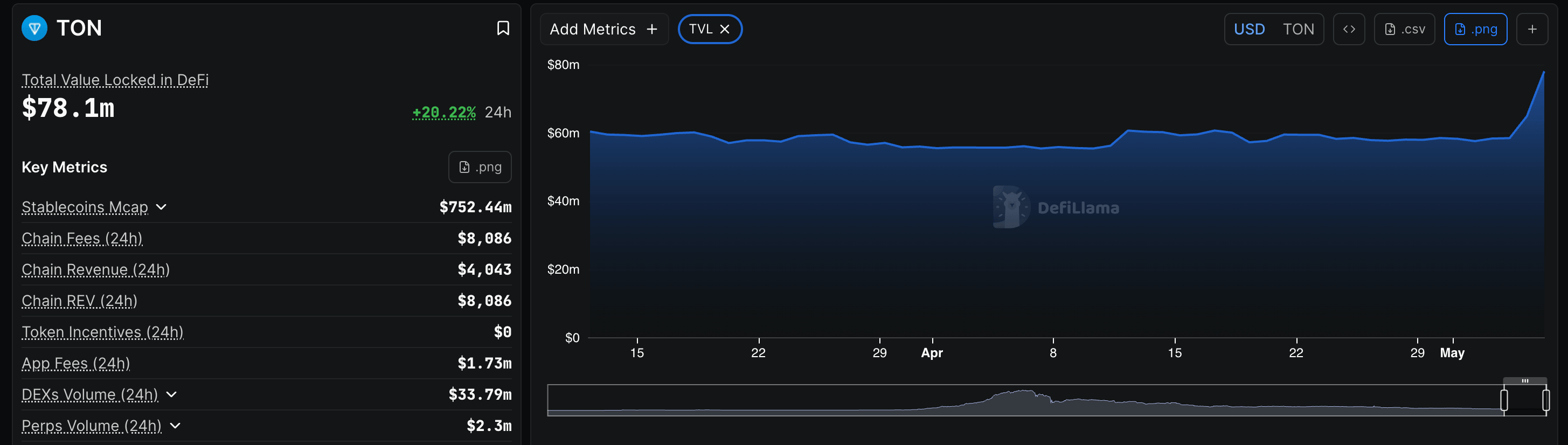
The TON DeFi ecosystem — including DEXes like STON.fi, lending protocols, and Jetton issuance — requires both real-time method access (v2) for transaction submission and indexer access (v3) for token balance lookups, liquidity pool reads, and historical trade data. A provider that only surfaces v2 forces teams to run their own indexer or accept incomplete data coverage. Heavy indexing workloads — particularly transactionsByMessage, getJettonMasters, and adjacent transaction lookups — generate request volumes that overwhelm shared-tier endpoints quickly.
Chainstack’s Dedicated Nodes with v2 and v3 coverage are the most complete option for DeFi infrastructure. The v2/v3 architecture is documented in Chainstack’s own TON tooling docs, and archive access is available from the Growth plan ($49/month) with no extra method costs. Quicknode’s TON v3 HTTP API support (confirmed in April 2026 docs) makes it a viable alternative for teams already on the Quicknode platform. Ankr provides broad coverage but with rate limits and no clear archive depth documentation.
For enterprise wallets, custodians, and compliance-sensitive deployments
TON’s integration with Telegram’s 950M user base is attracting wallet providers and custodians who need to support end-user fund management at scale. Enterprise deployments in this category require SOC 2 Type II and ISO 27001-certified infrastructure, contractual SLA coverage, dedicated endpoints (no noisy neighbors), and support access that goes beyond community forums. These are requirements that only Chainstack and Quicknode satisfy in this comparison.
Chainstack’s Enterprise plan ($990/month, 400M RU, unlimited RPS) covers large-scale wallet operations with documented uptime guarantees, dedicated endpoint isolation, and ADNL access on Dedicated Nodes for teams that need protocol-level access. Quicknode is a credible alternative for enterprise teams with existing Quicknode contracts, though TON-specific product depth (Streams, Webhooks) is still documented as “coming soon.” For compliance-sensitive teams, both providers offer substantially more than the remaining field.
Provider-by-provider breakdown
Chainstack
Chainstack is the most fully-featured TON RPC provider in production as of 2026. Its TON infrastructure exposes both HTTP API v2 (real-time node requests) and v3 (indexed data), covers mainnet and testnet, and includes ADNL protocol access on Dedicated Nodes. Archive access is available from the Growth plan at $49/month. Archive and historical-lookup calls, such as deep transaction history, bill at 2 request units instead of the standard 1 RU for regular requests. The Global Nodes tier routes automatically to the geographically nearest server, keeping latency competitive across regions.
Pricing uses a flat RU model: Developer (free, 3M RU/25 RPS), Growth ($49/month, 20M RU/250 RPS), Pro ($199/month, 80M RU/400 RPS), Business ($499/month, 200M RU/600 RPS), Enterprise ($990/month, 400M RU/unlimited RPS). The Unlimited Node add-on converts billing to flat-fee RPS tiers with no per-request overages — the right choice for teams with predictable high-volume traffic. WebSocket endpoints are included. SOC 2 Type II and ISO 27001 certification is held and documented.
Chainstack is also the only provider in this comparison with a dedicated TON testnet faucet at faucet.chainstack.com/ton-testnet-faucet, which significantly reduces the friction of testnet development compared to relying on community faucets.
Limitations: The Unlimited Node add-on costs extra on top of base plan pricing. ADNL access is restricted to Dedicated Nodes (Pro plan and above), so teams on Developer or Growth plans using shared infrastructure don’t get ADNL without upgrading.
Fit by workload:
- Telegram Mini App payments: Excellent — flat pricing, no method weighting on getTransactions, geo-load-balanced Global Nodes
- DeFi / Jetton indexing: Excellent — v2 + v3 both available, archive from $49/month, Dedicated Nodes for sustained indexer load
- Enterprise wallets: Excellent — SOC 2 Type II and ISO 27001, 99.99% uptime SLA, ADNL on Dedicated Nodes, Enterprise plan with contractual coverage
Orbs TON Access
Orbs TON Access is a purpose-built, decentralized RPC gateway for TON, operated by the Orbs Network validators with roughly $100M staked. Its defining feature is anonymous, keyless access — no API key registration, no rate limits per user, no centralized business dependency. It supports all three TON API flavors (HTTP v2, HTTP v4 by TonHub, and raw ADNL), making it uniquely suited for client-side dApp frontends where storing API keys is inherently insecure.
TON Access is not a production substitute for managed RPC infrastructure — it provides no SLA, no archive access, no dedicated nodes, and no compliance documentation. Its architectural guarantee is decentralization: routing through dozens of independent validators means no single vendor outage takes down your access. For browser-based dApps that can’t hold a server-side API key, it’s the right choice. For everything else, the absence of SLA and archive coverage makes it a poor primary endpoint.
Limitations: No SLA, no archive, no dedicated nodes. Not suitable as a primary endpoint for server-side production workloads handling user funds. Performance varies by validator node quality.
Fit by workload:
- Telegram Mini App payments: Limited — no SLA, not suitable for production payment processing; useful for client-side prototypes
- DeFi / Jetton indexing: Limited — no archive access, not suitable for historical data workloads
- Enterprise wallets: Limited — no compliance documentation whatsoever
dRPC
dRPC routes requests through a distributed network of independent node operators with an AI-driven load balancer. For TON specifically, access requires a paid Growth Plan — TON is listed among chains available only on paid tiers. The flat per-request pricing ($6/1M requests after a mid-2025 update) is among the cheapest in this comparison for moderate-volume workloads, and dRPC’s public endpoints provide frictionless testing without API key registration.
dRPC’s distributed architecture creates a real latency consistency trade-off: request routing across independent operators introduces variability that purpose-built global infrastructure (Chainstack, Quicknode) doesn’t. For payment processors with p95 latency requirements, this variability is a risk. For cost-sensitive analytics pipelines or secondary fallback endpoints, it’s acceptable.
Limitations: TON requires paid plan. No documented SLA. Latency variability is a known characteristic of the distributed routing model. No documented ADNL support or archive depth.
Fit by workload:
- Telegram Mini App payments: Moderate — cost-effective for moderate load, but no SLA and latency variability is a risk for real-time payment confirmation
- DeFi / Jetton indexing: Good — viable for non-time-sensitive analytics at low cost; verify archive depth before relying on it
- Enterprise wallets: Limited — no SOC 2 documentation, no contractual SLA, not suitable for compliance-sensitive deployments
Ankr
Ankr has supported TON in its multi-chain coverage for several years, offering both public RPC endpoints and paid private endpoints. The free tier is generous by request volume (200M API credits/month), but public endpoints impose aggressive rate limits that make them unreliable for sustained production use — they’re best treated as a testing convenience, not a production tool. Paid plans add rate-limit isolation, dedicated support, and a cleaner endpoint experience.
Ankr’s TON coverage includes mainnet access over HTTP; the provider holds a SOC 2 Type 2 certification (reported 2025). Archive depth and v3 indexer support are not clearly documented for TON specifically, which creates risk for teams that need deep transaction history.
Limitations: Free public endpoints throttle aggressively. Archive depth for TON not clearly documented. v3 API support not confirmed. Less TON-specific documentation depth than Chainstack or Quicknode.
Fit by workload:
- Telegram Mini App payments: Moderate — public tier throttles too aggressively for production; paid plans are viable for small-to-medium scale
- DeFi / Jetton indexing: Moderate — adequate for lightweight queries; archive depth uncertainty is a risk for heavy indexing
- Enterprise wallets: Limited — SOC 2 Type 2 is a positive, but missing clear SLA terms and archive documentation reduce confidence
GetBlock
GetBlock supports TON mainnet and testnet via its HTTP-based API, including both JSON-RPC and JSON-RPC v2. Its free tier provides 40K requests per day — useful for development and testing but constrained for production use. GetBlock’s regional endpoint selection (Frankfurt and US-East bare-metal) is a meaningful differentiator for teams optimizing for specific geographic latency; paid plans add up to 300 RPS and unlimited API keys.
GetBlock’s pricing uses CU-based billing, and TON is listed as available on paid plans with independent verification recommended before production deployment. The platform lacks the same depth of TON-specific documentation as Chainstack, and archive support for TON is not explicitly documented.
Limitations: 300 RPS ceiling on paid plans (below Chainstack and Quicknode at comparable tiers). CU billing can be difficult to forecast for mixed workloads. TON archive depth not clearly documented. Limited ecosystem tooling for TON-specific workflows.
Fit by workload:
- Telegram Mini App payments: Moderate — regional endpoints are useful for geo-optimized deployments; rate limits constrain scale
- DeFi / Jetton indexing: Moderate — suitable for smaller indexing tasks; 300 RPS ceiling restricts high-volume use cases
- Enterprise wallets: Limited — no documented SLA or compliance certification matching enterprise requirements
Quicknode
Quicknode supports TON mainnet with both HTTP API v2 and v3 (HTTP API and TON V3 HTTP API), documented in its April 2026 release. Archive access is confirmed for mainnet. Quicknode’s credit model weights requests by method complexity, which is manageable for teams with predictable workloads but can produce billing surprises under heavy archive or complex v3 query loads. SOC 2 Type II and ISO 27001 certifications make it one of two providers in this comparison with documented security compliance.
Quicknode’s broader ecosystem strength — Streams, Webhooks, the Marketplace add-on library — doesn’t yet fully translate to TON: the chains page lists additional TON products as “coming soon.” Teams building multi-chain products with an existing Quicknode account will find the TON support adequate for most production use cases. Teams building exclusively on TON will find Chainstack’s deeper TON-specific documentation and support more appropriate.
Limitations: TON-specific products (Streams, backfill) documented as coming soon rather than live. Credit billing adds forecasting complexity for heavy archive workloads. No free tier — 30-day trial only.
Fit by workload:
- Telegram Mini App payments: Strong — reliable endpoints, archive access, SOC 2, but credit model adds billing complexity
- DeFi / Jetton indexing: Good — v3 supported, but heavier methods consume more credits; monitor spend carefully
- Enterprise wallets: Strong — SOC 2 + ISO 27001, 99.99% SLA, existing enterprise contracts apply
Getting started with TON on Chainstack
Getting a production-ready TON endpoint on Chainstack takes under five minutes:
- Create a free Chainstack account or log into the console
- Create a new project and click Add node
- Select TON and choose Mainnet or Testnet
- Pick your plan and click Deploy — the node is live in seconds
- Navigate to Access and credentials to copy your HTTPS or WebSocket endpoint
Here’s a minimal cURL call to verify your endpoint is live:
curl --request GET \
  --url YOUR_CHAINSTACK_TON_ENDPOINT/api/v2/getMasterchainInfo
For SDK-based integration, the TON tooling documentation covers TonWeb, Ton.js, Blueprint, and SDKs for Python, Go, Rust, and .NET — all pre-configured for Chainstack endpoints.
Need testnet TON for development? Grab some from the Chainstack TON testnet faucet.
Conclusion
TON’s sharded architecture and dual v2/v3 API surface make provider selection more consequential than on typical EVM chains — teams that pick a shared endpoint without verifying archive depth, v3 indexer support, and RPS headroom will hit problems in production.
- Telegram Mini Apps and payment processors: Chainstack for its flat RU pricing, geo-distributed Global Nodes, and Unlimited Node add-on; Quicknode as a secondary option for multi-chain teams
- DeFi protocols and Jetton indexers: Chainstack Dedicated Nodes for sustained v3 indexer load with archive; Quicknode for teams with existing credit budgets
- Enterprise wallets and custodians: Chainstack or Quicknode exclusively — Chainstack holds SOC 2 Type II and ISO 27001, Quicknode holds equivalent certifications, and both provide contractual SLA coverage
- Client-side dApps without a backend: Orbs TON Access for keyless, decentralized access with no API key exposure risk
- Cost-sensitive early-stage projects: dRPC for low-cost paid access; Ankr for high free-request-volume prototyping
FAQ
TON API v2 serves requests directly off a live node — lowest latency, real-time data, essential for payment confirmation and wallet state. TON API v3 serves requests off an indexer — higher stability, structured historical data, better for Jetton balance lookups, NFT metadata, and analytics. Most production applications need both: v2 for transaction submission and live state, v3 for anything requiring reliable historical data. Chainstack’s TON tooling documentation explains the trade-offs in detail.
Yes. Chainstack’s Developer plan gives 3M RU/month (25 RPS) with full mainnet and testnet access, archive data, and a testnet faucet — no credit card required. Ankr’s free public tier is more generous by raw request count (200M credits/month) but throttles aggressively in practice. dRPC’s free public endpoints work without an API key but provide no SLA and require a paid plan for TON specifically. Quicknode’s trial is 30 days with no ongoing free tier.
For the vast majority of applications — wallets, payment processors, DeFi frontends, NFT platforms, Mini Apps — the HTTP API (v2 or v3) is the right choice. ADNL is TON’s low-level peer-to-peer protocol requiring either a lite-client binary or a library with native ADNL support, and it adds meaningful integration complexity. Reserve ADNL for protocol-level tooling, validator management, or applications that genuinely require direct liteserver access without an HTTP translation layer. Chainstack supports ADNL on Dedicated Nodes.
Mean latency benchmarks are misleading for TON — a provider with good average response time can still show 800ms+ p95 on heavy getTransactions calls with large history. Run your actual method mix (not just getMasterchainInfo) from your deployment region for at least 24 hours. The Chainstack performance dashboard tracks real-time latency across several chains — TON is not yet among them, so validate your TON p95 figures with your own benchmark before committing. The CompareNodes public endpoint comparison tool also lets you test Chainstack, dRPC, and Quicknode endpoints from your browser location.
At minimum, SOC 2 Type II and ISO 27001 demonstrate that a provider has undergone independent audit of its security controls — not just a self-declaration. Chainstack holds SOC 2 Type II and ISO 27001; Quicknode also holds both. For financial services, custodians, or any product handling user funds in a regulated jurisdiction, verify the current certification status directly with the provider before signing infrastructure contracts.
EVM chains have well-defined method cost tiers (eth_call, eth_getLogs are expensive; eth_getBalance is cheap), and providers like Alchemy and Quicknode use CU/credit models that reflect this. TON’s method complexity doesn’t map cleanly onto EVM pricing heuristics. Chainstack uses a flat 1 RU per request model for TON — no method weighting — which makes billing predictable regardless of whether you’re calling getMasterchainInfo (cheap on any provider) or getTransactions on an address with years of history (expensive in practice). For teams running heavy v3 indexer queries, the flat model is meaningfully cheaper than weighted alternatives.
Related reading
TON deep-dive
- TON: Ultimate guide to APIs and interaction libraries
- TON: Ultimate developer guide from smart contracts to Jettons
- TON: Choosing v2 or v3 API
- How to develop fungible tokens (Jettons)
Best RPC providers on other chains