


TL;DR
Polygon operates on a robust Layer 2 architecture, providing high throughput and low transaction fees while ensuring compatibility with Ethereum’s ecosystem. This infrastructure is designed for production use, emphasizing scalability and reliability to support decentralized applications and services.
This guide explains how to get a Polygon RPC endpoint in 2026 — from public RPCs for testing to private endpoints for production workloads.
Polygon RPC options: public vs private
When choosing a Polygon RPC endpoint, developers typically decide between shared public RPC infrastructure and managed RPC providers based on workload characteristics, performance requirements, and reliability expectations.
The next sections provide a comparison of the benefits and limitations involved.
Public RPC endpoints
- Access is free and straightforward, allowing for easy integration during initial development.
- They may experience limited request rates and variable performance due to shared resources.
- No guaranteed uptime or service level agreements (SLAs), making them less suitable for critical applications.
- Mainly used for testing, development, or applications with light usage.
Private RPC endpoints
- Offers dedicated resources, ensuring stable performance and request handling.
- Typically comes with SLAs, enhancing reliability for production workloads.
- Provides customizable infrastructure to meet specific application needs.
- Better suited for high-demand applications that require consistent uptime.
Private RPC endpoints are preferred for applications requiring stronger reliability and performance guarantees.
Transitioning to access a private RPC endpoint can enhance your application’s performance and reliability.
How to get private Polygon RPC using Chainstack

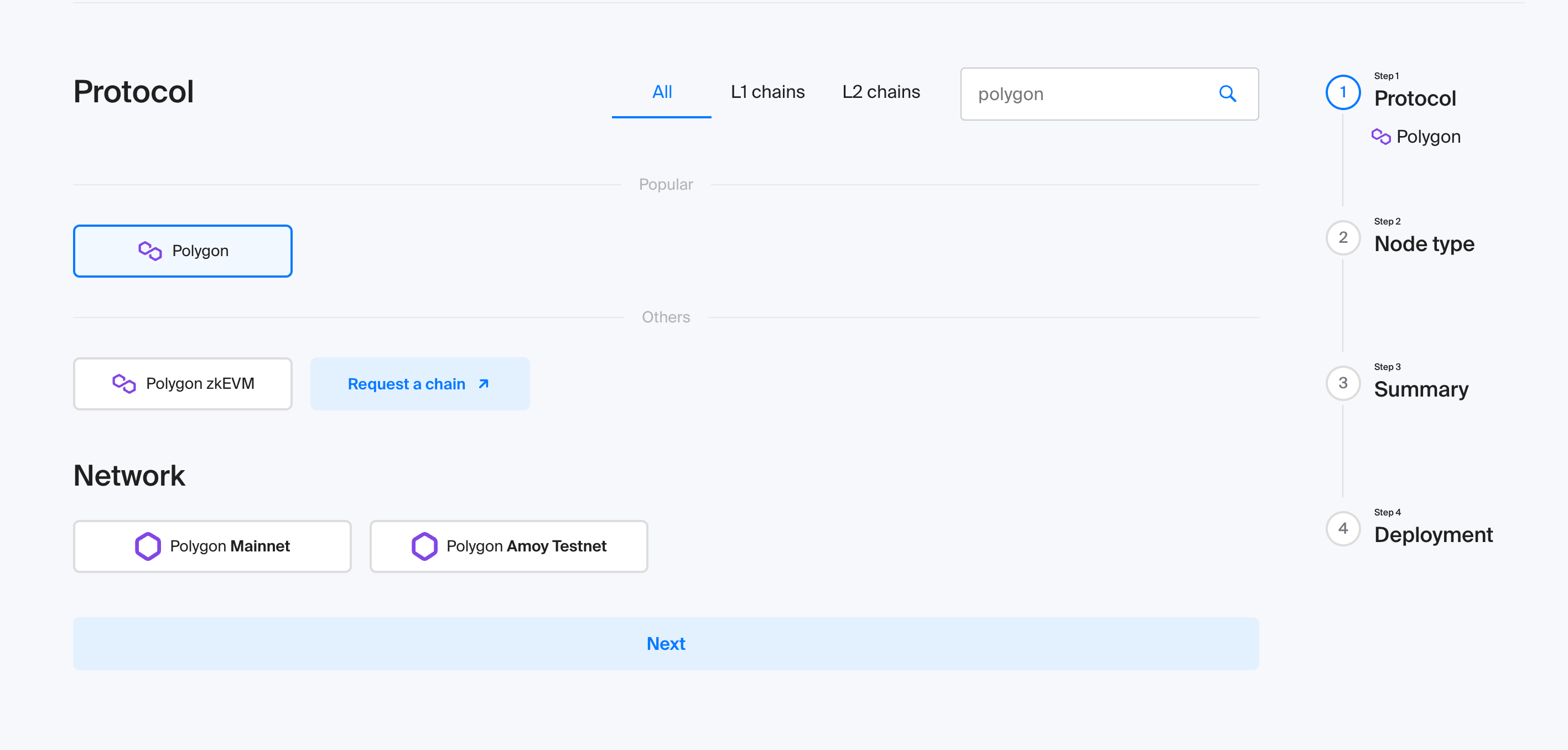
- Log in to the Chainstack console (or sign up if needed).
- Create a new project.
- Select Polygon as the blockchain.
- Choose the network:
- Polygon PoS Mainnet
- Testnet (Polygon Amoy Testnet)
- Deploy a Polygon RPC node.
- Open the project dashboard and copy the generated HTTPS and WebSocket RPC endpoints.
In addition to managed RPC nodes, Polygon provides community-operated endpoints with notable limitations.
Free public Polygon RPC URLs (with limitations)
- Mainnet RPC:
https://polygon-rpc.com(Polygon Foundation) - Testnet RPC: Amoy testnet:
https://rpc-amoy.polygon.technology/ - WebSocket / Notes:
– Mainnet:wss://rpc-mainnet.matic.network;
– Mumbai testnet deprecated by “Amoy”
Public endpoints are shared resources that often have limitations such as rate limits, stability variability, and no SLA, and they are mainly suitable for testing, development, or light usage rather than production workloads.
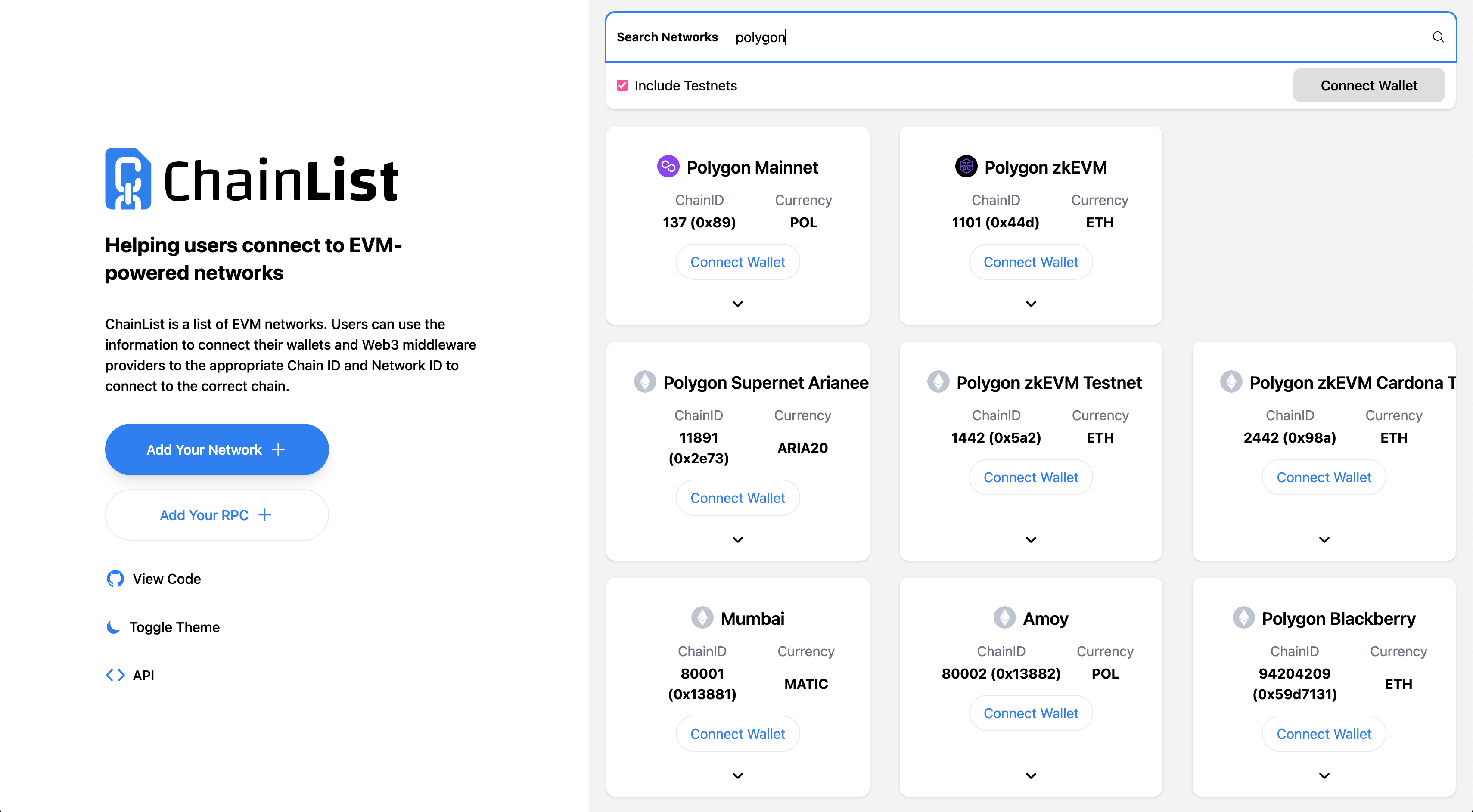
Using Chainlist
Chainlist can be used to add Polygon to wallets (for example, MetaMask), but it does not provide RPC infrastructure. It typically relies on public or community RPC endpoints, so for production usage any RPC URL obtained via Chainlist should be replaced with a managed RPC endpoint such as Chainstack.
Polygon RPC considerations for 2026
- Throughput and request limits impacting application performance.
- Latency and regional availability affecting user experience across different geographies.
- Reliability and uptime behavior of the RPC endpoints during peak usage demands.
- Cost predictability and scaling behavior as applications grow.
- Dependency on Ethereum L1 for finality may introduce additional latency during cross-chain transactions.
- Network congestion patterns that could affect the responsiveness of RPC services.
Reliable Polygon RPC provider for production
Looking for a reliable Polygon RPC provider for production use in 2026?
Chainstack provides low-latency, globally distributed Polygon RPC infrastructure built for DeFi and stablecoin infrastructure, from development to high-throughput production.
With dedicated nodes, high availability, and enterprise-grade security, Chainstack helps teams build, scale, and operate Polygon applications without managing infrastructure.
Chainstack as a Polygon RPC provider
- Low-latency Polygon RPC endpoints powered by global infrastructure
- Dedicated and global nodes for mainnet and testnets
- High 99.99% uptime and consistent performance under real-world load
- Secure access with API keys and role-based permissions
- Fast setup — deploy a Polygon node in minutes
Start building on Polygon today
Start for free, connect your application to a reliable Polygon RPC endpoint, and scale with dedicated nodes built for production performance.
FAQ
Polygon RPC endpoints are optimized for scalability, enabling faster transactions and lower fees compared to Ethereum. They are designed to handle specific workloads and offer distinct performance characteristics.
Developers should consider using Polygon RPC when building applications that require faster transaction speeds and reduced costs, especially for high-frequency transactions or scaling solutions.
Developers typically leverage tools such as ethers.js and Web3.js to interact with Polygon RPC endpoints, ensuring compatibility with existing Ethereum development practices.
Polygon provides comprehensive documentation and tooling support for developers, along with testnet environments to facilitate the development and testing of applications before deploying to the mainnet