


Tempo RPC providers are the backbone of payment infrastructure on Tempo blockchain. As stablecoin settlement and real-time payments migrate to purpose-built chains, selecting reliable Tempo RPC providers directly impacts transaction reliability, cost predictability, and system uptime.
The challenge: Payment systems can’t tolerate downtime. A single RPC failure during settlement can halt thousands of transactions, trigger compliance violations, or cause missed SLA targets. Traditional blockchain infrastructure wasn’t built for this—Tempo was.
This guide compares the top 5 Tempo RPC providers, evaluating performance, pricing transparency, uptime guarantees, and enterprise readiness. Whether you’re building stablecoin payment rails, high-frequency settlement systems, or regulated financial workflows, you’ll find the Tempo RPC provider that fits your requirements.
What is Tempo blockchain?
Tempo is a Layer-1 blockchain purpose-built for payment infrastructure. Unlike general-purpose chains that balance multiple use cases, Tempo optimizes specifically for financial transactions where predictable latency, fast finality, and deterministic execution are non-negotiable.
Why Tempo matters for payments:
- Sub-second finality – Transactions confirm in under 1 second, enabling real-time settlement
- Predictable gas costs – No surprise fee spikes during network congestion
- Deterministic execution – Smart contracts behave consistently under load
- Built for compliance – Architecture designed with regulated finance in mind
Tempo is being adopted for stablecoin payments, cross-border settlement infrastructure, and institutional transaction processing—environments where even minor latency or inconsistent state reads can disrupt operations. Its architecture prioritizes sustained performance under production load, making it the go-to chain for payment systems and high-frequency financial applications.
📖 Learn more about Tempo and its underlying architecture here: Tempo blockchain: Low-latency infrastructure for stablecoins
Why choosing the right Tempo RPC provider matters
Your Tempo RPC provider is not just a connection point—it’s mission-critical infrastructure for payment applications.
What reliable Tempo RPC providers deliver:
- 99.99%+ uptime – Multi-region failover ensures zero downtime during settlement windows
- Low-latency routing – Geographic distribution keeps response times under 50ms globally
- Predictable costs – Request-based pricing with no surprise compute unit charges
- SOC 2 compliance – Security controls required for enterprise financial infrastructure
- Archive access – Historical data for auditing, compliance, and debugging
What happens with unreliable Tempo RPC:
- ❌ Payment transactions fail during critical settlement periods
- ❌ Unpredictable costs make budgeting impossible
- ❌ Regional outages halt cross-border payment flows
- ❌ Compliance violations from insufficient audit trails
- ❌ Lost revenue from downtime during high-volume periods
In this guide, we evaluate the best Tempo RPC providers across five critical dimensions: performance benchmarks, pricing models, uptime SLAs, developer experience, and security compliance. By the end, you’ll know exactly which Tempo RPC provider matches your payment infrastructure requirements.
Best Tempo RPC providers comparison
This section compares the best Tempo RPC providers by pricing, latency, uptime, and developer experience
| # | Proveedor | Plan gratuito | Planes de pago y tarifas | Latencia y tiempo de actividad | Developer |
|---|---|---|---|---|---|
| 1 | Chainstack | 3 millones de solicitudes al mes, 25 solicitudes por segundo | A partir de 250 RPS y con capacidad para superar los 600 RPS en Enterprise personalizados, con un complemento de nodos ilimitados que permite realizar solicitudes sin límite por una tarifa mensual fija | Enrutamiento global de baja latencia con un tiempo de actividad superior al 99,99 % | Docs, dashboard metrics, guides, Access rules |
| 2 | Alchemy | 30 millones de transacciones al mes; hasta 25 transacciones por segundo | Pago por uso o mensual; mayor rendimiento de unidades de crédito en los planes de pago | Enrutamiento de baja latencia y tiempo de actividad disponibles en los planes superiores | Monitoring APIs, analytics, SDK support |
| 3 | QuickNode | No hay plan gratuito; solo hay una prueba de 10 millones de créditos | 50-500 RPS; planes mensuales basados en créditos (ponderados por método) | Distribución global, 99,99 % de tiempo de actividad en los planes de pago | Streams, Webhooks, team dashboards, multi-region setup |
| 4 | Conduit | 400M CUs/month, 1 API key | Pro: $50/month, 1B CUs, 10 API keys Enterprise: custom pricing for production-scale workloads | Optimized for testnet; enterprise SLA available. | Simple setup via Conduit app, API key–based access, Tempo RPC Quickstart available, HTTPS & WebSocket support |
| 5 | dRPC | ~210 millones de operaciones al mes (~≈10 millones de llamadas), ~100-250 operaciones por segundo | Aproximadamente 6 $ por cada millón de solicitudes (pago por uso). Escalable hasta unos 5.000 RPS; enterprise más allá de ese límite. | Enrutamiento multirregional con consideración de la latencia; 99,99 % de tiempo de actividad en el servicio de pago | Análisis del panel de control y métricas de solicitudes, claves ilimitadas en los planes de pago, mensajería con calidad de servicio ponderada por la participación y enrutamiento seguro frente al MEV |
What separates one RPC provider from another usually comes down to the same few metrics: pricing, latency, uptime, and scalability options available. Here’s how the leading Tempo options measure up:
Conclusiones principales de la comparación:
- Chainstack offers the most balanced feature set with transparent request-based pricing, highest uptime (99.99%+), and full SOC 2 Type II certification
- QuickNode leads in performance with maximum RPS and globally distributed infrastructure
- Alchemy provides the richest developer tooling including monitoring APIs
- dRPC is ideal for small projects and developers needing simple setup
Before diving into detailed provider reviews, let’s examine how each performs across critical Tempo use cases:
Choose Tempo RPC provider by your use case
Infraestructura de stablecoins y pagos
Tempo is purpose-built for payment infrastructure. Applications building on Tempo require RPC service with consistent throughput, near-zero downtime, and predictable costs. Even minor RPC outages or high latency can disrupt payment flows and settlement operations.
Top providers address this with robust multi-region infrastructure that automatically fails over if any node goes down. Chainstack’s network delivered 99.99%+ availability in testing, with multi-cloud architecture that reroutes traffic instantly if a region fails. Such redundancy ensures payment transactions aren’t halted by regional outages.
Critical requirements for payment infrastructure:
- Multi-region failover – Automatic rerouting when nodes go down
- Predictable pricing – Fixed monthly costs, no surprise bills during high-volume periods
- SLA guarantees – 99.99%+ uptime with financial penalties for violations
- Security compliance – SOC 2 Type II for enterprise financial workflows
High-frequency transaction workloads
Tempo’s deterministic execution model makes it ideal for applications requiring consistent performance under load. Trading bots, automated market makers, and real-time analytics need RPC infrastructure that can handle sustained throughput without degradation.
High-frequency essentials:
- Sustained RPS capacity: Chainstack offers high-throughput plans with custom RPS configurations on Tempo and achieves ~99.99% measured uptime via global load balancing
- Dedicated Nodes for isolated performance: For ultra-low-latency applications, Chainstack’s Nodes provide exclusive infrastructure with no resource contention from other users
- Low-latency routing: Multi-region data centers and intelligent routing keep response times uniform worldwide
- Burst handling: Infrastructure that maintains performance during network congestion
SOC 2 compliant providers
Security and compliance are paramount for enterprises integrating with Tempo. SOC 2 certification has become a key benchmark of a provider’s security controls and operational integrity.
Security leaders:
- Chainstack & QuickNode both hold SOC 2 Type II certification, reflecting rigorous audits of security, availability, and confidentiality practices
- Chainstack achieved SOC 2 Type II in late 2025, underscoring enterprise-grade security and 99.99%+ uptime SLA guarantees
- QuickNode maintains SOC 1 Type 2, SOC 2 Type 2, plus ISO 27001 certifications
In-depth Tempo RPC providers analysis
Chainstack

Chainstack is a multi-chain infrastructure platform offering one of the most complete ways to connect to Tempo without the overhead. By choosing Chainstack Tempo RPC node, you get secure HTTP and WebSocket access to Tempo, backed by 99.99%+ uptime and globally distributed routing for consistently low latency. Chainstack is listed as an official integration on the Tempo docs, highlighting its active role in the Tempo ecosystem.
From a single console, teams can deploy and manage:
- Global Nodes for geo-balanced Tempo RPC access.
- Nodos dedicadospara un rendimiento aislado y un control total sobre la configuración de los nodos.
- Archive nodes for deep historical queries, tracing, and debugging.
- Reglas de accesopara gestionar los dominios y las direcciones IP permitidos directamente desde el panel de control.
- Unlimited Node add-on for flat-rate, unmetered requests within a fixed RPS tier.
| ¿Cuánto cuesta? | Developer — free, 3M requests/month (~25 RPS), $20 per extra million. Growth — $49/month, 20M requests (~250 RPS), $15 per extra million. Pro — $199/month, 80M requests (~400 RPS), $12.5 per extra million. Business — $499/month, 200M requests (~600 RPS), $10 per extra million. Enterprise — from $990/month, 400M requests (custom RPS), extra from $5 per million. Unlimited Node Add-on — flat monthly fee for unmetered requests starting from $149, priced by RPS tier. Dedicated Nodes — $0.50 / hour plus storage costs for exclusive, high-performance isolated Tempo node instances, what means ~$0.25 per million requests effectively. While others price in shifting compute units, Chainstack keeps it simple with request-based billing and clear RPS tiers, so you always know what you’ll pay. What’s more, on Chainstack, you are able to pay in crypto. |
| Rendimiento | Tiempo de actividad: Disponibilidad superior al 99,99 %, respaldada por una red multicloud que redirige automáticamente el tráfico si una región deja de estar disponible. También hay una página de estado pública disponible. Latencia: Elige puntos de conexión en EE. UU., la UE o APAC para mantener tiempos de respuesta reducidos. Rendimiento: Los planes incluyen suficiente capacidad de RPS para absorber picos de tráfico sin obligarte a limitar la aplicación. Estabilidad: Se mantiene estable bajo carga, incluso durante picos en toda la red. Supervisión: Métricas integradas en la consola, además de paneles públicos de rendimiento y comparación, y una página de estado. |
| Ventajas | – High throughput at price point (~250 RPS on Growth, ~600 RPS on Business) – Predictable, request-based pricing with Unlimited Node add-on for flat, unmetered traffic within your chosen RPS tier – 99.99%+ uptime SLA, SOC 2 Type 2, globally distributed routing for low latency One provider for Tempo plus 70+ other chains |
| Contras | – Fixed RPS per tier; ultra-low-latency apps may need Dedicated Nodes – Free plan (3M calls, ~25 RPS) can be tight for bots or indexers – Dedicated Nodes require at least a Pro plan |
Chainstack offers a full-featured infrastructure stack for running Tempo, including high RPS capacity, global routing, and archive access. The deployment model stays consistent as workloads grow, helping teams scale without re-architecting their setup or losing cost visibility.
Alchemy

Alchemy offers Tempo RPC access with Day 1 support, providing HTTP/WebSocket connectivity to Tempo Testnet. Alchemy launched Tempo support alongside the testnet, demonstrating strong commitment to the ecosystem.
Developers get enhanced transaction monitoring, real-time notifications, and historical data alongside Alchemy’s global infrastructure. The platform supports dozens of networks, giving developers access to blockchain data and real-time event streaming tailored for Tempo, including transactions, contract events, and state changes.
| ¿Cuánto cuesta? | Alchemy measures usage in compute units (CUs) rather than raw requests, which can make costs less predictable for teams sending large volumes of latency-sensitive calls compared to flat, request-based models. Alchemy starts with a free tier offering 30M CUs per month, roughly equal to 1.2M basic requests up to 25 RPS. Paid plans scale by total CU usage: Pay-as-you-go — $5 per 11M CUs (~$0.45 per million). Enterprise — custom pricing with lower per-unit costs at high volumes. |
| Rendimiento | Uptime: Reports 99.9% historical uptime, but an uptime SLA is only guaranteed on Enterprise plans. Latency: Region-based routing helps keep response times low; however, Alchemy does not publish official Tempo-specific latency numbers. Throughput: Begins at about 25 RPS on the free tier, with scaling up to 300 RPS on paid. Reliability: The Supernode setup helps maintain data accuracy during heavy traffic. Monitoring: You can check usage, errors, and request patterns through the dashboard in real time. |
| Ventajas | – Day 1 Tempo support – Covers Tempo plus 40+ chains – Optimized transaction delivery – Rich developer tooling and analytics |
| Contras | – CU pricing isn’t intuitive, – Hard to verify real performance without public benchmarks, – Throughput caps by plan, very high RPS needs an enterprise plan – No SOC 2 certification Type 2 as of 2026 |
Alchemy’s early Tempo support and developer-first tooling make it attractive for teams prioritizing monitoring and analytics. Compute-based CU pricing offers flexibility but bills vary by API call complexity, making cost prediction challenging at scale. Best suited for teams needing enhanced observability over strict cost predictability.
QuickNode


QuickNode runs a multi-region infrastructure for Tempo RPC, letting you connect to Tempo over HTTP or WebSocket. Archive support is available for teams that need to query deep historical data.
It also supports dozens of other chains and offers add-ons such as Webhooks and Streams if you want event-based triggers or real-time blockchain feeds. It’s popular with high-traffic teams because the network scales well under pressure, but to get to that performance you would need to move to the higher-priced tiers.
| ¿Cuánto cuesta? | Build — $49/month, 80M credits plus $0.62 per extra million, up to 50 RPS. Accelerate — $249/month, 450M credits plus $0.55 per extra million, up to 125 RPS. Scale — $499/month, 950M credits plus $0.53 per extra million, up to 250 RPS. Business — $999/month, 2B credits plus $0.50 per extra million, up to 500 RPS. Enterprise — custom terms for higher volumes and dedicated support. Credits rollover unused portions, which helps variable Tempo loads, though the model adds a layer compared to straight request counts. |
| Rendimiento | Tiempo de actividad: Objetivo de disponibilidad del 99,9 % en los planes de pago. Latencia: Puntos finales enrutados por región optimizados para una baja latencia; no se ha publicado ningún objetivo oficial en milisegundos, por lo que conviene realizar pruebas de rendimiento en tu región. Rendimiento: Los planes iniciales admiten entre 15 y 25 RPS; los niveles avanzados escalan hasta superar con creces los 500 RPS. Fiabilidad: Las solicitudes se redirigen automáticamente. Supervisión: El panel de control ofrece visibilidad en tiempo real del rendimiento de las solicitudes y de los errores. |
| Ventajas | – Scales up to 500+ RPS on higher plans, – Archive data available (by chain/plan), – Low latency from multi-region routing |
| Contras | Free trial caps at 15-25 RPS with only community support, – Method-weighted, credit-based billing makes costs less predictable, – No flat-rate unlimited option for heavy workloads |
QuickNode gives you speed, global routing, and developer tooling, which makes it good option for Tempo apps. The main limitation is its credit-based (method-weighted) pricing. Because different methods burn credits at different rates, long-term cost planning takes more effort, especially if your workload isn’t static.
Conduit


Conduit provides high-performance RPC infrastructure for Tempo. Developers can create API keys and access Tempo endpoints through the Conduit app with straightforward setup and reliable connectivity.
Conduit focuses on simplicity and developer experience, offering quick access to Tempo RPC without complex configuration. The platform is designed for teams that want to get started fast with development and testing.
| ¿Cuánto cuesta? | Conduit offers a free tier for mainnet access with pay-as-you-go pricing for higher usage. Enterprise plans are available with custom pricing for production-scale workloads. – Free tier — 400M CUs/month, 1 API key – Pro — $50/month, 1B CUs/month, 10 API keys, Basic support – Enterprise — Custom pricing for dedicated infrastructure and support |
| Rendimiento | – Uptime: Reliable infrastructure with monitoring – Latency: Optimized for testnet performance – Throughput: Scales with usage-based plans – Accessibility: Simple API key management through Conduit app – Documentation: Tempo RPC Quickstart available in Conduit Hub |
| Ventajas | – Simple setup through Conduit app – Free tier for testnet development – Tempo RPC Quickstart guide available |
| Contras | – Limited public information on specific RPS limits – Fewer advanced features compared to enterprise-focused providers |
Conduit is a solid choice for developers getting started with Tempo. The platform prioritizes ease of use and quick onboarding, making it ideal for early-stage development and testing. For teams needing enterprise-grade SLAs, compliance certifications, or advanced monitoring, providers like Chainstack or QuickNode may be better suited.
dRPC

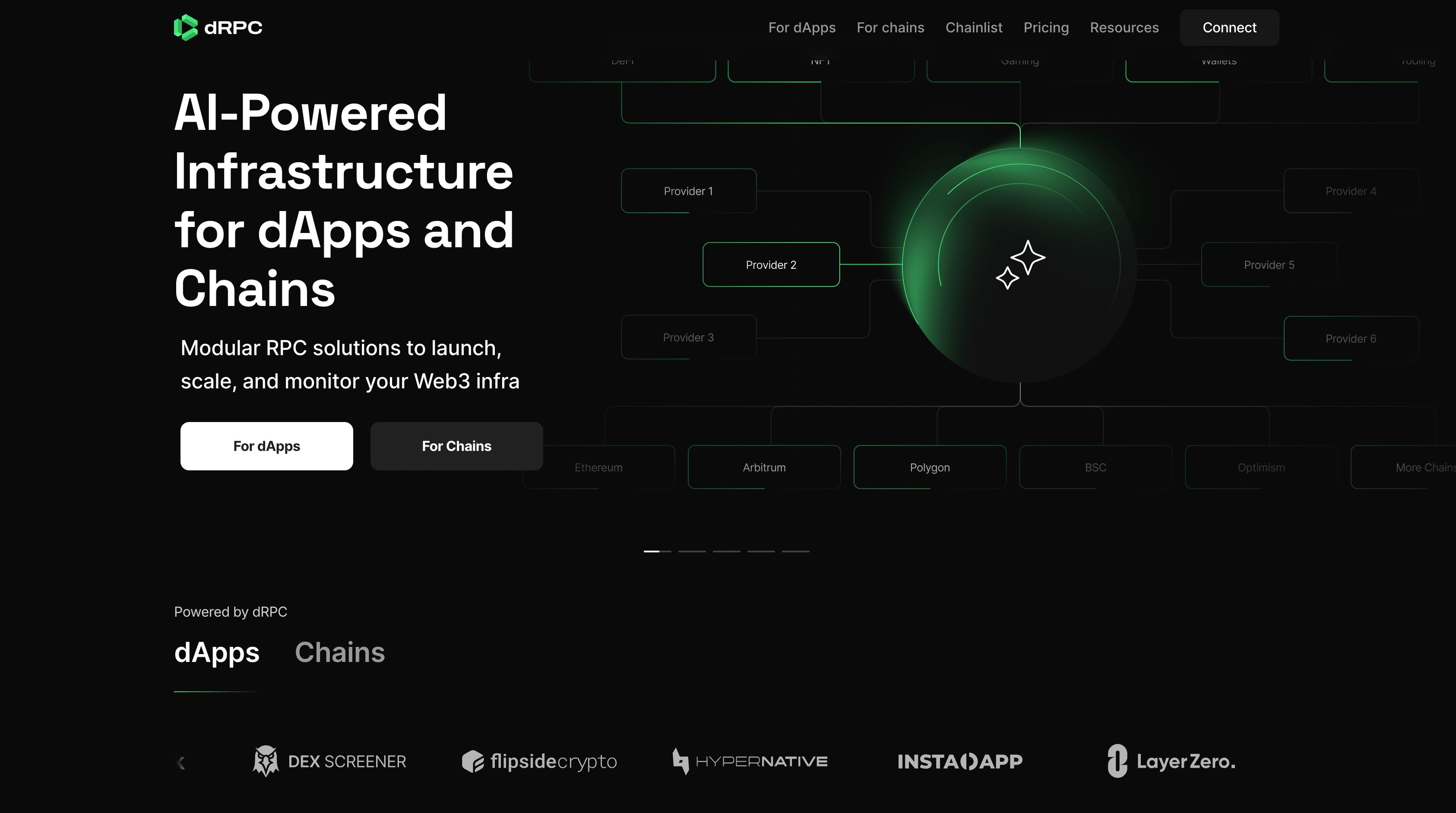
En lugar de gestionar su propio clúster único, dRPC distribuye el tráfico a través de una red de más de 50 operadores de nodos independientes y utiliza un equilibrador de carga basado en inteligencia artificial para seleccionar el endpoint más rápido y con mejor estado endpoint cada solicitud. El objetivo es eliminar los puntos únicos de fallo, reducir la latencia dirigiendo las llamadas a la región más cercana y ofrecer un rendimiento de nivel de producción sin que el usuario quede vinculado al perfil de hardware de un único proveedor.
That design comes with a clear trade-off: you’re not getting one tightly controlled Tempo stack. Speed and redundancy are achieved by sitting on top of multiple operators, so performance depends on a rotating pool of providers. As a result, you don’t always get the same level of deterministic routing, regional pinning, or operational visibility that other providers provide.
| ¿Cuánto cuesta? | dRPC prices Tempo access on a pay-as-you-go model. Costs are structured around compute units and per-million-request pricing: higher tiers get you more RPS capacity, priority routing, uptime SLAs, and dedicated support. Free — $0. Includes 210M compute units per month (roughly ~10M calls). Growth / Pay-as-you-go — $6 per 1M requests. Includes high-performance nodes behind an AI-driven load balancer, up to 5,000 requests per second class throughput. Enterprise — Custom pricing starting from ~300M+ requests/month. |
| Rendimiento | Disponibilidad:Objetivo de tiempo de actividad del 99,99 % con conmutación automática entre más de 50 operadores y 7 regiones. Latencia:El enrutamiento con reconocimiento de región mantiene las llamadas cercanas; las velocidades pueden fluctuar ligeramente. Escalabilidad:Rendimiento de pago por uso de hasta ≈ 5000 RPS, ampliable para enterprise. Estabilidad:Los reintentos automáticos y la rotación inteligente mantienen el flujo durante las acuñaciones o cuando hay una gran carga en la red. Controles:Se incluyen claves API ilimitadas, análisis de solicitudes y enrutamiento seguro frente a MEV. |
| Ventajas | – Agregador descentralizado con enrutamiento basado en IA a través de más de 50 operadores, lo que garantiza una baja latencia y la ausencia de un único punto de fallo – Amplio margen de capacidad en los planes de pago – Enrutamiento integrado a prueba de MEV y conmutación automática a una ruta alternativa en caso de congestión |
| Contras | – Menos predecible que una infraestructura con un único proveedor; el enrutamiento y el rendimiento pueden variar entre los distintos operadores de nivel superior – Los controles más precisos, como la asignación regional estricta o la visibilidad por clúster, son limitados en comparación con los proveedores que dan prioridad a la infraestructura – La resolución de casos extremos puede llevar más tiempo, ya que los problemas pueden tener su origen en diferentes operadores de nodos de nivel superior |
dRPC es una buena opción para equipos que buscan un alto número de operaciones por segundo (RPS) de forma rápida y no tienen inconveniente en que el enrutamiento inteligente decida el destino del tráfico. El modelo de pago por uso y la elevada capacidad de picos de tráfico resultan ideales para bots, liquidadores y sistemas de monitorización que necesitan rendimiento inmediato. Si necesitas una asignación estricta a una región, una facturación predecible o una visibilidad detallada de una única pila, una solución más orientada a la infraestructura, como Chainstack mayor seguridad a largo plazo.
Top 5 Tempo RPC providers
🥇 1. Chainstack
Best all-around provider for production Tempo workloads, with a strong focus on reliability, security, and predictable scaling. Designed for teams running latency-sensitive and high-throughput Tempo applications.
Puntos fuertes:
- Custom RPS on enterprise plans (400M+ requests/month), 99.99% uptime
- SOC 2 Type II certified with 99.99%+ SLA
- Predictable request-based pricing with Unlimited Node add-on for flat-rate billing
- Nodos globales para aplicaciones descentralizadas (dApps) de baja latencia. Nodos dedicados para cargas de trabajo aisladas y fiabilidad enterprise.
🥈 2. QuickNode
Strong focus on low-latency performance via region-routed endpoints, well suited for globally distributed Tempo applications.
Aspectos destacados:
- 500+ RPS, 99.99% uptime SLA, enterprise-scale volumes
- SOC 2 Type II + ISO 27001 certified
- Advanced APIs, Webhooks, NFT/token data
- Credit-based pricing requires usage monitoring
🥉 3. Alchemy
Popular among developers for its tooling layer and analytics, extending beyond basic RPC access.
Puntos fuertes:
- 30 millones de unidades de crédito en el plan gratuito(aprox. 1,2 millones de solicitudes), 0,45 $ por millón de llamadas básicas
- 40+ chain support
- ~99.9% uptime, no SOC 2 certification
- Early Tempo ecosystem participant (Day 1 support)
🏅 4. Conduit
Simple, developer-friendly RPC access for Tempo development.
Aspectos destacados:
- Free tier for testnet development
- Quick setup through Conduit app
- Tempo RPC Quickstart guide
- Ideal for early-stage testing and prototyping
🏅 5. dRPC
Agregador RPC descentralizado de alto rendimiento.
Características principales:
- Enrutamiento basado en IA a través de más de 50 operadores de nodos
- ~100-250 RPS gratis, hasta 5.000 RPS de pago por uso
- 6 $ por cada millón de solicitudes, claves API ilimitadas, a prueba de MEV
- Rendimiento variable según el operador
Conclusión
The 2026 Tempo RPC providers landscape is more competitive and mature than ever. Chainstack leads as the top all-around provider, combining enterprise-grade performance and 99.99% uptime via multi-cloud routing, transparent request-based pricing ($0.25-$2.50/M with unlimited options), and full SOC 2 Type II compliance. It perfectly serves stablecoin payments, and enterprise dApps include 70+ chain support.
QuickNode is a strong choice for latency-sensitive workloads, offering high RPS limits and robust compliance certifications. Alchemy remains a developer-first platform with rich tooling and a generous free tier, best suited for teams prioritizing productivity over raw infrastructure control.
dRPC and Conduit serve more cost-conscious and early-stage use cases. dRPC fits testing and lightweight applications with simple regional endpoints, while Conduit offers broad multi-chain access and flexible pricing—but with fewer enterprise-grade features compared to top-tier providers.
Overall, developers now have a wide range of Tempo RPC options—from enterprise-ready infrastructure to flexible, budget-friendly platforms—making it easier to match providers to specific performance, compliance, and cost requirements.
Reliable Tempo RPC infrastructure

Getting started with Tempo on Chainstack is fast and straightforward — deploy a reliable node in seconds through an intuitive console, no hardware or complex setup required.
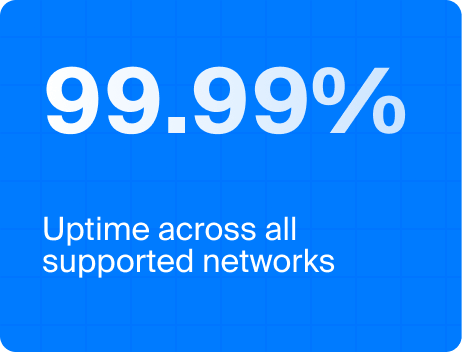
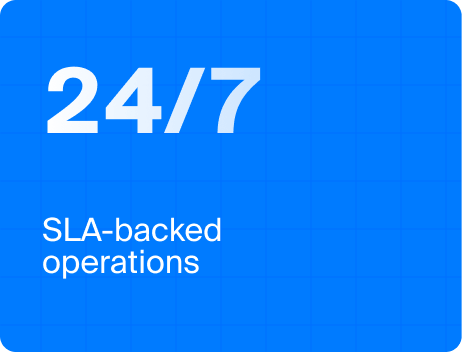
With 99.99% uptime, 24/7 SLA-backed operations and low-latency global endpoints, Chainstack ensures seamless RPC access for building and scaling DeFi, analytics, and trading applications.
Preguntas frecuentes
Tempo RPC is the standard interface that lets applications communicate with the Tempo blockchain. Through an RPC provider, you can read blockchain data (balances, transactions), send transactions, deploy smart contracts, and interact with dApps using JSON-RPC API calls. Without reliable RPC, your app can’t connect to Tempo.
Para cargas de trabajo de producción, Chainstack una opción sólida, ya que combina una estructura de precios predecible basada en las solicitudes, un rendimiento escalable, un tiempo de actividad del 99,99 %, enrutamiento global de baja latencia, cumplimiento de la norma SOC 2 Tipo II yenterprise tantoenterprise . Cubre las necesidades de infraestructura de pagos, sistemas de liquidación y transacciones de alta frecuencia mejor que la competencia.
Sí. Chainstack ofrece 3 millones de solicitudes al mes (~25 RPS) gratis con Tempo y datos de archivo. Alchemy ofrece 30 millones de unidades de crédito (aprox. 1,2 millones de solicitudes), y Conduit incluye un nivel gratuito limitado adecuado para pruebas y uso ligero.
When you start building on Tempo, the provider you choose shapes your baseline for speed, reliability, and how easily you can scale over time. While different platforms cater to different use cases, Chainstack bundles the full stack into a setup that takes minutes to deploy:
1. Log in to your Chainstack account (or create one if you don’t have it yet).
2. Create a new project or select an existing one.
3. Choose Tempo Mainnet or Testnet
4. Deploy a node with RPC access and copy the HTTP or WebSocket endpoint into your app.